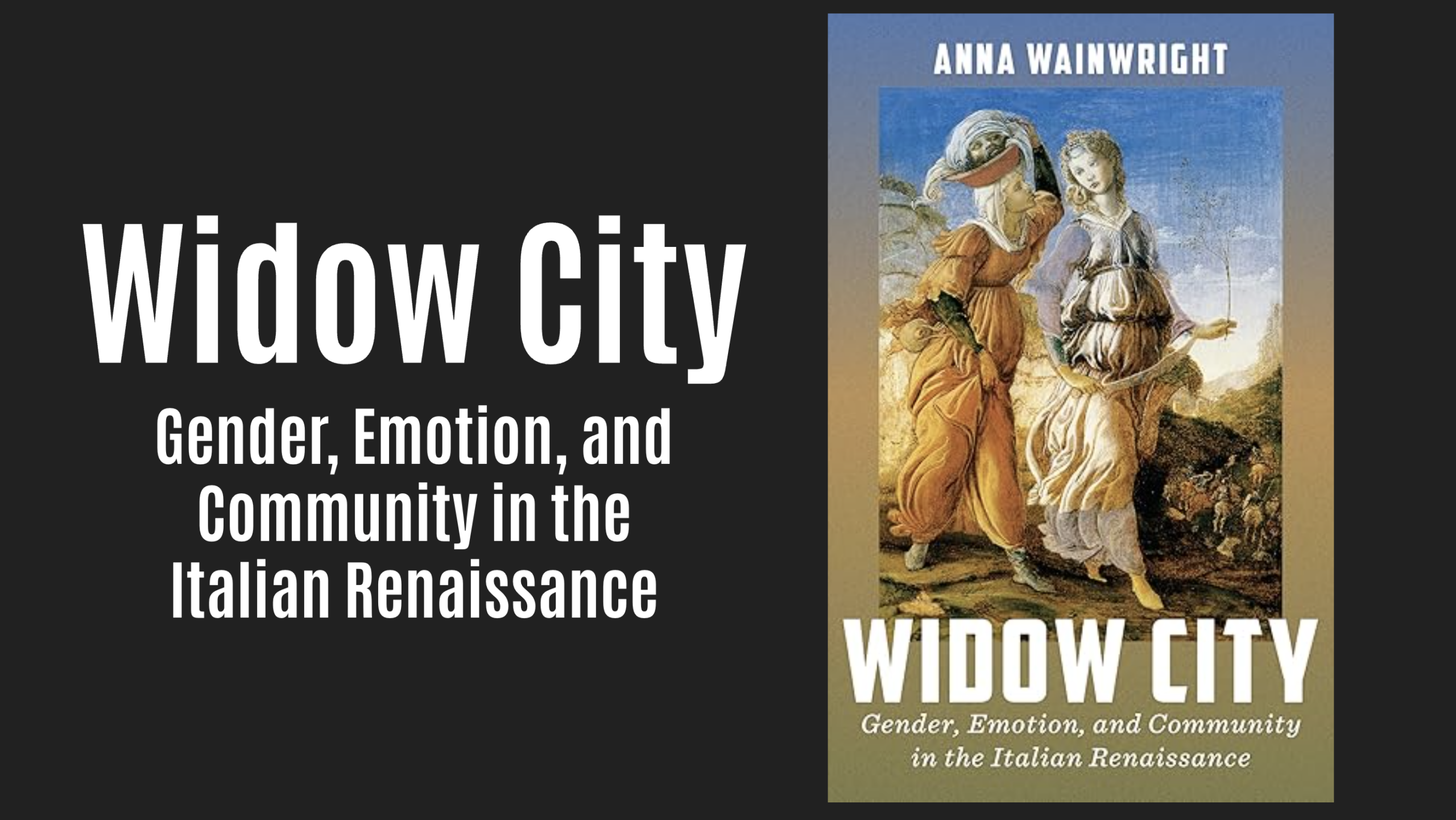
"Widow City: Gender, Emotion, and Community in the Italian Renaissance is the first scholarly work to investigate the evolving role of the widow from allegorical subject to author in medieval and early modern Italian literature. Through an analysis that cuts across genres, my study establishes the cultural and political significance of widowhood in Italy, from the works of canonical authors such as Dante, Petrarch, and Boccaccio, who constructed a rich poetic vocabulary around widowhood."
"Divided into three parts, it first explores what major Italian authors of the period had to say about widowhood, then looks at how women themselves responded to losing a husband, whether through religious or secular paths, and finally turns to writings by widows, including several prominent female authors of the sixteenth century."
Widow City examines widowhood in late medieval and early modern Italy, tracing how widows mourned and continued their lives after losing husbands. The study analyzes canonical authors including Dante, Petrarch, and Boccaccio who created poetic vocabularies around widowhood, alongside writings by widowed women themselves. The work establishes widowhood's cultural and political significance in Italian society, demonstrating how women transitioned from being allegorical subjects in literature to becoming authors who fundamentally changed conversations about public mourning and widowed identity. The book addresses a significant gap in medieval historical scholarship by exploring both male literary constructions of widowhood and women's actual responses through religious and secular choices.
#renaissance-italy #widowhood-and-gender #medieval-literature #womens-history #emotion-and-community
Read at Medievalists.net
Unable to calculate read time
Collection
[
|
...
]