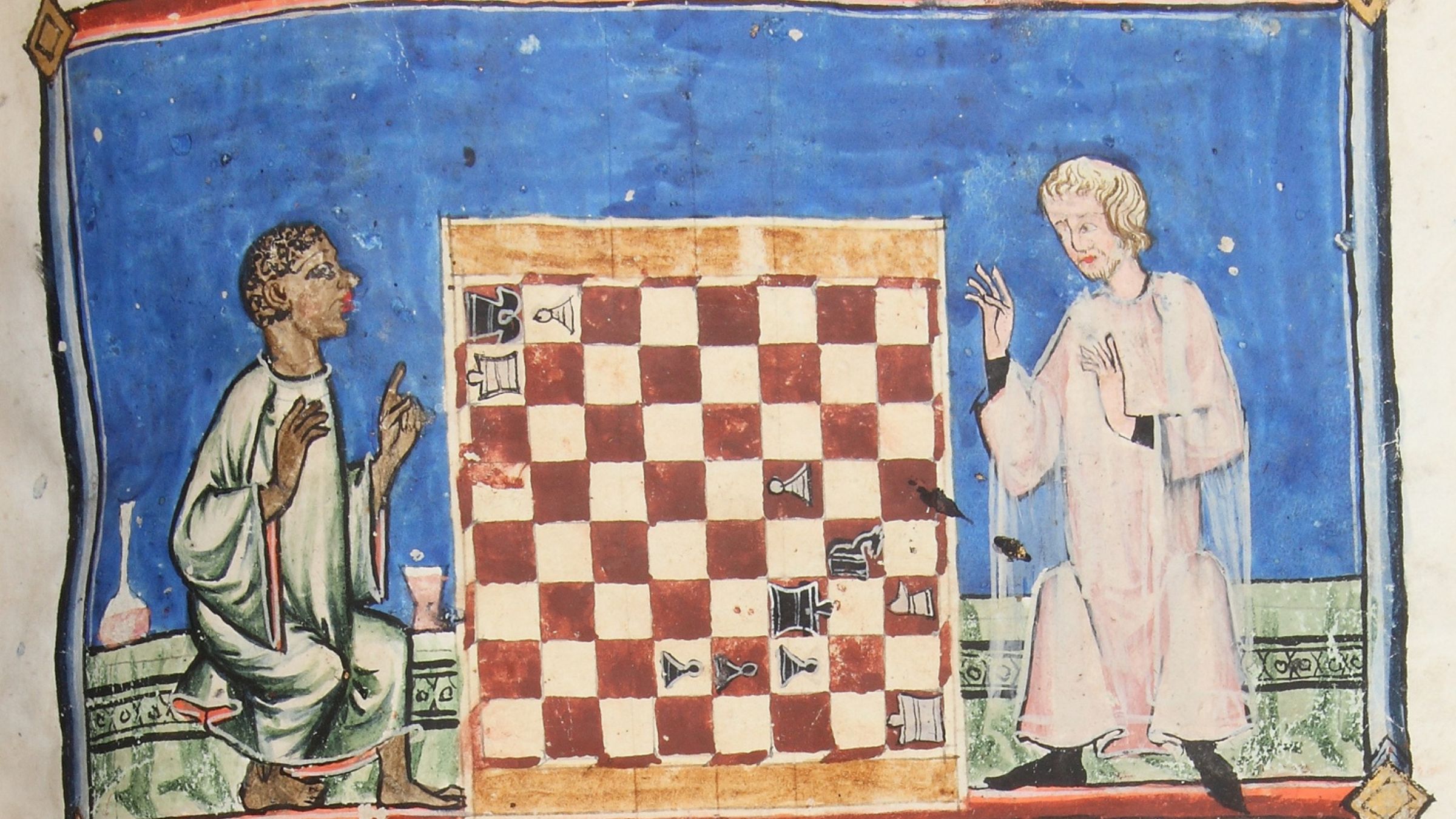
"When people with non-white skin colour are depicted in medieval images, scholars have tended to see them in either exalted or subdued positions. So you get the Queen of Sheba at one extreme and executioners and other malignant forces at the other. Chess reveals a different, more complex story."
"In one striking scene, a Black chess player is on the verge of defeating a white opponent, a cleric. The player appears relaxed, seated comfortably on a finely decorated bench, with a bottle of red wine nearby and a full glass at hand. His opponent sits opposite him, and the two figures are presented as equals, engaged in a shared intellectual pursuit rather than a contest defined by hierarchy or power."
"Chess functioned as a rare arena in which intellectual ability could take precedence over status, background, or skin colour."
Medieval manuscripts, paintings, and chess sets reveal a more complex understanding of race and identity in the Middle Ages than previously assumed. Dr. Krisztina Ilko's award-winning research demonstrates that chess provided a unique space where intellectual ability could transcend status, background, and skin color. The Libro de axedrez, a 1283 Castilian chess treatise, contains striking imagery of a Black player as an equal to a white opponent, both engaged in intellectual pursuit. This contrasts sharply with other medieval depictions where non-white individuals typically appeared in exalted or subordinate positions. Chess scenes throughout medieval sources depict players from diverse cultures presented as intellectual equals, suggesting more nuanced medieval attitudes toward race and ability than traditional scholarship has recognized.
Read at Medievalists.net
Unable to calculate read time
Collection
[
|
...
]