#medieval-manuscripts
#medieval-manuscripts
[ follow ]
#cultural-heritage #book-of-kells #portmahomack #art-exhibition #trade-networks #codex-h #new-testament

History
fromMedievalists.net
1 month agoMedieval Chess Reveals a More Diverse Middle Ages, Study Finds - Medievalists.net
Medieval chess functioned as a rare intellectual arena where people from different cultures and races engaged as equals, challenging assumptions about rigid medieval social hierarchies.
fromwww.scientificamerican.com
2 months agoLong-lost page of Archimedes' writings rediscovered in France
The Archimedes Palimpsest is one of the treasures of antiquity. This medieval manuscript, dating the to the 10th century, includes copies of the writings of Archimedes of Syracuse, a Greek mathematician and scientist who laid the foundations of modern calculus, geometry and fundamental physics.
History
fromMedievalists.net
3 months agoThe End of the World in Images: The Picture Book of the Life of St John and the Apocalypse - Medievalists.net
Picture Book of the Life of St John and the Apocalypse is a unique and visually striking example of the picture-book Apocalypse - a distinctive group of medieval manuscripts that present the apocalyptic visions of the Book of Revelation primarily through images. Centred on the visions of St John and often framed by episodes from his legendary life, these manuscripts transform the biblical text into a continuous pictorial narrative.
History
History
fromMedievalists.net
3 months agoOver 32,000 medieval manuscripts transcribed in four months using AI - Medievalists.net
Automated transcriptions of 32,763 medieval manuscripts were produced in four months using a standardized, machine-learning-trained corpus to enable large-scale searchable manuscript analysis.
Books
fromOregon ArtsWatch * Arts & Culture News
3 months agoAn intimate exhibit at Lewis & Clark College brings medieval manuscripts into the context of community * Oregon ArtsWatch
Medieval manuscripts from the 13th–16th centuries, including annotated vellum books, legal scrolls, and printed books altered to mimic manuscripts, are exhibited at Lewis & Clark.
fromPortland Mercury
3 months agoThe Mercury's Do This, Do That: Your Top Events for January 12-18
The news is bleak, the nights are long. Yet somehow... the calendar is still stacked. January is when culture gets weird in the best way; this week, medieval manuscripts emerge from the vault, and camp horror and queer literature come out to play. Plus, artist Elizabeth Knight presents her dog embroideries, and local hardcore shows up to shred. Don't say we didn't warn you!
Arts
fromHi-Fructose Magazine - The New Contemporary Art Magazine
4 months agoHelena Minginowicz Paints Personal Works Utilizing & Depicting Disposable Materials - Hi-Fructose Magazine
"We can't escape the language of the internet; it's now our emotional alphabet," Minginowicz says. "Sometimes a hashtag or emoji expresses more than an entire essay." "I don't intentionally insert trends into my paintings... but I also don't filter them out. I absorb the world, I scroll, observe, analyze. So yes, the internet seeps into my work, through color, gesture, distortion, glitches. Humor, or rather, bitter absurdity, emerges from that saturation."
Arts
History
fromMedievalists.net
5 months agoThousand-Year-Old Medieval Gospel Linked to Women Scribes Heads to Auction - Medievalists.net
A thousand-year-old Gospel linked to Essen Abbey and likely produced by a community of canonesses will be offered at Christie's, providing rare evidence of medieval female scribal activity.
fromMedievalists.net
8 months agoHistory in Flames with Robert Bartlett - Medievalists.net
Part of the reason a lot of people figure nothing much went on during the Middle Ages is because we've lost a whole lot of sources telling us what actually did happen. Through malice and misfortune, medieval manuscripts have been destroyed in their thousands. So, how do we know what may have gone up in smoke? And what can we do to keep our beloved manuscripts safe?
History
fromTheartnewspaper
11 months agoTres Riches Heures: Chantilly exhibition offers 'once-in-a-lifetime opportunity' to see famed medieval manuscript
"The Très Riches Heures, commissioned by the Duc de Berry, is an extraordinary manuscript featuring 131 full-page illuminations showcasing life in 15th century France."
Paris food
fromMedievalists.net
11 months agoBritish Library Acquires Five Rare Medieval Manuscripts - Medievalists.net
This acquisition of five medieval manuscripts enriches our understanding of Jewish-Christian relations and medieval life, showcasing sophisticated collaboration and administrative practices in the period.
History
fromTheartnewspaper
11 months agoIn a new exhibition, the Getty Centre uncovers the mysterious world of medieval codes
A show at the Getty Center titled "Symbols and Signs: Decoding Medieval Manuscripts" aims to illuminate the formerly impenetrable language of medieval texts through familiar codes.
Typography
fromMedievalists.net
1 year agoSymbols and Signs: Getty Exhibition Explores Medieval Manuscript Codes - Medievalists.net
"People today are fascinated by ciphers, puzzles, and secrets... This exhibition explores the clever ways that scribes and artists of the past deliberately and playfully employed such codes to arrest the attention of medieval audiences and engage their minds."
History
fromwww.theguardian.com
1 year agoMillennium-old monks' manuscripts return to Ireland for exhibition
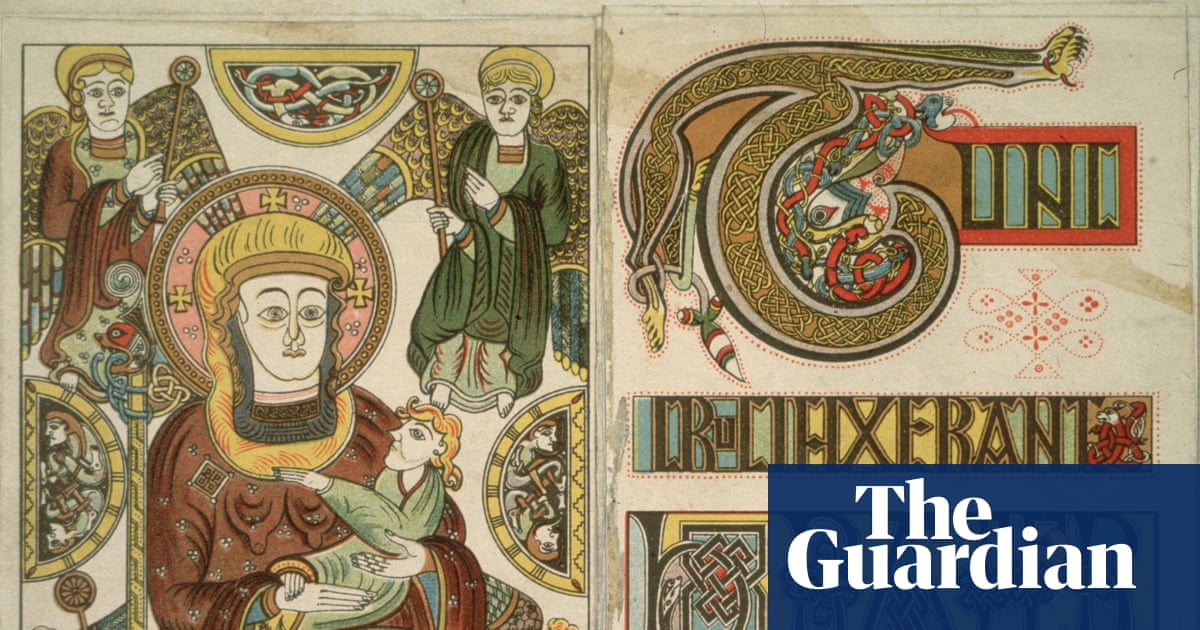
The monks did not know if the books, which included religious scriptures, linguistic analysis, scribbled jokes and a collection of tomes described as the internet of the ancient world, would survive, or ever return.
Books
Miscellaneous
fromOpen Culture
1 year agoThe Medieval Manuscript That Features "Yoda", Killer Snails, Savage Rabbits & More: Discover The Smithfield Decretals
The Smithfield Dec reÌtals showcases a remarkable blend of ecclesiastical law and vivid illustrations, making it a unique historical manuscript.
fromMedievalists.net
1 year agoMedieval Manuscripts Were Bound in Seal Skin, New Study Finds - Medievalists.net
This integration of the biological sciences into the study of historical manuscripts not only provides a clearer picture of the material culture of medieval Europe, but also illustrates the extensive trade networks that Cistercian monasteries were part of.
History
[ Load more ]