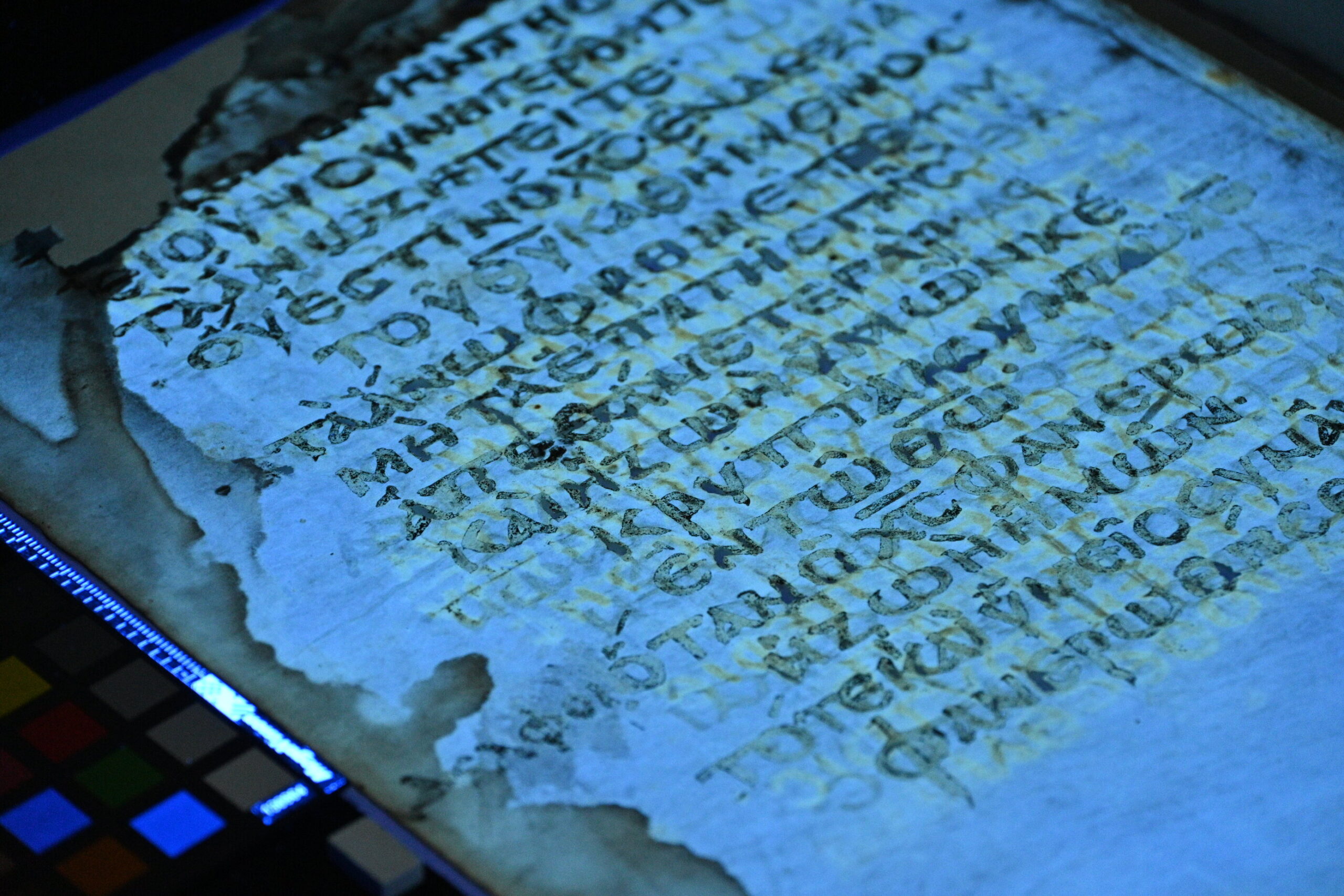
"The manuscript in question, known as Codex H, is a sixth-century copy of the Letters of St. Paul. It was broken apart in the thirteenth century at the Great Lavra Monastery on Mount Athos in Greece, where its pages were re-inked and reused as binding material and flyleaves in other books."
"Rather than being simply lost, Codex H appears to have been deliberately dismantled as part of routine book repair work. At Mount Athos, older manuscripts were sometimes taken apart and reused as reinforcement for newer volumes—a practical solution that has inadvertently preserved traces of much earlier texts."
"Researchers used multispectral imaging to examine the surviving pages, revealing faint traces of text that had been transferred onto neighbouring leaves when the manuscript was re-inked. These 'ghost' impressions were created when chemicals in the new ink subtly affected facing pages, leaving behind mirror-like traces that are often invisible to the naked eye but recoverable with modern technology."
A team of researchers has uncovered 42 previously unknown pages from Codex H, a sixth-century manuscript of St. Paul's Letters. Advanced imaging techniques revealed erased writing, providing insights into biblical text preservation. Codex H was dismantled in the thirteenth century at Mount Athos, where its pages were reused in other books. This practice inadvertently preserved earlier texts. The discovery utilized multispectral imaging to reveal faint traces of text, created by chemical interactions between re-inked pages, which are often invisible to the naked eye but recoverable with modern technology.
Read at Medievalists.net
Unable to calculate read time
Collection
[
|
...
]