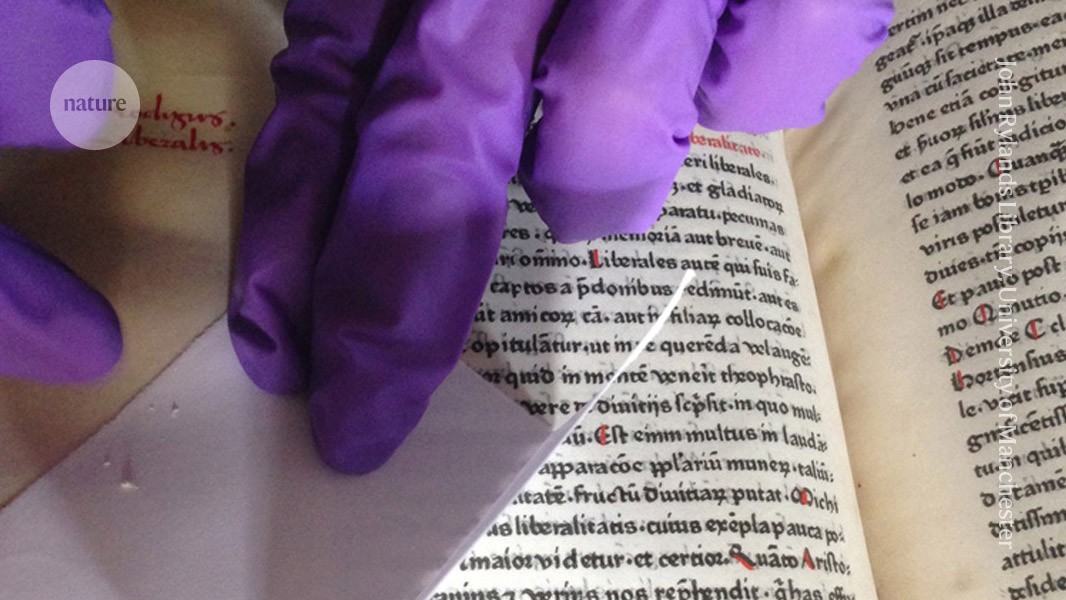
Tim Stinson's visit to Oxford's Bodleian Libraries in 2006 sparked his interest in the physicality of ancient manuscripts. He was captivated by a six-century-old book, noting its worn leather binding and the unique history it represented. Stinson speculated about the potential of DNA from animal skins in dating manuscripts, despite technological challenges. Nearly two decades later, advancements in non-destructive sampling and genomics have enabled new approaches to studying these cultural artifacts without damaging them.
""It had its own biography, its own deep history. It seemed like an archaeological site between covers," recalls Stinson, who is now a medievalist at North Carolina State University in Raleigh."
"Stinson wondered whether DNA might survive in the animal skins used to make the book's pages, and whether that DNA could offer fresh ways to date and contextualize manuscripts beyond the conventional markers of handwriting and dialect."
"Nearly two decades later, that curiosity has helped to give rise to a new field. The development of non-destructive sampling methods, alongside advances in genomics and proteomics, have made it possible to study ancient manuscripts in innovative ways."
Read at Nature
Unable to calculate read time
Collection
[
|
...
]