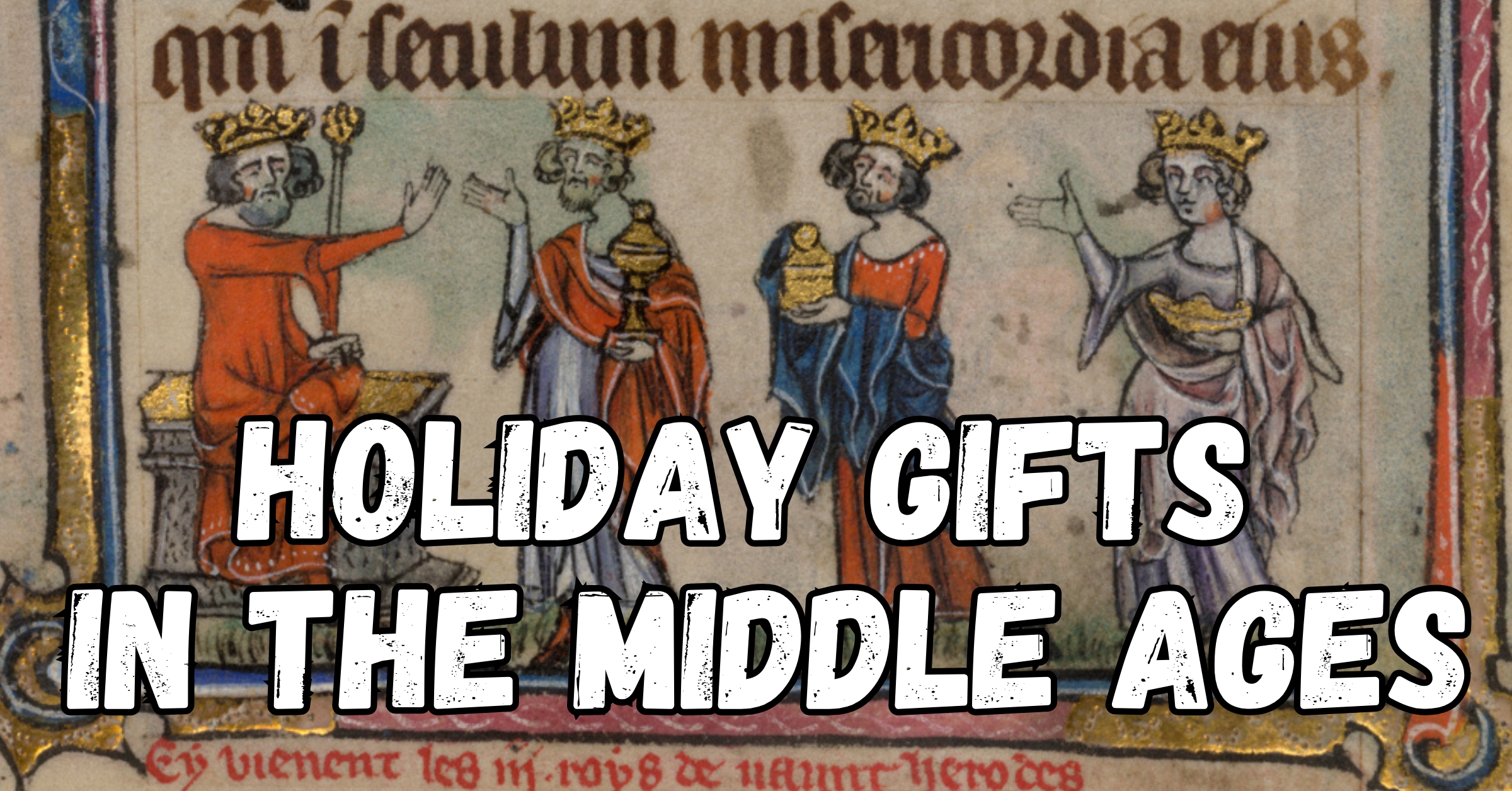
"Today, presents are a central component of holiday celebrations. As soon as November 1st rolls around, we are inundated with advertisements that tell us what gifts our loved ones would like most. Stores start displaying shelves of toys, chocolates, books, soaps, and other pretty things for us to buy. The image of a Christmas tree surrounded by presents becomes a fixture of many store displays and advertising campaigns. Gift-giving is one of the most central components of contemporary holiday celebrations."
"Saturnalia was an ancient Roman festival celebrating the Roman god Saturn which took place over a few days in late December. During the celebrations, children would be given wax dolls - a delightful precursor to our contemporary tendency to buy children's toys at Christmas. As nice as this sounds, Alexander Murray suggests in his History Today feature on "Medieval Christmas" that this tradition may have more somber origins."
Contemporary holiday celebrations center on presents and consumer culture, with stores displaying toys, chocolates, books, and themed advertising beginning in November. Gift-giving predates the Middle Ages and appeared in ancient winter festivals. Saturnalia featured wax dolls given to children, linking ancient practices to modern toy exchanges, though some origins may involve earlier fertility rites and child sacrifice. Kalends on January 1 also included gift exchanges and influenced later traditions. Gift-giving remains one of the most longstanding components of winter celebrations, evolving from religious and pagan feasts into varied cultural customs.
Read at Medievalists.net
Unable to calculate read time
Collection
[
|
...
]