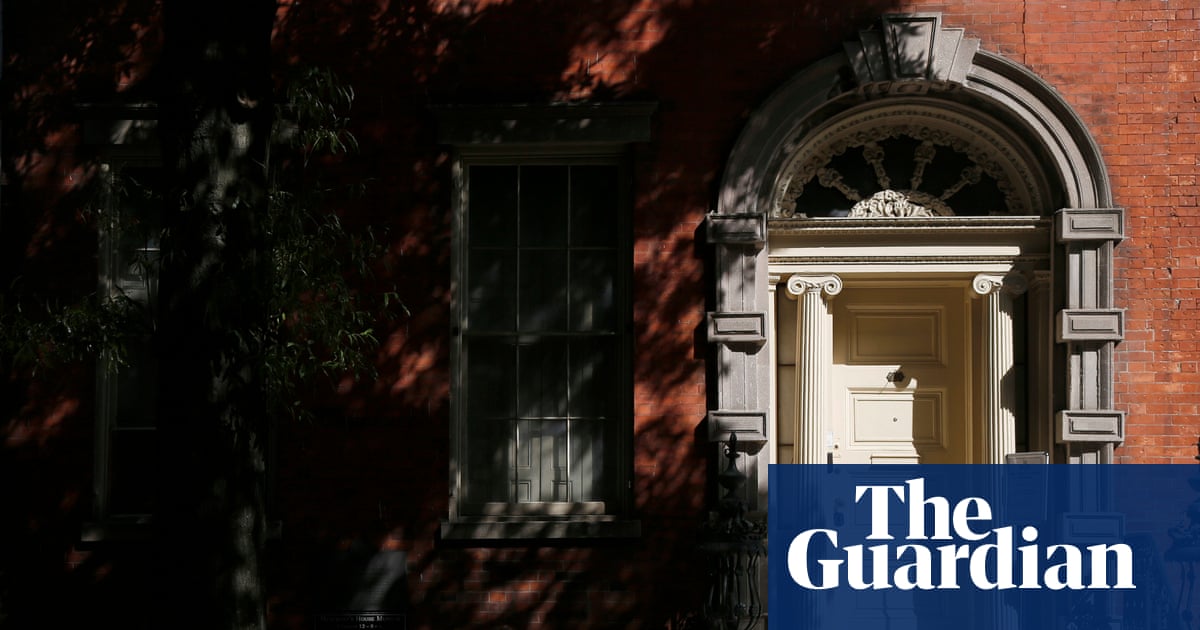
"The Merchant's House Museum's link to the Underground Railroad, a network of abolitionists who secured the safe passage of enslaved people to freedom, was discovered when archaeologists looked beneath the drawers of a built-in dresser in the wall of a hallway leading to bedrooms on the building's second floor. They found a small rectangular opening cut into the floorboards, an enclosed space about 2ft by 2ft, and a ladder leading to the ground floor."
"In the run up to the civil war, gangs of slave hunters, assisted by sympathetic local residents and law enforcement, would seek bounties for capturing people who fled their enslavers authorized by the Fugitive Slave Act of 1850. We knew it was here, but didn't really know what we were looking at, Camille Czerkowicz, the museum's curator, told the outlet."
"Michael Hiller, a preservation attorney and professor at Pratt Institute, said it was the most remarkable discovery he had seen in more than 30 years. This is a generational find. This is the most significant find in historic preservation in my career, and it's very important that we preserve this, he said. Merchant's House was built in 1832 by a tradesman called Joseph Brewster, and sold three years later to the Tredwell family, who lived there for a century until it became a museum after it was sold at auction."
Archaeologists uncovered a concealed 2ft-by-2ft opening beneath the drawers of a built-in dresser on the second-floor hallway, with a ladder descending to the ground floor. The enclosed space would have provided an emergency hideout and rapid escape route for people fleeing enslavement. The discovery aligns with the era's dangers, including slave hunters pursuing bounties under the Fugitive Slave Act of 1850, making secret refuges essential. Preservation experts called the find highly significant for historic preservation. The house was built in 1832, sold to the Tredwell family in 1835, and later became a museum.
#underground-railroad #merchants-house-museum #fugitive-slave-act-1850 #historic-preservation #archaeological-discovery
Read at www.theguardian.com
Unable to calculate read time
Collection
[
|
...
]