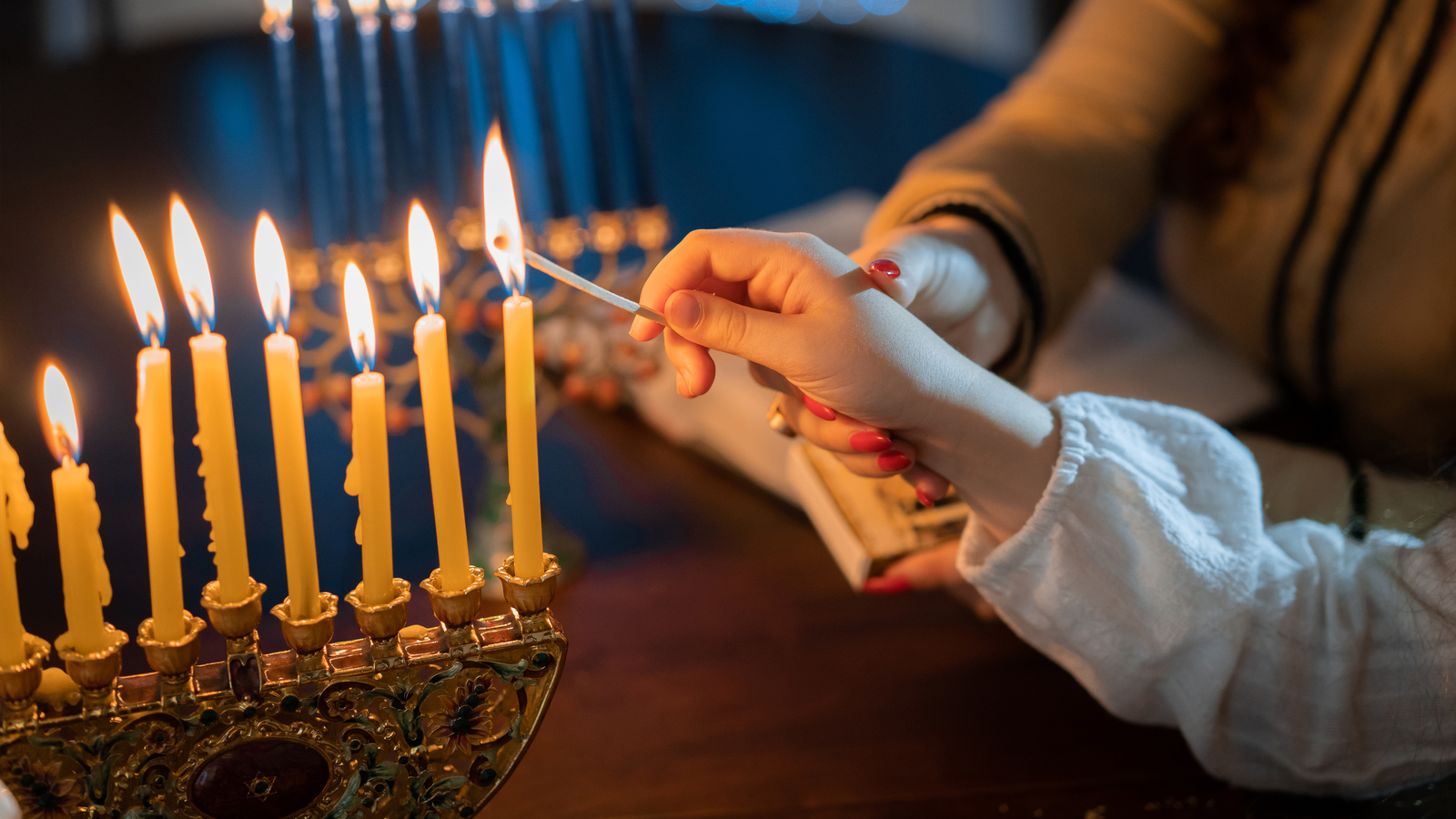
Hanukkah lasts eight nights, usually in November or December; in 2025 it begins at sundown December 14 and ends at nightfall December 22. The holiday begins on the 25th of Kislev in the Hebrew calendar. The Festival of Lights commemorates the rededication of the Holy Temple in Jerusalem after the Maccabean Revolt against the Syrian-Greek forces. Rabbinic tradition recounts that a single supply of oil for the Temple menorah miraculously lasted eight nights. The central observance is lighting a Hanukkiah, adding candles from right to left and lighting them each night starting with the left-most candle. Judaic blessings are recited during the lighting.
"Hanukkah starts on the 25th of Kislev, a month in the Hebrew calendar that usually falls within November or December. Also known as the Festival of Lights or the Feast of Dedication, the holiday celebrates the rededication of the Holy Temple in Jerusalem following the Maccabean revolt against the Syrian-Greek army. The holiday takes place for eight nights and days, commemorating the rededication of the Holy Temple."
"Hanukkah commemorates the Maccabean Revolt against the Syrian-Greek army. According to biblical text, Mattathias the Hasmonean started the revolt by refusing to worship the Greek gods. Hanukkah, in particular, celebrates Judah Maccabee's victory over the Seleucids. Rabbinic tradition states the victorious Maccabees could only find an amount of oil to keep the commemorative menorah lit for one night. However, the Menorah miraculously stayed lit for eight nights."
"The most common tradition of Hanukkah is the lighting of a commemorative menorah, also known as a Hanukkiah. Many families of the Jewish faith will commonly have these in their homes, while Jewish organizations and communities as a whole may have larger menorahs displayed in public organizations. Menorahs are lit with a primary candle first, and that candle is used to light an additional candle for each night."
Read at ABC7 Los Angeles
Unable to calculate read time
Collection
[
|
...
]