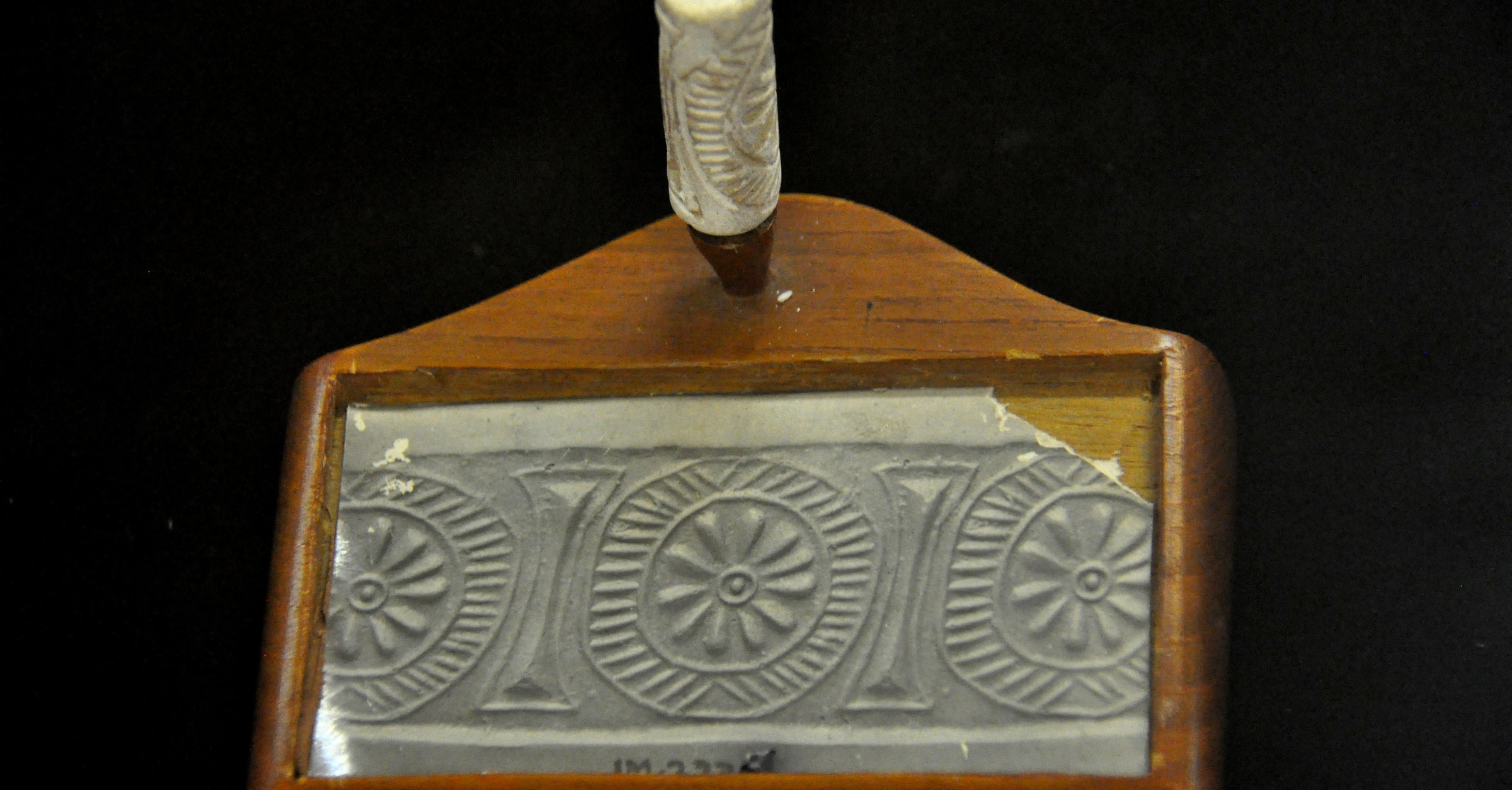
"Cylinder seals were impression stamps, often quite intricate in design, used throughout Mesopotamia. They were known as kishib in Sumerian and kunukku in Akkadian and were used by everyone, from royals to slaves, in the transaction of business and sending correspondence. They originated in the Late Neolithic Period, circa 7600-6000 BCE, in the region known today as Syria (though, according to other claims, they originated in Sumer, modern Iraq, sometime later) and were made from semiprecious stone (such as marble, obsidian, amethyst, lapis lazuli) or metal ( gold or silver)."
"These seals were worn by their owners on strings of leather or other material around the neck or wrist or pinned to a garment. Their purpose was to serve as a personal signature on a document or package to guarantee authenticity or legitimize a business deal, as one signs a letter or form in the present day. The seal was rolled onto the moist clay of the document as an official, binding signature."
"Contemporaneous with cylinder seals were stamp seals, which were smaller and less ornate in design. The typical cylinder seal was between 3-4 inches (7-10 cm) long, while stamp seals were less than an inch (2 cm) total and more closely resembled the later signet ring. While some scholars (such as Dr. Stephen Bertman) claim the stamp seal preceded the cylinder seal, others (such as Dr. Gwendolyn Leick and Dr. Senta Green) claim that the two seals were used contemporaneously."
"The claim that the stamp seal came first would seem to make sense, as it is a less refined means of sealing a document, and one would logically assume that the more refined and ornate cylinder seal developed from the more primitive stamp seal. While that may be, evidence suggests that stamp seals were popular throughout Mesopotamia at the same time as cylinder seals, and especially in the regions known today as Syria and Turkey."
Cylinder seals were intricate impression stamps used throughout Mesopotamia for business transactions and correspondence. Known as kishib in Sumerian and kunukku in Akkadian, they were worn on strings or pinned to garments and served as personal signatures that guaranteed authenticity and legitimized deals. The seal was rolled onto moist clay to create an official, binding impression. Cylinder seals originated in the Late Neolithic period around 7600–6000 BCE in the region of modern Syria, though alternative claims place origins in Sumer. They were made from semiprecious stones such as marble, obsidian, amethyst, and lapis lazuli, or from gold and silver. Stamp seals were smaller and less ornate, and were used contemporaneously in many regions.
Read at World History Encyclopedia
Unable to calculate read time
Collection
[
|
...
]