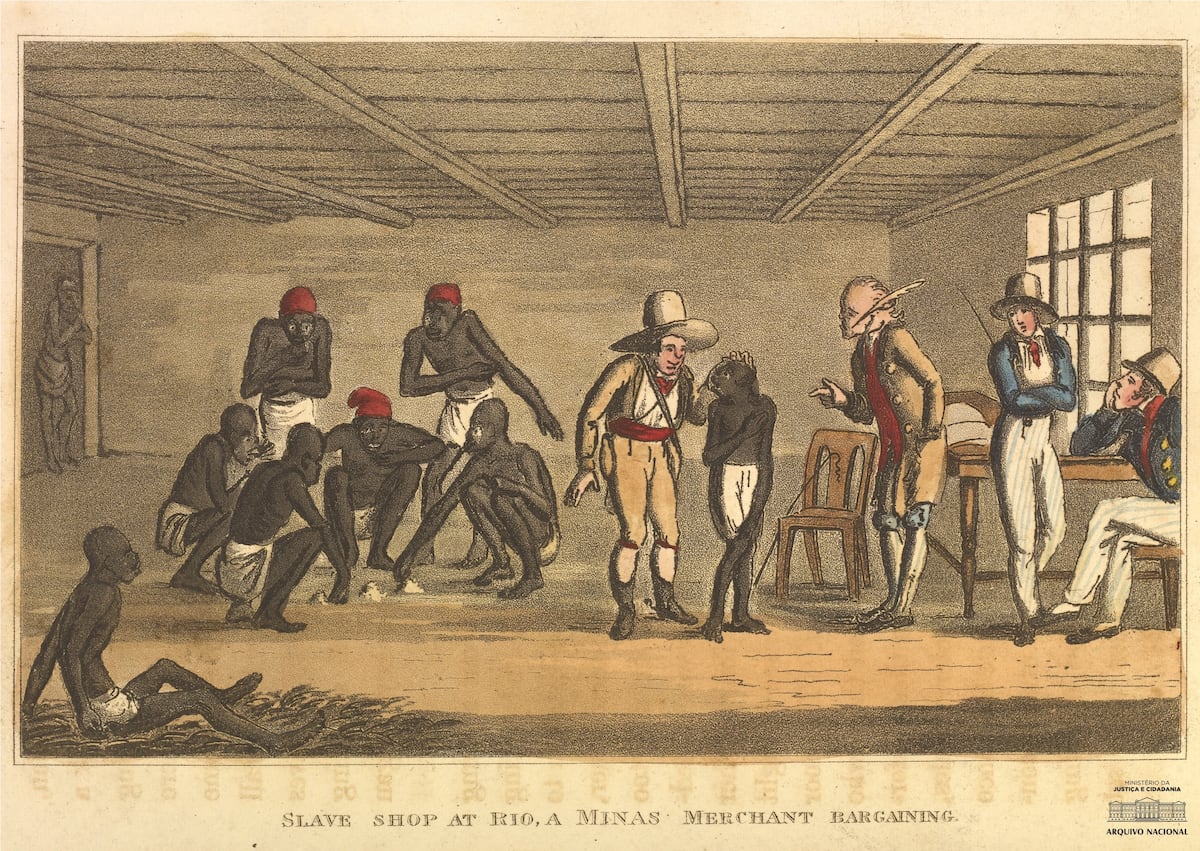
Ambrozio, an enslaved man, signed documents in 1887 to open a savings account at Caixa Economica Federal in his own name. He aimed to buy his freedom by saving money. After Princess Isabel signed the Golden Law in 1888, Ambrozio withdrew 50,000 reais and closed the account as a free man. Lidia, a laundress enslaved by Maria Carlota Fortuna, stopped depositing after abolition and left her money in the bank. Her balance grew through a 6% semi-annual interest rate, reaching 300,000 reais by the early 1900s and tripling by 1931. Research later traced these accounts from bank archives, and Rio’s Public Prosecutor’s Office sought to determine what happened to enslaved people’s savings.
"We know his name was Ambrozio, that he was a slave, and that in 1887 he personally signed the documents opening a savings account in his name at a Brazilian public bank: Caixa Economica Federal. At that time, the debate on the abolition of slavery a milestone that would come the following year was very much alive in Brazil because, in the rest of the Americas, the children of the slave trade were already free men and women. Like so many others, Ambrozio dreamed of one day buying his freedom. To achieve this, many slaves saved every cent."
"A few months later, the imperial princess Isabel signed the Golden Law, which granted freedom to the hundreds of thousands of people who as had been the case for over three centuries were mere merchandise that could be bought, sold, rented, or inherited. Ambrozio returned to the bank as a free man, withdrew the 50,000 reais from his only deposit, and closed the account. Others, like Lidia, a laundress in Rio de Janeiro, slave of Maria Carlota Fortuna, according to her ledger, never recovered that money earned through their hard work, which went almost entirely into the pockets of their masters."
"With the abolition of slavery in 1888, Lidia stopped making deposits at the Caixa Economica Federal. Her money remained in the bank, growing thanks to a 6% semi-annual interest rate. By the turn of the 20th century, the account held 300,000 reais, which had tripled by 1931, according to research by historian Keila Grinberg of the Federal University of Rio and the University of Pittsburgh, who unearthed the stories of Ambrozio and Lidia from the bank's archives."
"Nearly a century and a half later, the Public Prosecutor's Office of Rio de Janeiro wants to know what happened to the savings of enslaved people. Knowing the whereabouts of those"
Read at english.elpais.com
Unable to calculate read time
Collection
[
|
...
]