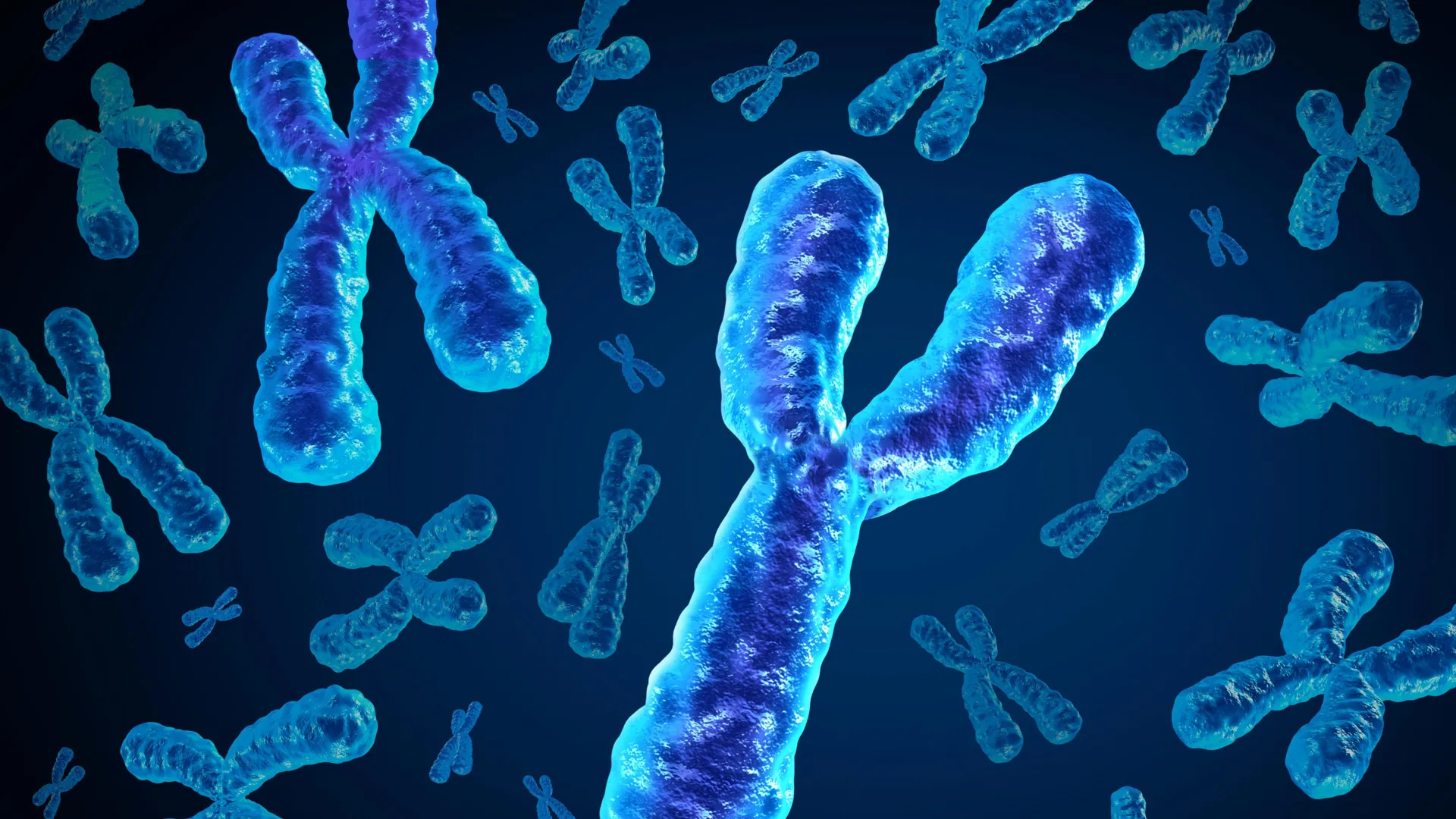
"Men tend to lose the Y chromosome from their cells as they age. But because the Y bears few genes other than for male determination, it was thought this loss would not affect health. But evidence has mounted over the past few years that when people who have a Y chromosome lose it, the loss is associated with serious diseases throughout the body, contributing to a shorter lifespan."
"New techniques to detect Y chromosome genes show frequent loss of the Y in tissues of older men. The increase with age is clear: 40% of 60-year-old men show loss of Y, but 57% of 90-year-olds. Environmental factors such as smoking and exposure to carcinogens also play a role. Loss of Y occurs only in some cells, and their descendants never get it back. This creates a mosaic of cells with and without a Y in the body."
"Y-less cells grow faster than normal cells in culture, suggesting they may have an advantage in the body - and in tumors. The Y chromosome is particularly prone to mistakes during cell division - it can be left behind in a little bag of membrane that gets lost. So we would expect that tissues with rapidly dividing cells would suffer more from loss of Y."
"The human Y is an odd little chromosome, bearing only 51 protein-coding genes (not counting multiple copies), compared with the thousands on other chromosomes. It plays crucial roles in sex determination and sperm function, but was not thought to do much else. The Y chromosome is frequently lost when cells are cultured in the lab. It is the only chromosome that can be lost without killing the cell."
Men increasingly lose the Y chromosome from cells as they age, with detection methods showing higher rates in older tissues. About 40% of 60-year-olds show loss of Y, rising to 57% by age 90. Environmental exposures such as smoking and carcinogens contribute. Loss occurs in only some cells, creating a mosaic of Y-present and Y-absent cells that do not regain the Y. Y-less cells grow faster in culture, suggesting a biological advantage that can support tumor development. The Y is prone to errors during cell division, especially in rapidly dividing tissues. Although the Y has few genes, its loss correlates with serious diseases across the body and reduced lifespan.
Read at ScienceDaily
Unable to calculate read time
Collection
[
|
...
]