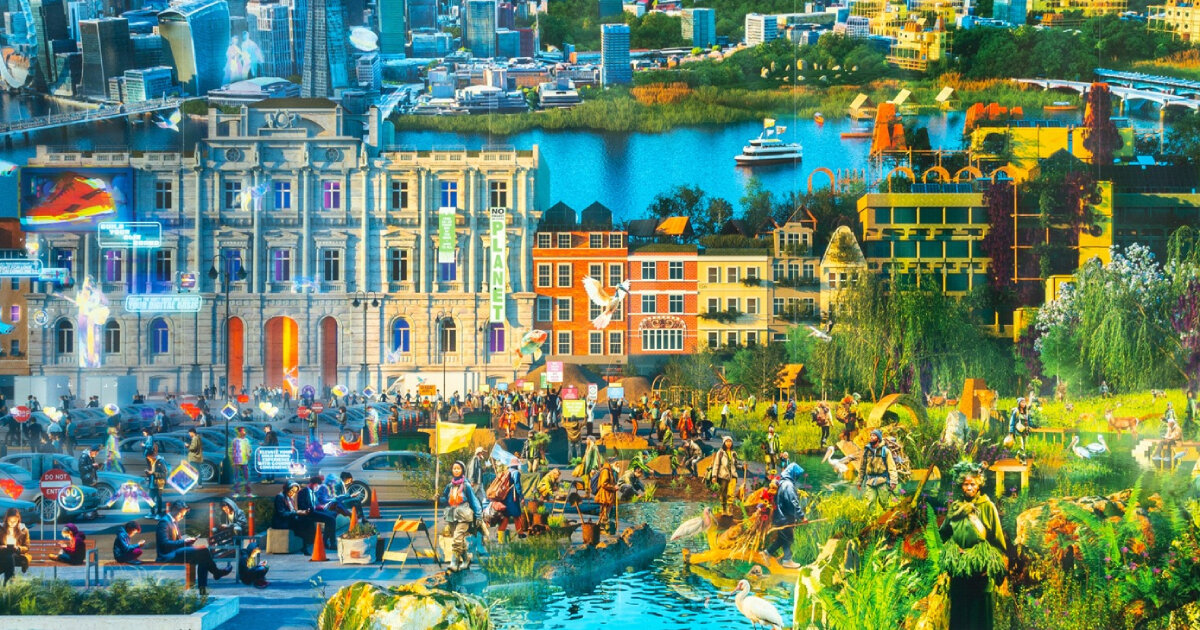
Superflux, a London-based design studio founded by Anab Jain and Jon Ardern, employs speculative design to imagine safer and more critical collective futures. Rather than presenting forecasts as theoretical reports, the studio creates experiential futures—immersive, multisensory environments that engage visitors emotionally and sensorially before intellectually. These installations use material, sound, smell, image, and spatial sequences to make imagined futures tangible and actionable. The studio's core philosophy recognizes that information and data alone cannot compel behavioral change, despite decades of accurate climate and social data being available. By allowing people to experience what alternative futures feel like, Superflux aims to bridge the critical gap between knowing about problems and actually taking action to address them.
"The most effective way to change what people do today is to make them experience what tomorrow can look like. They illustrate details backed by data, science, and facts, allowing their imagined futures to no longer stand as theories but as actionable methods. Where forecasting extends from data, speculative design builds from imagination, supported by research."
"Information alone can't move or compel people. The science of the climate crisis has been available and accurate for decades, and the data on inequality, on ecological collapse, and on the failures of existing architecture are available to read. Yet, the gap between knowing and acting stands as one of the problems of the present time."
"Superflux's working hypothesis is to bridge that gap, the one that lacks this experienced sense of what a different future would actually be like to live in. The design studio builds what they call experiential futures, which are a series of manmade environments or a specific vision of the future made tangible using material, sound, smell, image, and spatial sequence."
Read at designboom | architecture & design magazine
Unable to calculate read time
Collection
[
|
...
]