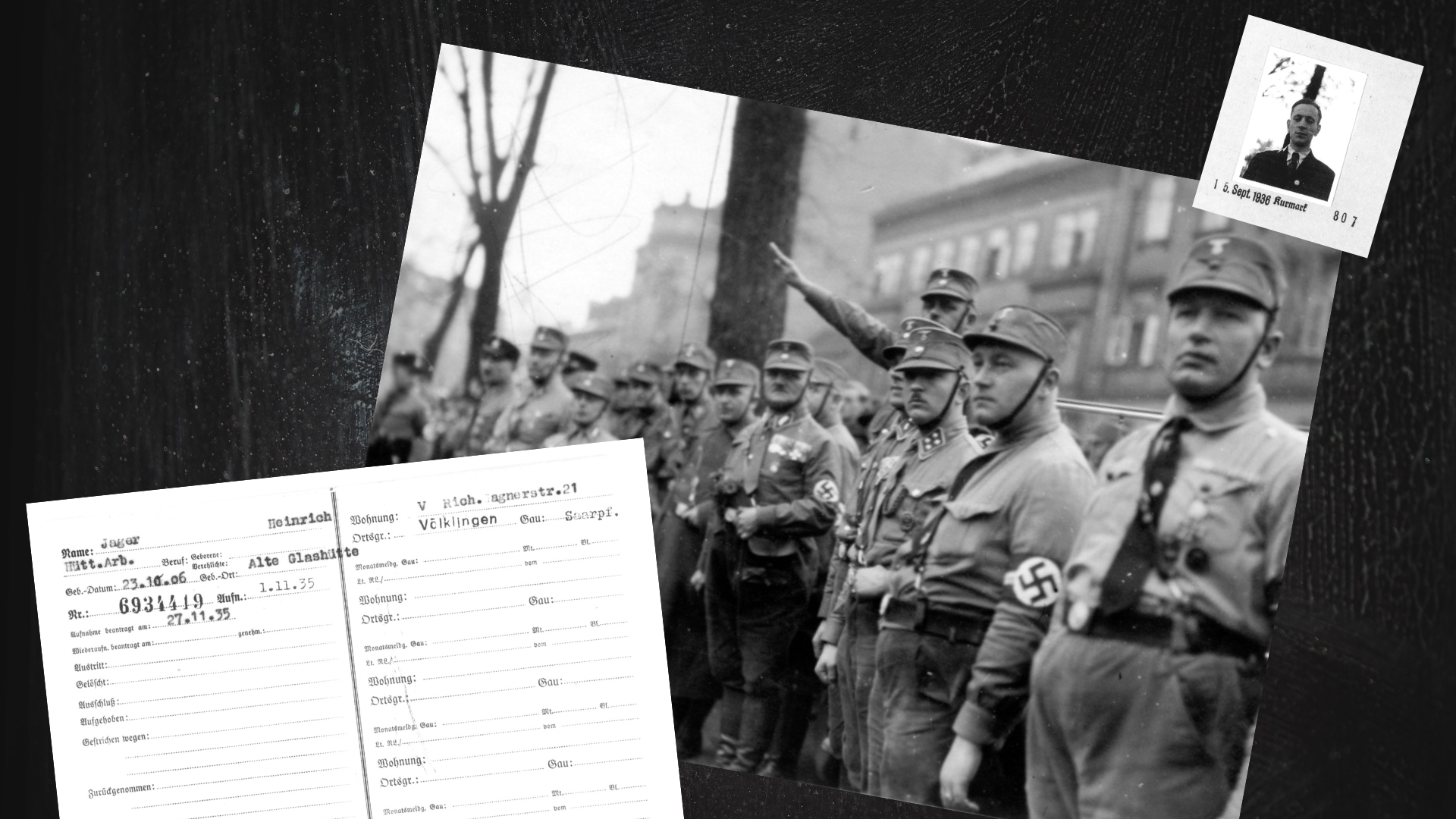
"The first Germans to become Nazis during Hitler's rise to power may have been ideological zealots, but later members were largely "ordinary men" drawn into the movement by propaganda and social pressure. That's one of several key findings in a new paper from Harvard researchers affiliated with the Economics Department and the Weatherhead Center for International Affairs."
"The researchers used vision-language artificial intelligence to digitize membership cards for more than 10 million members of the National Socialist German Workers' Party, expanding on an existing database of 55,000, to illuminate who joined the fascist movement, when, and in what communities. Their findings were published in April by the National Bureau of Economic Research."
""What we can do with this new resolution is zoom in much more fine-grained, temporally speaking, but also geographically speaking," said Luis Bosshart, a co-author of the paper and a researcher at the Harvard Academy for International and Area Studies at the Weatherhead Center. "What we find is that mass entry occurred in discontinuous waves and that representativeness increased over time. By the end of the regime, the joiners looked much more like the population at large.""
"Led by Adolph Hitler, the Nazi Party, officially the National Socialist German Workers' Party, established a totalitarian regime in Germany that triggered World War II and carried out the murder of 6 million Jews in the Holocaust. At its height, one in six German adults was a registered member of the movement. Nazi functionaries tracked information about members' ages, occupations, addresses, and dates of party entry."
Nazi Party membership grew from early ideological zealots to later participants who were largely ordinary people drawn in through propaganda and social pressure. Researchers digitized membership cards for more than 10 million members of the National Socialist German Workers' Party, building on an earlier database of 55,000. The digitization used vision-language artificial intelligence to identify who joined, when they joined, and where they lived. The findings show mass entry happened in discontinuous waves, and representativeness increased over time. By the end of the regime, joiners looked much more like the general population. Nazi functionaries recorded members’ ages, occupations, addresses, and entry dates, and the cards are held in U.S. archives.
Read at Harvard Gazette
Unable to calculate read time
Collection
[
|
...
]