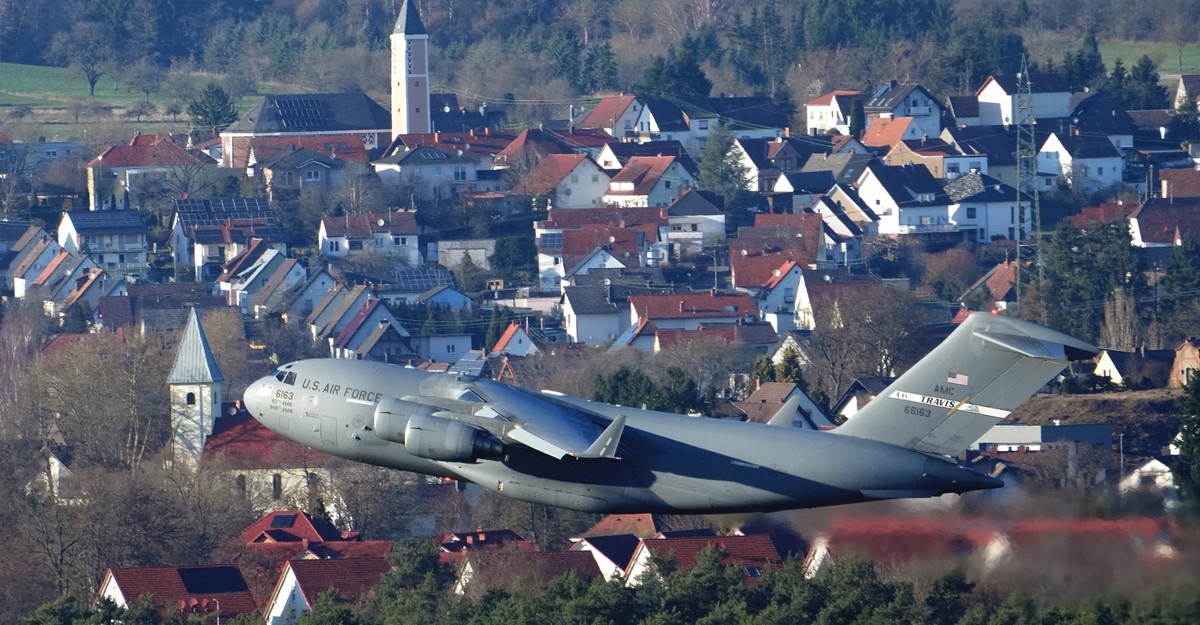
"President Trump announced last week that the United States will remove 5,000 troops from Germany, possibly as the beginning of a larger drawdown. Pentagon planners anticipate a phased reduction over the next 12 months that could see the total U.S. presence in Germany drop significantly. Some analysts believe that the administration ultimately favors rotating troops in and out of Europe rather than permanently basing them there."
"Americans have been stationed in Germany by the tens of thousands since the end of World War II. Some 50,000 Americans-including military personnel, civilian employees, and their families-populate the Kaiserslautern Military Community, which includes Ramstein Air Base. The remainder of the U.S. presence is concentrated in strategic hubs such as Wiesbaden, the headquarters of the U.S. Army Europe and Africa, and the training grounds of Grafenwoehr and Vilseck in Bavaria, where thousands of soldiers maintain a rotational readiness."
"Read: Europe without America Pundits in the United States are framing the move as a strategic rightsizing or a punitive diplomatic strike. But to view the exodus from Ramstein and Landstuhl through the narrow lens of defense budgets is to miss that it portends the tragic collapse of an 80-year-old social contract. The withdrawal from Germany is a step toward the liquidation of the shared West-a cultural and human project that was never written into a treaty and, once lost, can never be reacquired."
The United States plans to remove 5,000 troops from Germany, with Pentagon planners anticipating a phased reduction over the next 12 months that could significantly lower the overall U.S. presence. The initial reduction is expected to come primarily from forces stationed around Vilseck and Grafenwoehr. The U.S. has maintained large deployments in Germany since World War II, including tens of thousands of Americans across military, civilian, and family communities such as Kaiserslautern and Ramstein Air Base, as well as hubs like Wiesbaden and training areas in Bavaria. The move is framed by some as budget-related or diplomatic pressure, but it is presented as a deeper rupture that could undermine an 80-year social contract and the shared cultural project of the West.
#us-germany-relations #nato-burden-sharing #us-military-presence #european-security #transatlantic-social-contract
Read at The Atlantic
Unable to calculate read time
Collection
[
|
...
]