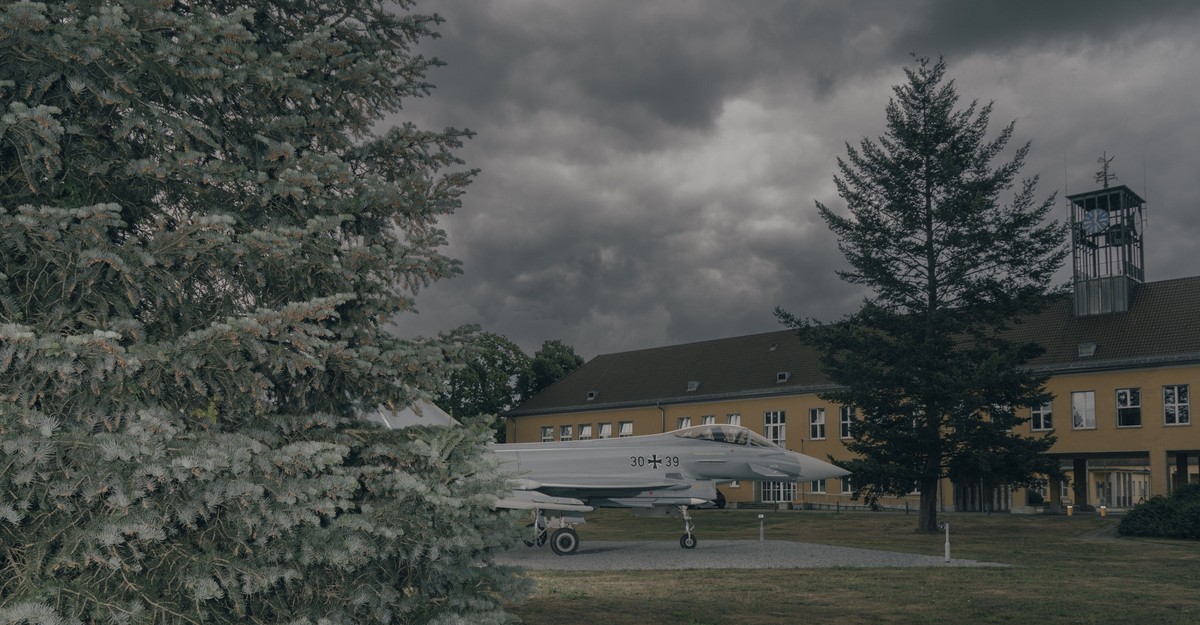
"The Bendlerblock is an imposing neoclassical building near the center of Berlin-severe and symmetrical, with a red-tile roof. It once served as the headquarters of the Wehrmacht, and it's where officers who plotted to kill Hitler in 1944 were executed by firing squad. Now the complex houses Germany's defense ministry, which oversees the armed forces."
"At the time of our meeting, Freuding was in charge of the ministry's Ukraine unit, but he had just been named the next chief of the army, a role he assumed in October. His actual, ambivalent-sounding title is inspector of the army. Freuding is gaunt and soft-spoken, with something of an aristocratic bearing. He doesn't come from a long line of military officers, he told me, but his grandfather served in both world wars and was imprisoned by Allied forces in 1945."
"I told him about my own German family. A century ago, my great-grandfather Hans Salzmann was a soldier in the German army. He fought in the First World War and was wounded near Verdun and awarded the Iron Cross before returning home to practice medicine. But then his country turned on him. When the Nazis stripped him of his citizenship, he fled, sailing from Hamburg to Cuba and then to New York City, with a red J stamped on his passport."
The Bendlerblock is a neoclassical Berlin building that served as Wehrmacht headquarters and the execution site of officers involved in the 1944 plot against Hitler. The complex now houses Germany's defense ministry, which oversees the armed forces. Lieutenant General Christian Freuding led the ministry's Ukraine unit and later became inspector of the army in October. Freuding is described as gaunt, soft-spoken, and bearing an aristocratic manner. His family background includes a grandfather who fought in both world wars and was imprisoned by Allied forces in 1945. Hans Salzmann, a great-grandfather, served in World War I, was wounded near Verdun, and later fled Nazi persecution to New York.
Read at The Atlantic
Unable to calculate read time
Collection
[
|
...
]