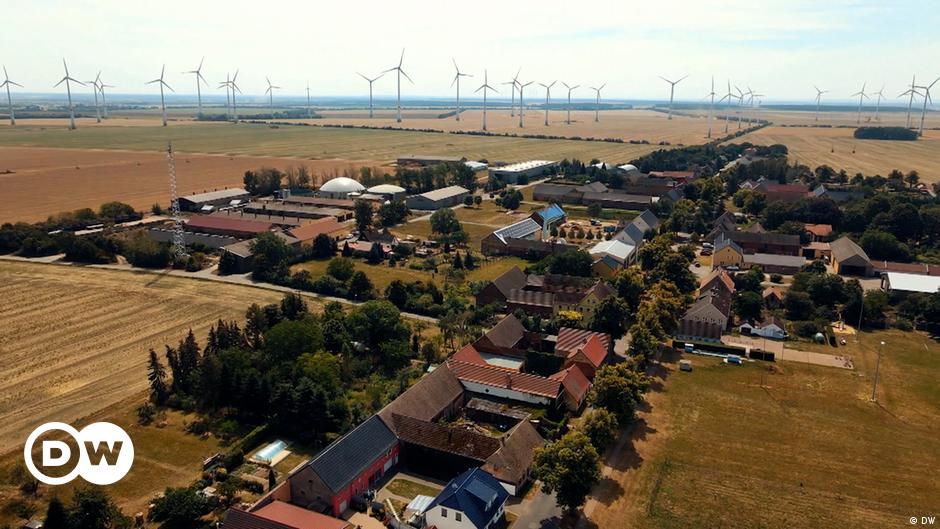
Feldheim, a village near Berlin, has become an attractive destination for residents seeking affordable electricity. The village maintains electricity costs below 0.23 euros per kilowatt hour, significantly lower than Germany's crisis peak of 0.45 euros per kilowatt hour. New residents like Jens Neumann have reduced their energy expenses by more than half after relocating to Feldheim. The village's affordable energy stems from locally-owned renewable infrastructure, particularly wind turbines visible throughout the area. While rural Germany generally opposes renewable projects, Feldheim's successful green transition demonstrates the economic benefits of community-based renewable energy systems. The village's model offers valuable lessons as Germany navigates energy costs and renewable energy expansion.
"In my old apartment, I used about 2,400 kilowatt hours a year. All this technology needs a lot of electricity. But since Neumann moved to Feldheim in 2024 one of many new residents drawn by the promise of cheaper electricity he's been pretty relaxed about all of this now because my costs have been cut by more than half."
"Even when Russia's war in Ukraine plunged Europe into an energy crisis and sent heating and electricity prices soaring, Feldheim remained insulated from the shock. At the peak of the crisis, Germany's average electricity price spiked to around 0.45 ($0.50) per kilowatt hour. In Feldheim, a village about 80 kilometers (51 miles) from Berlin, costs stayed fairly steady at less than half that."
"But as the latest energy crisis sends costs spiraling and Germany puts the brakes on its renewable's rollout, Feldheim's green transition may have lessons worth paying attention to."
Read at www.dw.com
Unable to calculate read time
Collection
[
|
...
]