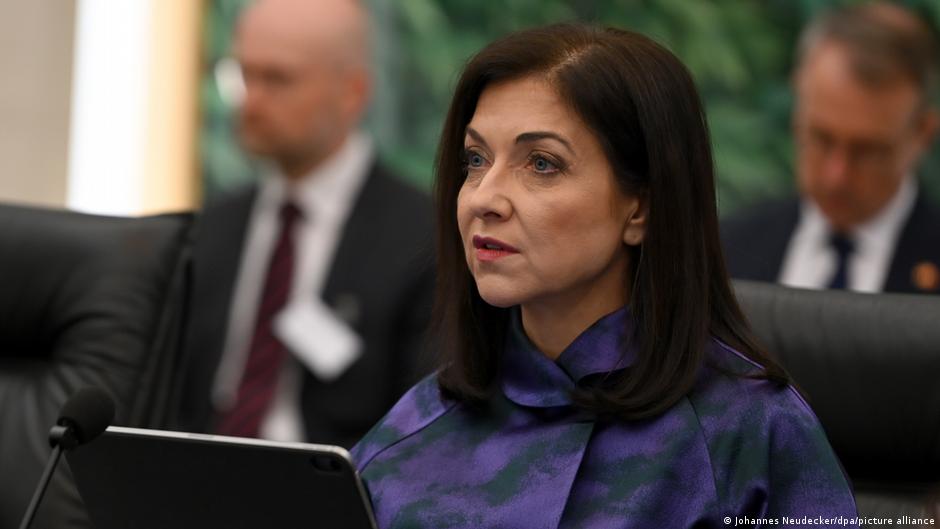
Katherina Reiche, a 52-year-old CDU politician, is widely viewed as combative and controversial in Germany. She entered politics in the Bundestag from 1998 to 2015 and later moved into the energy industry, including leadership at Westenergie, a major E.ON subsidiary supplying fossil-fuel energy to millions. Environmentalists and climate activists have criticized her as pro-business and opposed to a rapid renewables shift. After becoming Minister of Economic Affairs in 2025, she moved to roll back her predecessor Robert Habeck’s heating transition policies. Habeck’s law required new home heating systems to be powered mainly by renewable energy, but it faced protests and accusations of forcing expensive heat-pump installations. Reiche scrapped the provision, saying the Heating Act damaged trust and divided society, and announced a new direction for heating policy.
"She already had this image before she unexpectedly became Minister of Economic Affairs in Chancellor Friedrich Merz's government in 2025. Environmentalists and climate activists have long regarded the politician from the conservative Christian Democratic Union (CDU) as pro-business and pro-industry, and as an opponent of an ambitious shift towards renewables. After serving in the Bundestag from 1998 to 2015, the politician from Luckenwalde, Brandenburg 80 kilometers south of Berlin moved into the energy industry. Some critics referred to her as a lobbyist."
"Among other roles, Reiche served as chair of the executive board of Westenergie, the largest subsidiary of the energy giant E.ON. With around 10,000 employees, Westenergie supplies approximately 6.6 million people with a significant amount of fossil fuel energy. Rolling back Habeck's policies Shortly after taking office, Reiche made it clear that she intended to reverse the efforts of her predecessor, Robert Habeck of the environmentalist Green Party, to advance the energy transition in the heating systems of German homes."
"Approximately 72% of German homes are heated with natural gas or oil. Alongside transportation, the building sector is considered the one in which the country has made the least progress in implementing its climate policy. Both sectors have been missing targets for years. Habeck wanted to change that and drafted a law stipulating that new heating systems would have to be powered mainly by renewable energy. There were fierce protests against this, particularly in the eastern part of the country; Habeck was accused of forcing people to install expensive heat pumps."
"When she came to office, Reiche quickly scrapped this provision and stated: "The Heating Act has cost us trust and divided society. We are setting a new course." At the same time, the minister announced her pl"
Read at www.dw.com
Unable to calculate read time
Collection
[
|
...
]