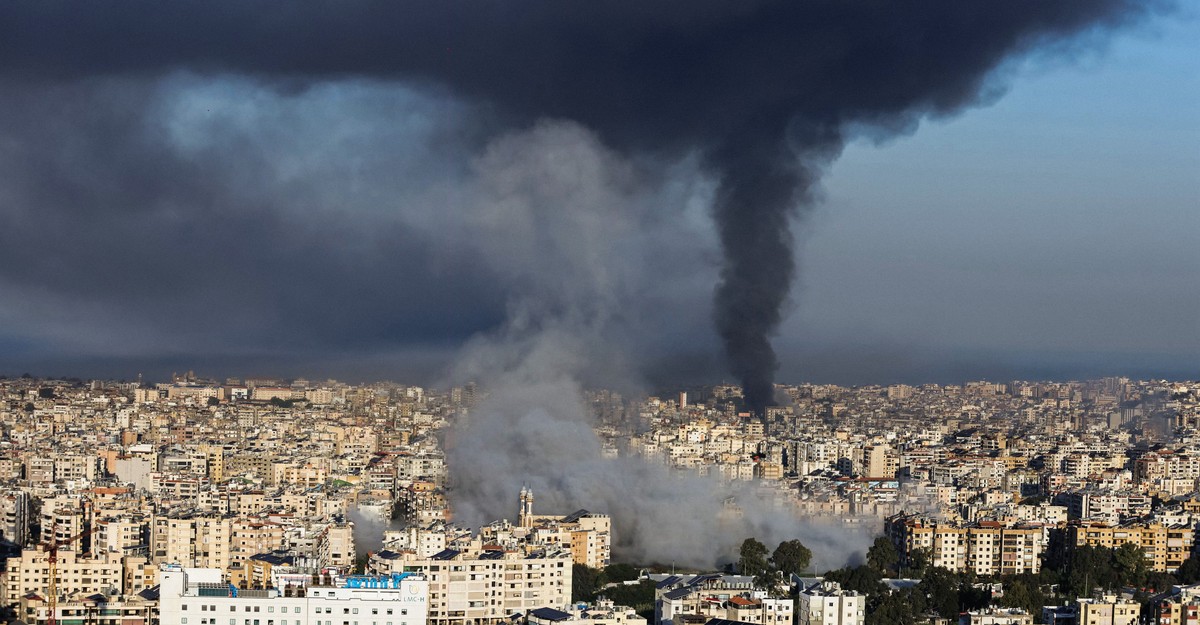
"Lebanon had once again been plunged into a war that had nothing to do with its national interests, by a militia group that has retained a private army and run its own foreign policy for decades. The Lebanese people are used to this dynamic. What happened after the Israeli strike, however, was surprising."
"The government had never confronted Hezbollah this directly before—not when Hezbollah was formed, following the 1982 Israeli invasion; not after the Taif agreement, which ended the Lebanese civil war in 1989 and led to the disarmament of all other militia groups; not even after Israel ended its occupation of southern Lebanon, in May 2000."
"Hezbollah's rationale for maintaining its weapons in 1989 was that Israel continued to occupy a large chunk of southern Lebanon, and this was widely accepted even by many who did not care for the organization. After Israel's withdrawal, Hezbollah argued that it still needed its guns in order to liberate small disputed areas in the border region."
Israeli air strikes on Lebanon early Monday morning triggered a significant shift in Lebanese government policy toward Hezbollah. Following an emergency cabinet meeting, the Lebanese government declared Hezbollah's military activities illegal and banned the organization, instructing the military to confiscate its weapons. This represents an unprecedented direct confrontation with Hezbollah, which has maintained a private army and conducted independent foreign policy for decades. Historically, the government tolerated Hezbollah's weapons under various justifications, including Israeli occupation of southern Lebanon and disputed border areas. Even after Hezbollah engaged in internal conflict with other Lebanese militias in 2008, the government avoided direct confrontation or forced disarmament threats.
#hezbollah-disarmament #lebanese-government-policy #israeli-lebanese-conflict #militia-regulation #middle-east-geopolitics
Read at The Atlantic
Unable to calculate read time
Collection
[
|
...
]