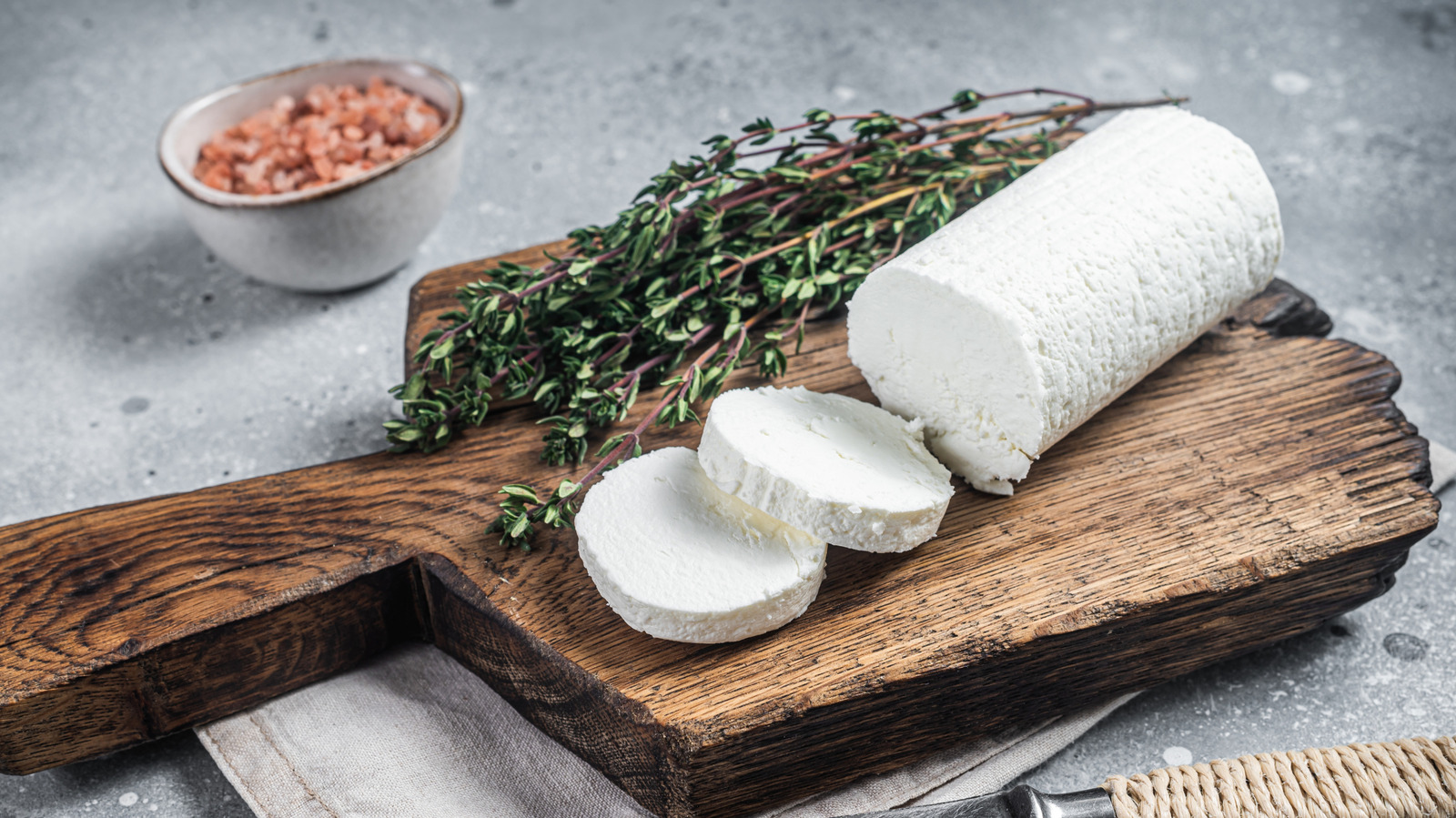
Fresh goat cheese derives its distinctive tang from high concentrations of short-chain fatty acids in goat's milk, specifically caproic, capric, and caprylic acids. Those acids produce tangy, lactic, and "goaty" flavor notes. The acids occur in cow and sheep milk too but at lower levels. Concentrations of these compounds vary with the goat's diet, the age of the milk when processed, and hormonal status; keeping males and females together during breeding season can increase barnyard flavors. Aging transforms the flavor profile toward milder, nuttier notes that may resemble cow cheese.
"Notably, there are a few variables that will dictate the concentration of these compounds, hence why some types of goat cheese are more intense than others. Diet plays a role, as does the age of the milk when it's turned into cheese, with the fresher kind offering a milder taste. The goat's hormones are a key factor too, and keeping male and female goats together during breeding season can result in cheese with that strong barnyard flavor too."
"The taste and aroma both come from three chemical compounds present in goat's milk: Caproic, capric, and caprylic small chain fatty acids. If your Latin is up to scratch, you might be able to divine that they're all named after the word for goat, "caper," and although these acids are also present in cow's and sheep's milk, the levels are considerably higher in goat's milk."
Read at Tasting Table
Unable to calculate read time
Collection
[
|
...
]