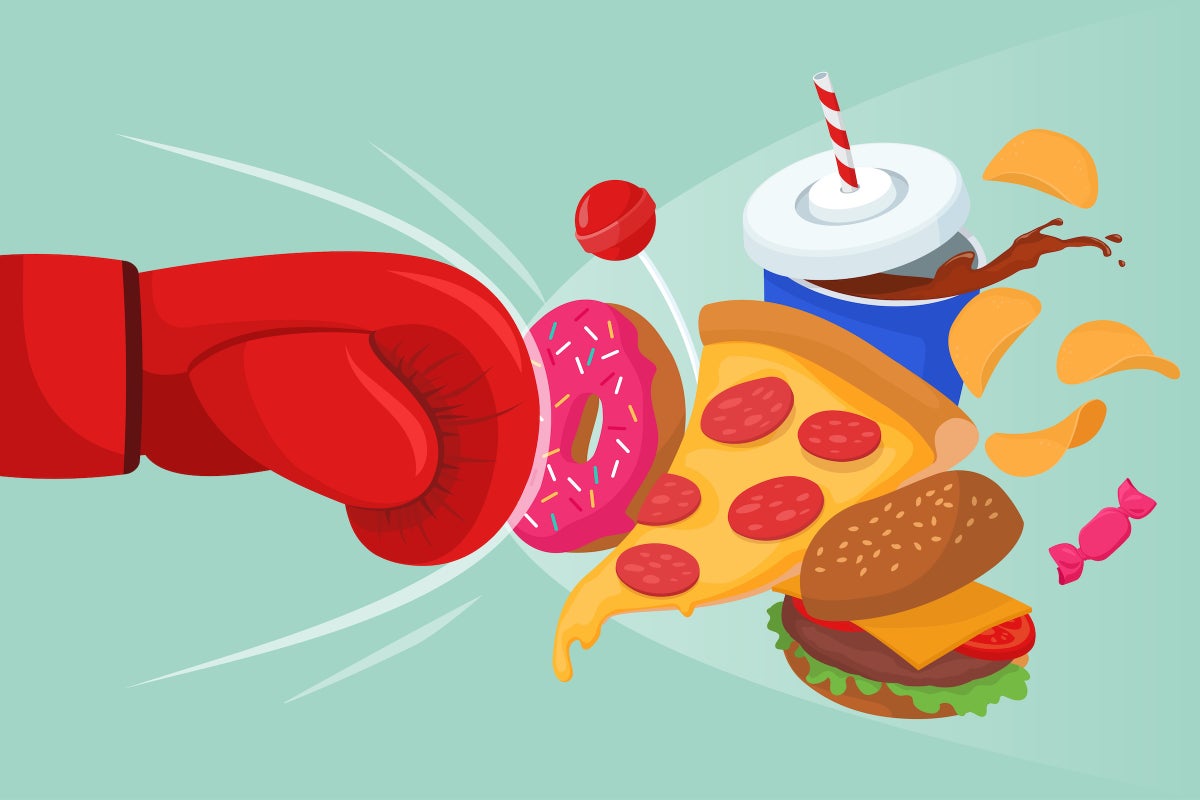
"But can food actually be addictive? Now some neuroscientists and food behavior researchers are trying to understand if foodparticularly ultraprocessed foodscan be addictive in the same way as other known substances, such as cigarettes, alcohol and cocaine. For foods to be potentially addictive, they're created in a way that is most palatable and most delicious, says Alex DiFeliceantonio, an appetitive neuroscientist at Virginia Tech. When you look at the food environment, those tend to be ultraprocessed."
"We have to put it in the framework of a substance use disorder. These disorders affect life in an untenable way. Food addiction isn't in the Diagnostic and Statistical Manual of Mental Disorders (DSM) like substance use disorder is, but there is a proposal to have it put in the DSM. We typically look to the Yale Food Addiction Scale for clinical evaluation."
Use of GLP-1 weight-loss drugs has increased public attention to terms such as food noise and food cravings. Neuroscientists and food behavior researchers investigate whether food, particularly ultraprocessed food, can be addictive in ways comparable to cigarettes, alcohol, and cocaine. Ultraprocessed foods are engineered to be maximally palatable and delicious, which may increase their potential to drive compulsive consumption. Food addiction is not currently listed in the DSM, though a proposal exists to include it. Clinicians commonly use the Yale Food Addiction Scale to evaluate addiction-like criteria and clinical indicators modeled on substance use disorder standards.
Read at www.scientificamerican.com
Unable to calculate read time
Collection
[
|
...
]