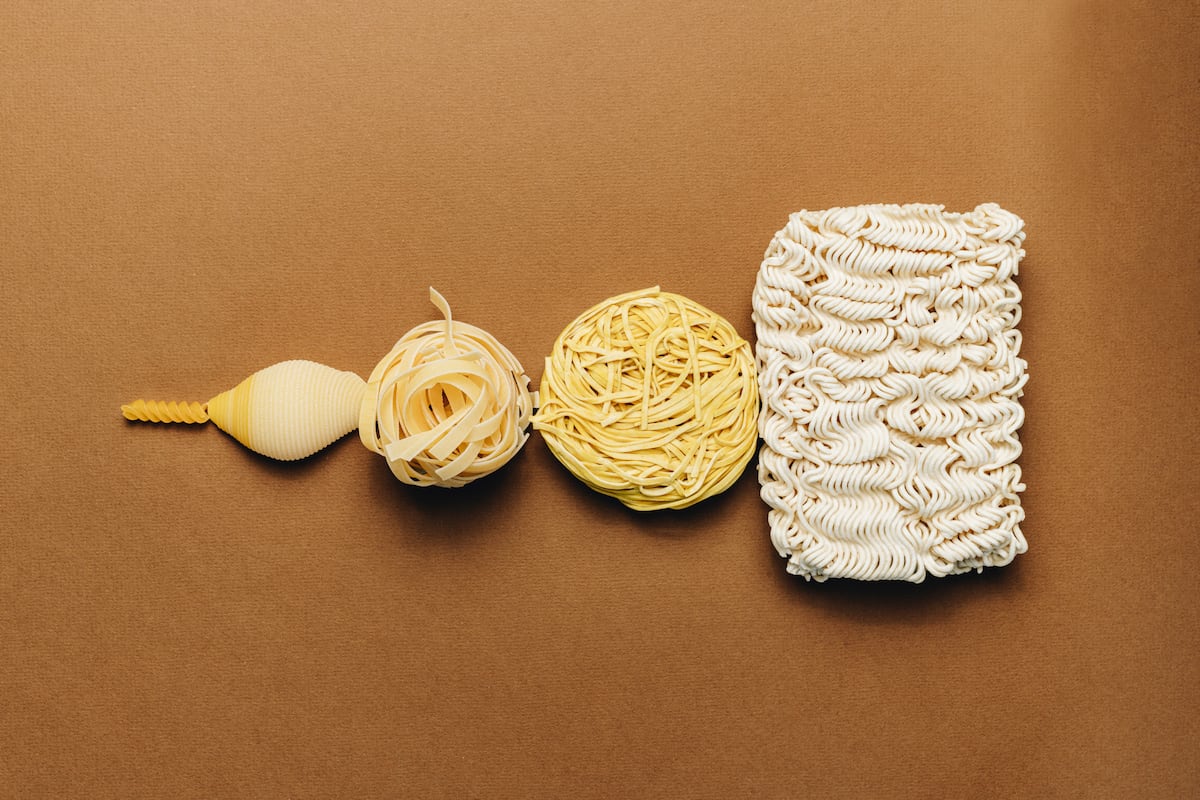
"I have always believed that what unites two cultures most, however different they may be, is their own cuisine, and therefore, I don't know of anything that unites different societies as much as a plate of spaghetti, ramen, or gyozas."
"The book is a concise, encyclopedic manual where you discover the differences between bulgur, couscous, and quinoa; or how many dishes around the world have been inspired by a Chinese baozi; or that the most delicate and crispy noodle is of Palestinian origin, although it is also made in Syria, Jordan, Israel, Greece, Turkey, and Lebanon, and is called kataif."
"Honestly, we don't know how it originated, because who's to say that some kind of pasta wasn't made in ancient Mesopotamia? The truth is, if we had to find a noodle that united the cultures of, say, America, Asia, and [others]."
Antonio Campins' book 'Los hilos de la vida' (The Threads of Life) explores how noodles and pasta function as a lens for understanding human history and cultural identity. The work traces pasta's origins to a 4,000-year-old archaeological discovery in China while acknowledging uncertainty about its true invention, as similar foods may have existed in ancient Mesopotamia. Through examining regional variations—from Palestinian kataif to Japanese soba to Chinese baozi—the book demonstrates how different cultures have developed distinct pasta traditions. Campins argues that cuisine, particularly noodle dishes, represents the strongest unifier between diverse cultures, transcending geographical and social boundaries. The encyclopedic manual reveals that shared food traditions connect societies more profoundly than most other cultural elements.
Read at english.elpais.com
Unable to calculate read time
Collection
[
|
...
]