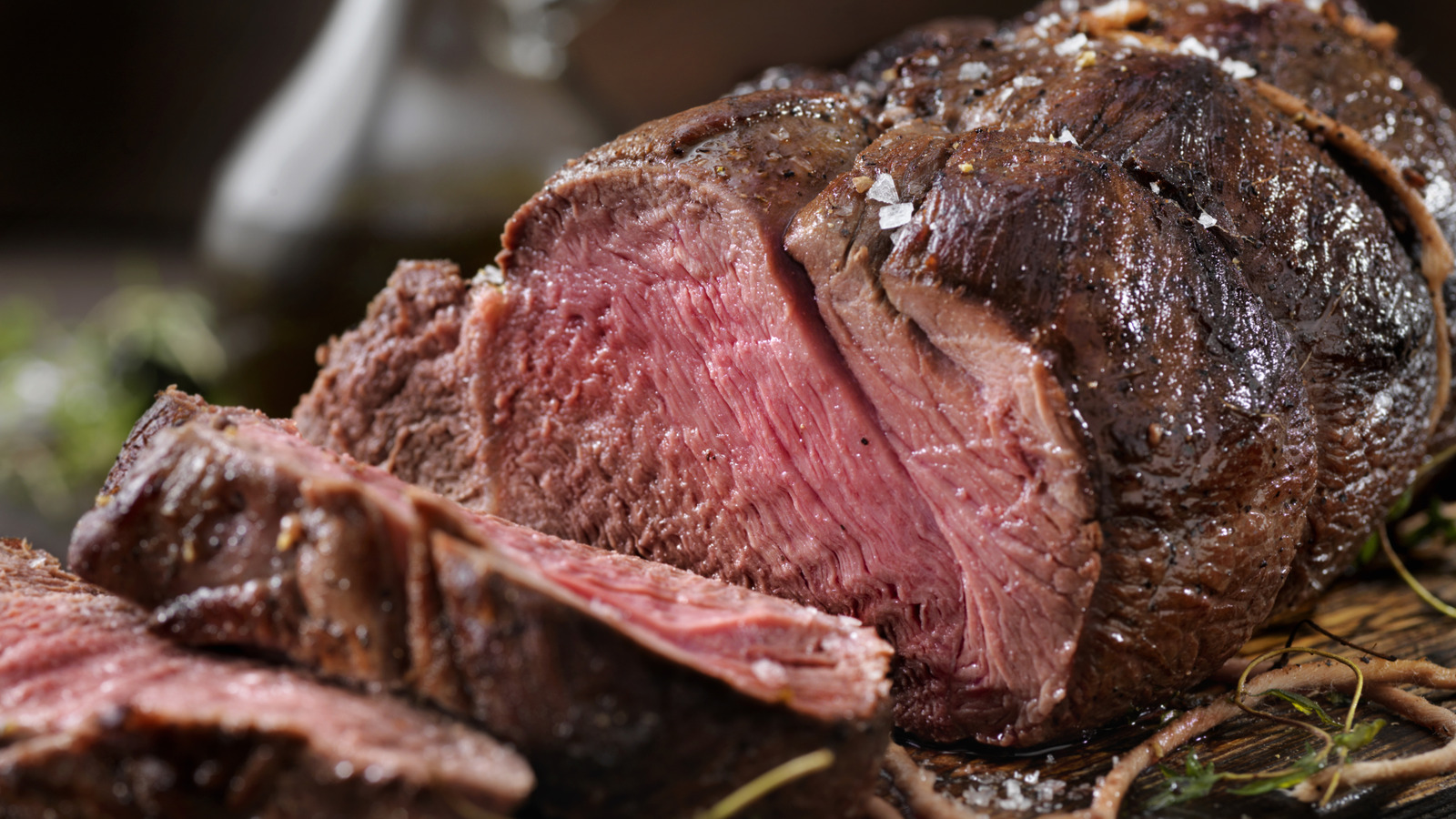
"Prime rib is one of those dishes usually reserved for special occasions and holiday meals, and for good reason. The cut of beef from atop a cow's rib bones is known for its undeniably tender and juicy texture. However, large cuts of beef can easily turn chewy or overcooked if you're not vigilant while they cook in the oven. This means watching factors like time and temperature."
"While it may seem like a small detail, many ovens' digital or manual temperature dials are not always accurate, and the appliance's temperature can fluctuate during cooking. Since low cooking temperatures are key to a juicy prime rib that's delectably tender, a thermometer left in the oven helps ensure your appliance's not actually 20 or 50 degrees Fahrenheit higher than the dial suggests. Those extra degrees make a difference, and high oven temps can ruin prime rib."
"While the food safe temperature to cook prime rib is 145 degrees Fahrenheit, many cooks strive for medium or medium-rare beef for extra tenderness. This means removing the prime rib from the oven as early as when the meat reaches 120 or 130 degrees Fahrenheit (though the temperature does increase slightly as the meat rests). While some home cooks love leave-in thermometers for their convenience and to avoid pricking the meat, which can cause its juices to leak, leave-in thermometers can be inaccurate because"
Prime rib offers tender, juicy meat but large roasts risk becoming chewy or overcooked without strict control of time and temperature. Many ovens' temperature dials are inaccurate and can fluctuate, so an oven thermometer verifies actual oven heat to prevent excessive temperatures. Low oven temperatures promote succulence, and an oven thermometer prevents the appliance from running 20–50 degrees Fahrenheit hotter than indicated. An instant-read meat thermometer allows removal at the desired internal temperature; 145 degrees Fahrenheit is food-safe, while medium-rare often requires removing the roast around 120–130 degrees because carryover raises temperature during resting. Leave-in thermometers can be convenient but may be inaccurate.
Read at Tasting Table
Unable to calculate read time
Collection
[
|
...
]