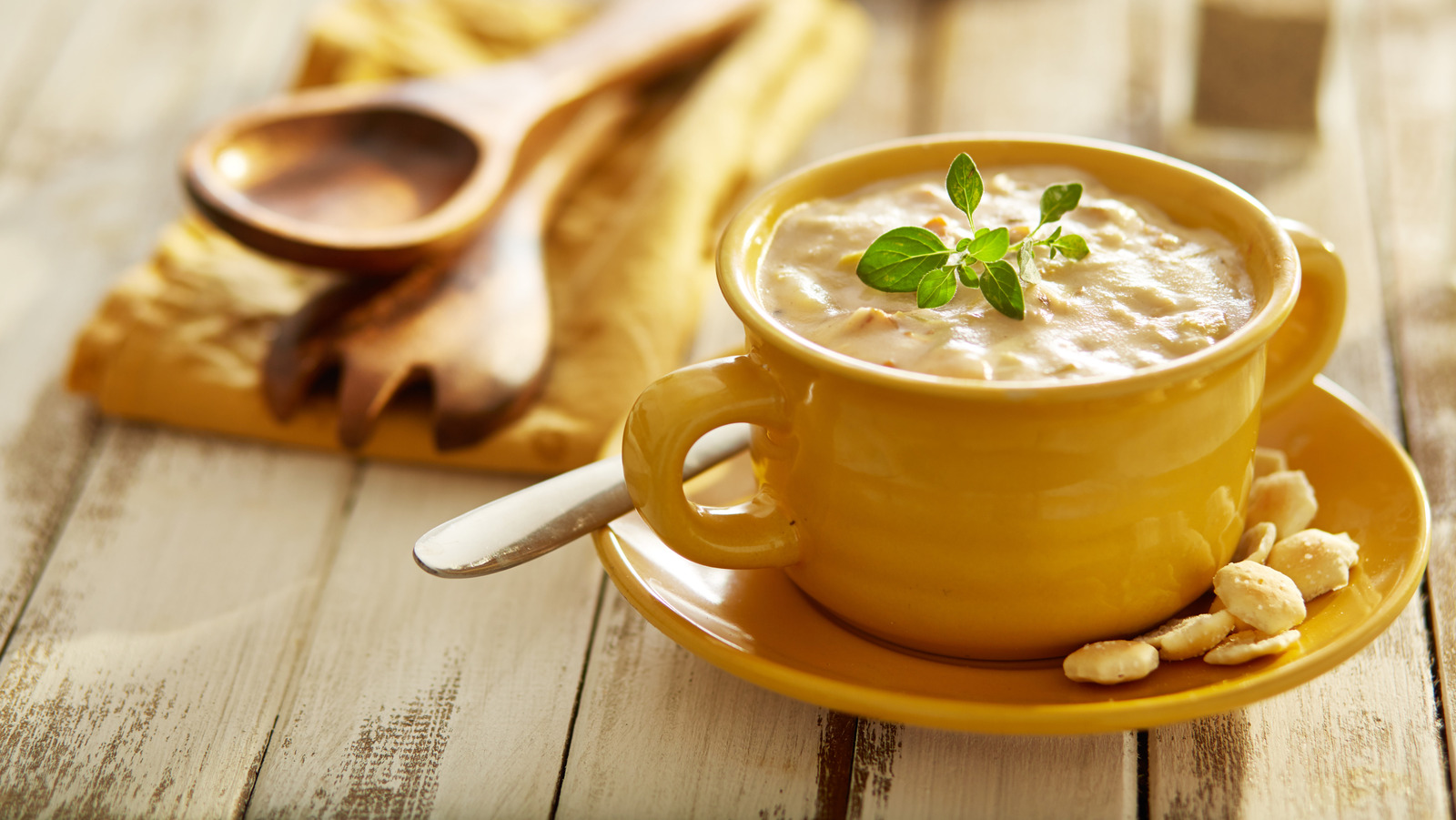
"In New England, the official dipping buddy for creamy clam chowder is called a common cracker, and it's different than any other cracker in almost every possible way. For starters, it's larger (about the size of a Ritz cracker), rougher, and looks unmistakably old-school. The common cracker's flavor is also deliberately restrained. Wheaty, crunchy, and very hearty - these unleavened crackers swell slightly in creamy New England clam chowder. This makes them take on a dumpling-like quality, and it's not accidental."
"History tells us those common crackers helped make any chowder fuller, especially if there were more diners on the list than anticipated. And while they are puffy like oyster crackers, common crackers came first. Think of them as the oyster cracker's great-grandmother, with companies like Cross Bakers and Westminster producing them around 1820. By the mid-1800s oyster crackers became a thing, a very popular thing, along with oysters around 1870,"
Common crackers are large, pale, unleavened crackers from New England that pair with creamy clam chowder. They are larger and rougher than typical crackers and have a restrained, wheaty flavor. When dunked into chowder they swell slightly and take on a dumpling-like texture, adding bulk and sustenance. They originated in the early 1800s, with producers like Cross Bakers and Westminster. Oyster crackers appeared later in the mid-1800s and became widespread by about 1870, yet common crackers remain popular, also known as St. Johnsbury or Montpelier crackers and used across New England and beyond.
Read at Tasting Table
Unable to calculate read time
Collection
[
|
...
]