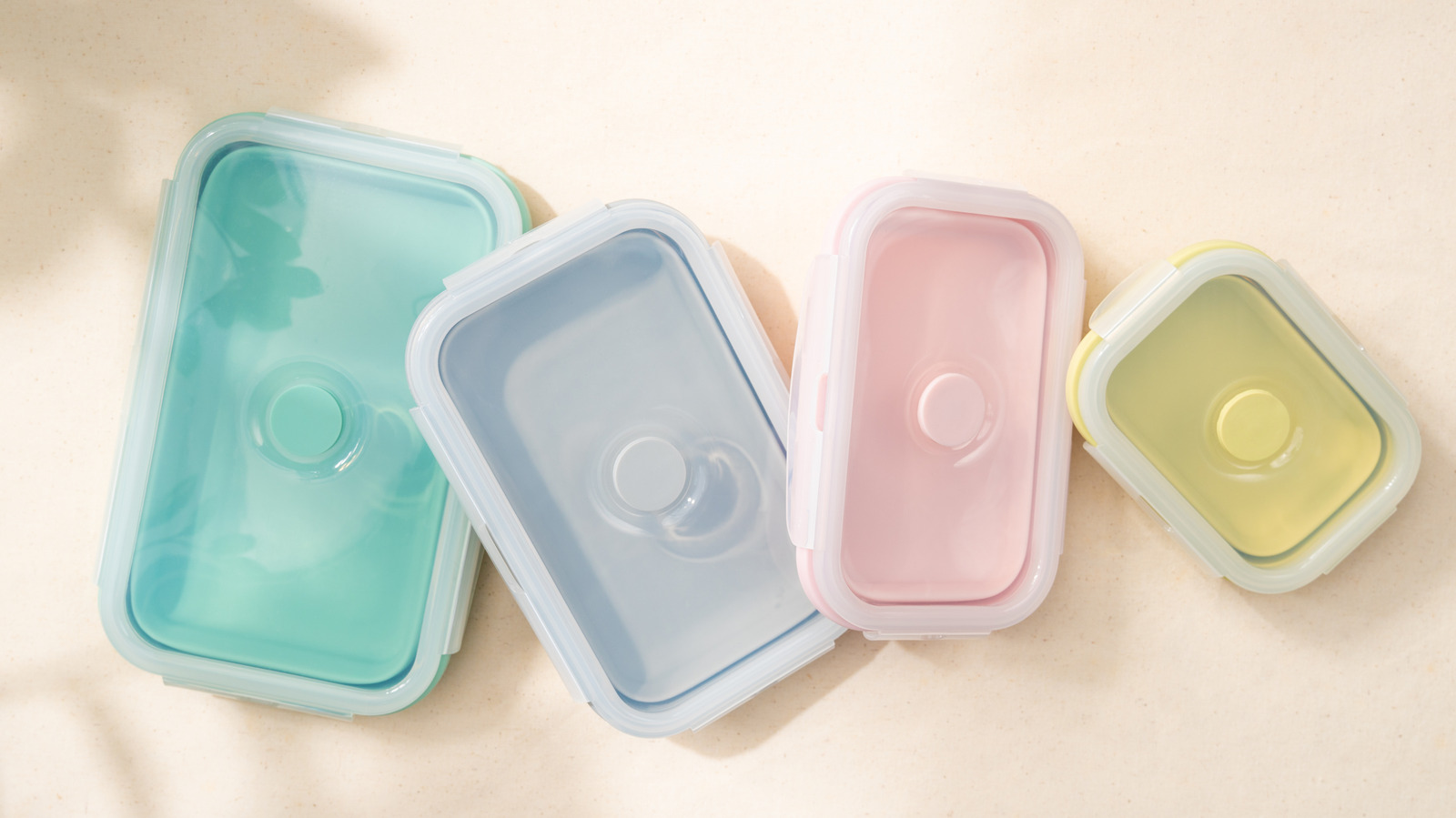
Plastic containers emerged in the 1940s and became popular because they were airtight, durable, lightweight, and easier to stack than metal or glass. Silicone slowly gained use because many features overlap with plastic, but silicone excels at high heat resistance and temperature tolerance. Food-grade silicone is non-reactive and free of BPA, lead, and phthalates, making it safe for oven, dishwasher, and microwave use. Only microwave-safe plastics should be microwaved, and thin or single-use plastics should not be put in the dishwasher because heat can cause release of harmful chemicals and microplastics. Silicone flexibility allows space-saving collapsible designs but can be too flimsy for liquids; hard-walled silicone containers and avoiding plastic lids preserve benefits.
"In comparison to silicone food containers, only "microwave-safe" plastic containers should be used in the microwave, and thin or single use plastics should never be put in the dishwasher because the heat can cause the release of harmful chemicals. This leads us to perhaps the most compelling reason to switch from plastic to silicone: the food safety aspect. Food grade silicone is non-reactive, and doesn't contain BPA, lead, or phthalates."
"As it became more affordable, plastic only became more popular - open the cupboards in any kitchen, and you're sure to find one stuffed with all sizes of plastic containers and lids. Silicone has been more of a slow burn in terms of popularity, perhaps because so many of its features overlap with plastic. But there are some areas where it really excels, such as resistance to high temperatures. This means silicone is safe for the oven, dishwasher, and microwave."
Read at Tasting Table
Unable to calculate read time
Collection
[
|
...
]