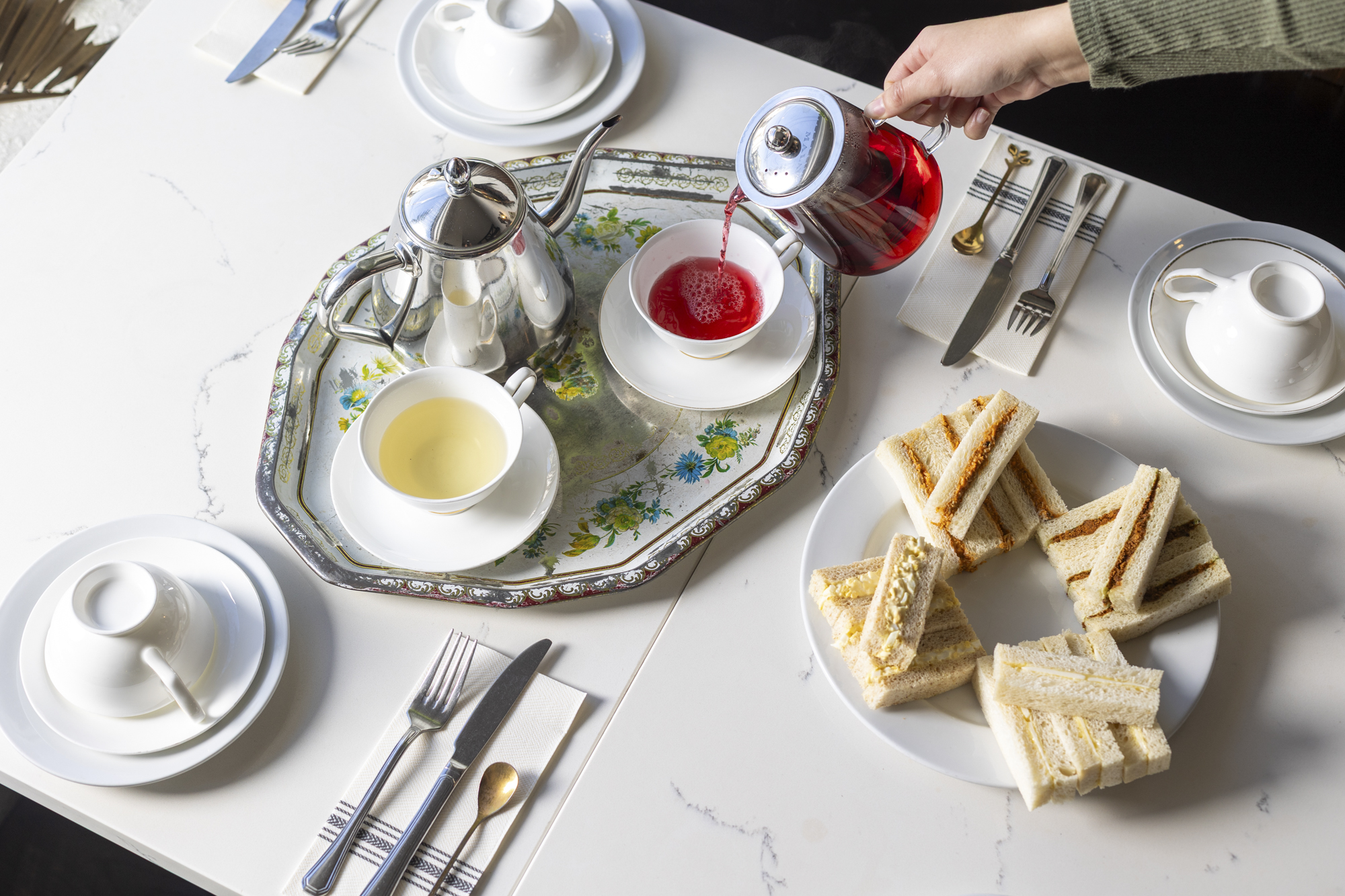
"At most, Lim recalls, maybe one item - say, a curry puff - would nod toward the local food culture. Because afternoon tea at the big hotels was "fancy" and expensive, Lim says even locals wanted the food to be authentically British. Why would anyone pay so much to eat a Malaysian snack they could buy down the street for just a few ringgits?"
"Lim estimates it's only in the last 10 years or so that even the fanciest British-style tea rooms in Malaysia and Singapore have started leaning more into local flavors, adding sambals and curries and kuehs (assorted bite-size treats made with glutinous rice) into the mix with the scones and cucumber sandwiches that people still expect. When Lim opened Malaya Tea Room in 2019, on a quiet stretch of Central Avenue in Alameda, she wanted it to be more of a hybrid."
"Lim wanted to do both. She planned to do the British stuff just as well as, or maybe even better than, the purely Anglophilic places - to, for instance, be one of the only places that make their clotted cream from scratch. But she also wanted to introduce customers to elegant, afternoon tea versions of some of her favorite Malaysian street snacks - in other words, to serve food that actually tastes good."
In the 1980s and 1990s upscale hotel afternoon teas in Malaysia served overwhelmingly British food, with at most a single local item like a curry puff. Afternoon tea at big hotels was expensive and perceived as 'fancy,' so locals expected authentically British offerings. Over the past decade British-style tea rooms in Malaysia and Singapore have increasingly incorporated local flavors such as sambals, curries, and kuehs alongside scones and cucumber sandwiches. Malaya Tea Room opened in 2019 as a hybrid that reproduces British standards — including scratch-made clotted cream — while presenting elegant, tea-appropriate versions of Malaysian street snacks like kaya toast, pork floss, and bakkwa.
Read at Kqed
Unable to calculate read time
Collection
[
|
...
]