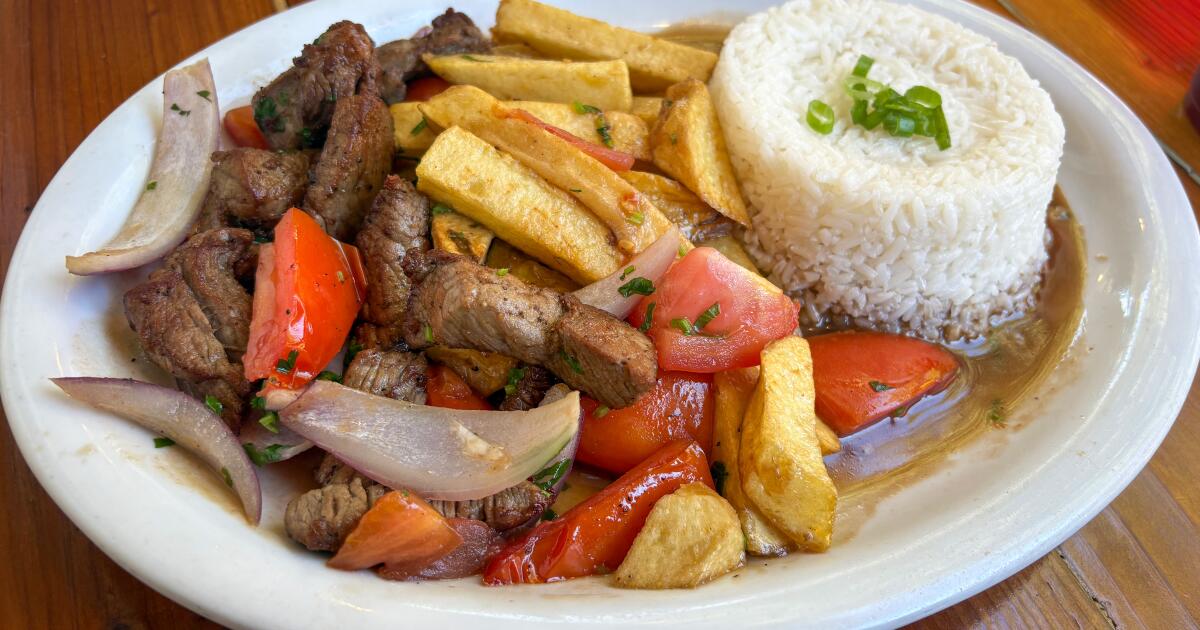
"I remember standing in rapt attention at the edge of the stovetop as my mom tossed fresh, thinly sliced beef into an oiled pan set on maximum heat. The steak hissed and leaped in a dramatic dance as flames licked the pan from underneath. My mom turned to me and said, "This is why it's called lomo saltado: the lomo is the steak, and watch how it's saltando - jumping.""
""The secret is in the smoke," says Miriam Ramirez, owner of Lonzo's Restaurant in Culver City. "When you cook lomo saltado, the room should be filled with the smell of smoke. I remember getting it for lunch in Peru and thinking, 'Oh no, my hair smells like smoke!' But that's how I knew it would be good." Lomo saltado consists of tomato, onion and bell pepper, seared with steak, traditionally in a wok, and served with sides of rice and potato fries."
Lomo saltado centers on thinly sliced beef seared at maximum heat, cooking in about a minute and often marked by a brief flare of flames and smoky aroma. The dish combines tomato, onion and bell pepper stir-fried with steak, traditionally in a wok, and is served with rice and potato fries. Soy sauce, called sillao (see-yow), is used generously and considered the key flavoring in Peruvian meat dishes. The presence of Chinese-Peruvian cuisine, known as chifa (from Mandarin chīfàn), reflects Chinese immigrant influence and explains Cantonese loanwords like the pronunciation of soy sauce.
Read at Los Angeles Times
Unable to calculate read time
Collection
[
|
...
]