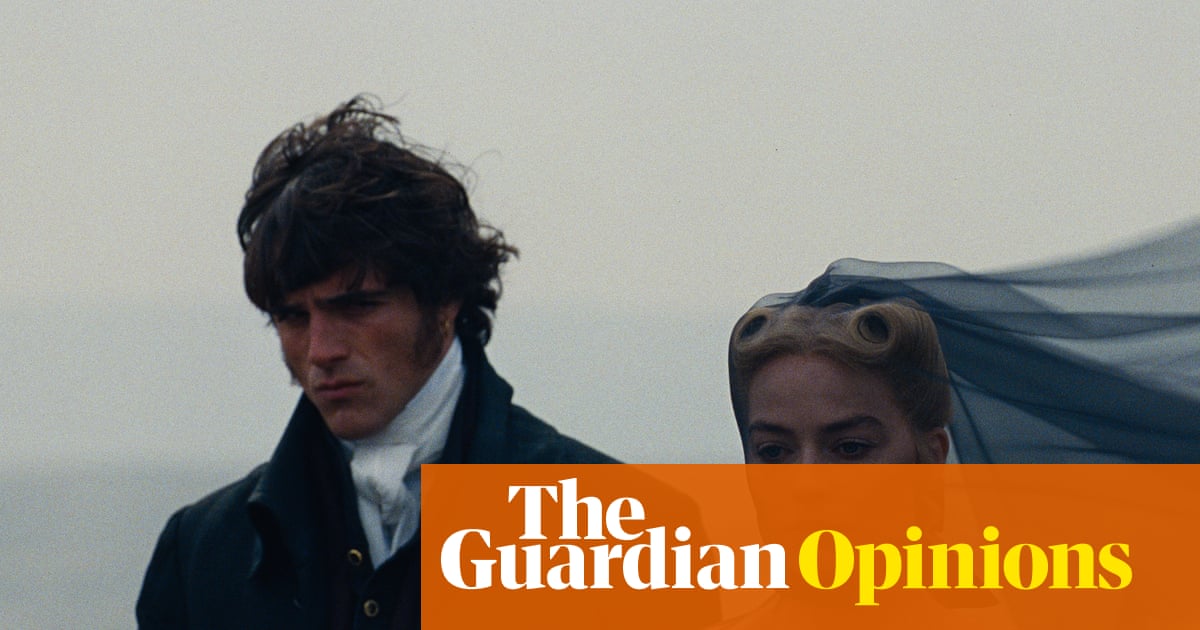
"Admittedly, this one came with a fair few red flags, from the casting of Margot Robbie (simply too old, Cathy is a teenager) and Jacob Elordi (simply too white, Heathcliff, while his origins are uncertain, is described as darker skinned) to the unhinged marketing and crass brand tie-ins. Nevertheless, I was still excited to see it. So why did I leave the cinema not only bored, but feeling a little bit sad?"
"Of course, if you're a teenager in love, the doomed connection between Cathy and Heathcliff does captivate, although as an abuser who hangs a dog, Heathcliff is not exactly fanciable. I do understand the impulse behind Fennell's fan-fictiony desire to have them consummate their love, when Bronte, who probably never touched a man her entire life, left all that desire unrealised. Horniness at the expense of all else, however, can feel terribly hollow."
A film adaptation of Wuthering Heights foregrounds the teenage Cathy–Heathcliff romance and explicit consummation while minimizing the novel's broader subjects. Casting choices attracted criticism for age mismatch and racial inaccuracy, and promotional strategies included conspicuous marketing and brand tie-ins. The adaptation privileges adolescent desire, producing a tone of horniness that can feel hollow when other thematic elements are de-emphasized. Core narrative concerns—revenge, class struggle, whiteness, systemic violence, and generational trauma—receive limited attention. Heathcliff is presented as a neglected, possibly foreign-origin child who, after experiencing abuse, neglect, and perceived rejection tied to poverty and brownness, pursues revenge on the next generation.
Read at www.theguardian.com
Unable to calculate read time
Collection
[
|
...
]