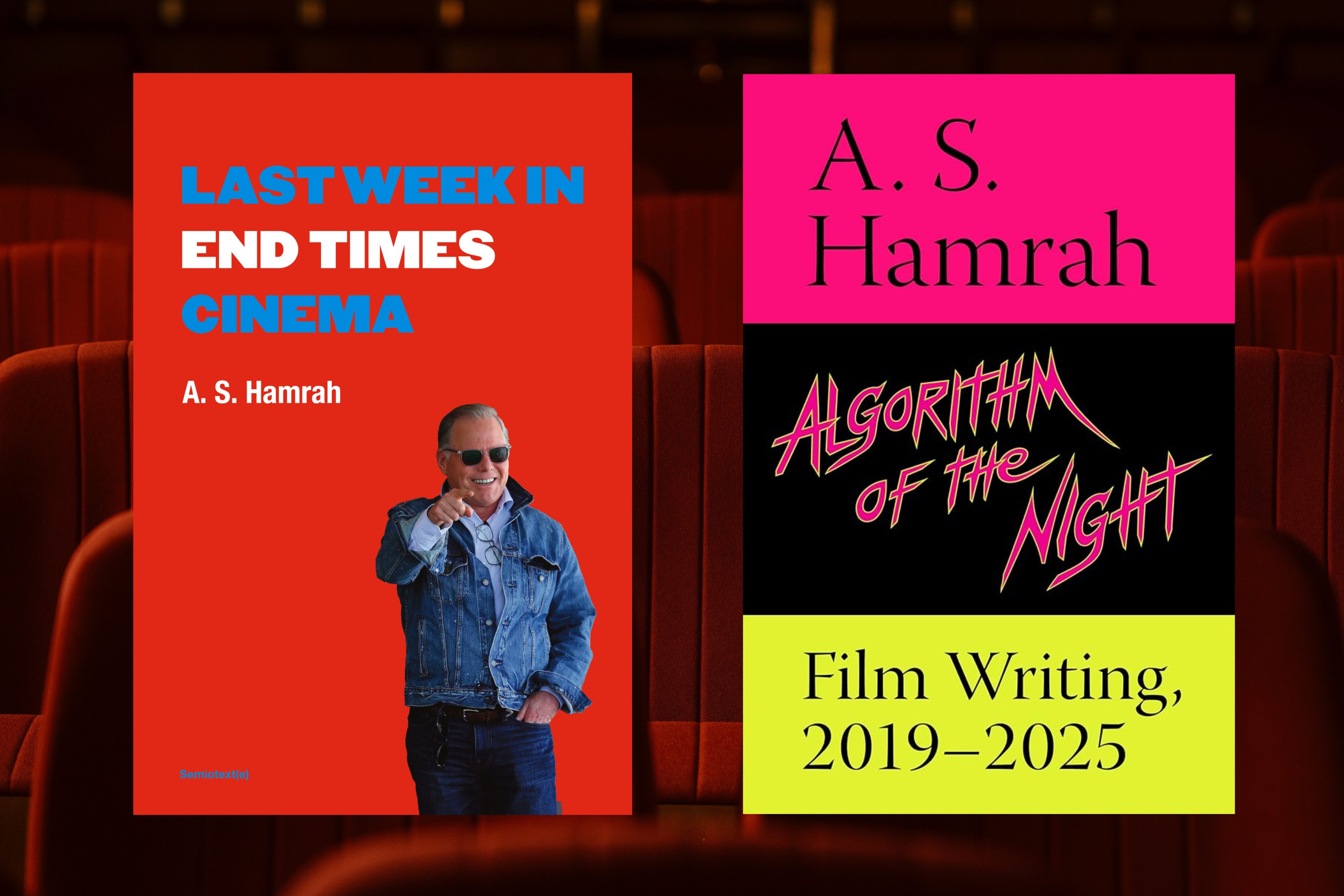
"As you may have heard, the twinned industries that produce art and criticism in this country are embattled. On every side, there is steady conglomeration, privatization, and the rapid uptake of labor-annihilating technology. In tandem, there has been a steady mainstreaming of an anti-intellectual attitude that finds criticism, particularly negative reviews, to be pretentious and without lasting cultural merit. Reading A.S. Hamrah, the film critic at the magazine n+1 and a prolific writer on the history and trajectory of cinema at large, will convince you that criticism remains vital."
"For over two decades, Hamrah has honed an uncompromising, incisive voice, taking advantage of his rigorous and wide-ranging knowledge of the cinematic project so that no one film stands untethered from another. In recent years, amidst a media landscape that is overstuffed and underbaked, Hamrah has continued to chronicle the downward spiral of our time with unflinching clarity. Two new books, Last Week in End Times Cinema and The Algorithm of the Night, collect select pieces of Hamrah's film writing across various outlets from the past six years."
"As the reader moves through traditional reviews and longer ruminations on specific filmmakers and films, a novel historical document emerges, one that witnesses the degradation of an artform while also championing the independent and underground entities, whether individual people or larger movements, pushing back against a tide of slop and cookie-cutter cinema."
The film and criticism industries confront conglomeration, privatization, and rapid adoption of labor-erasing technologies alongside a mainstream anti-intellectualism that devalues negative criticism. A rigorous critical voice links films across history to resist cultural homogenization and to chronicle cinematic decline with clarity. Two recent collections of film criticism compile reviews and extended essays from the past six years, forming a historical record that both documents degradation and champions independent and underground filmmakers pushing back against cookie-cutter cinema. A phone interview addresses industry health, the boundary between cinema and Hollywood, generational technology uptake, and the realities of making a living as a critic.
Read at Defector
Unable to calculate read time
Collection
[
|
...
]