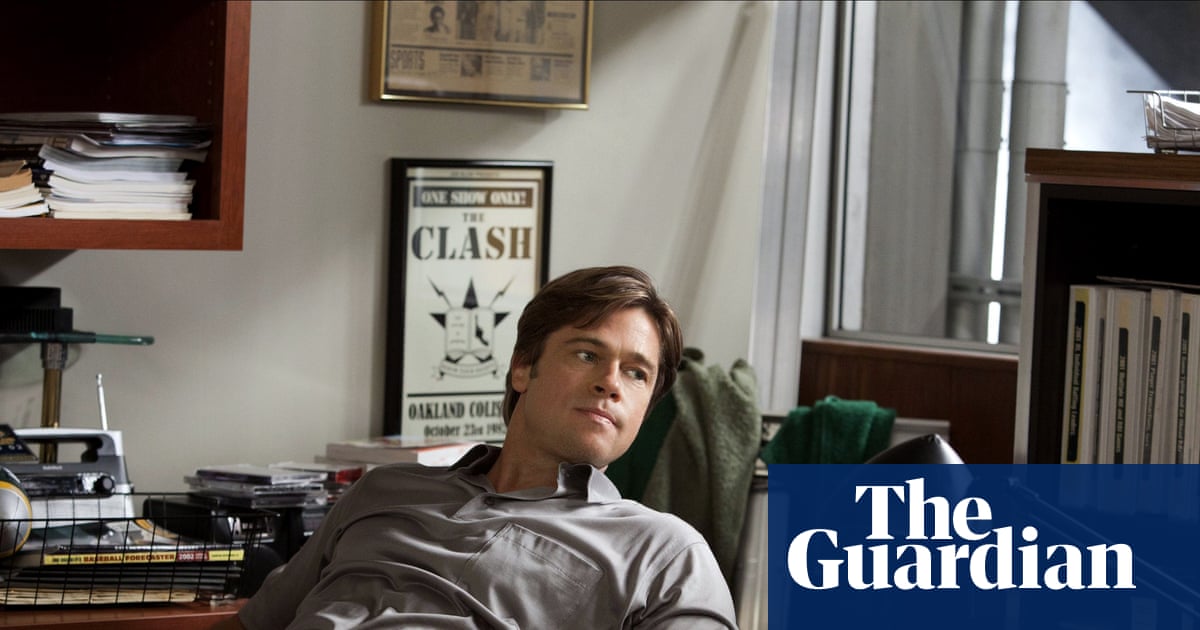
"The older I get, the more I want to hear people talk. I want films in which recognisably human characters interact in recognisably human ways. No one need die; nothing great need be at stake. I just want to be treated like an adult. Moneyball treats its audience like adults. Though it was released in 2011, it's a very 1970s film: its theme is analogous to the paranoid thrillers of that decade."
"Moneyball is proof that when you put good actors with a good script, so long as the director doesn't go off the deep end, you'll end up with something decent. It's unflashy: its sports action sequences are rare and wisely so, given that actors pretending to play professional sport is routinely an embarrassment. It's talky: it demands that you listen to what's being said, but makes it easy to comprehend. And it is endlessly rewatchable: the perfect plane movie, insomnia movie, sick day movie."
"Pitt plays Billy Beane, the general manager of the Oakland Athletics, the poorest team in baseball. The film asks (and this may be the least promising setup ever for a major Hollywood movie) how can data analysis detect unrecognised value in baseball players, as a means to counter economic inequality between teams? Somehow screenwriters Aaron Sorkin and Steven Zaillian, alongside director Bennett Miller, turned that into a very human drama."
"They were helped by career-best performances from Pitt, putting his usual preening self-glorification to one side because Beane is, if not a loser, then certainly not a winner: a failed major league player and the GM for a struggling team and from Jonah Hill. The Superbad star plays a composite called Peter Brand, largely based on Beane's former"
The film centers on Billy Beane, general manager of the Oakland Athletics, a team with limited resources. It focuses on how data analysis can identify unrecognized value in players to counter economic inequality between teams. The story treats characters as recognizably human and emphasizes adult conversation over spectacle. Sports action appears sparingly, avoiding the embarrassment of actors pretending to play professionally. The narrative is easy to follow while requiring attention to dialogue. Strong acting from Brad Pitt and Jonah Hill supports a human drama about failure, skepticism toward systems, and practical change. The result is rewatchable and suited to quiet viewing situations.
Read at www.theguardian.com
Unable to calculate read time
Collection
[
|
...
]