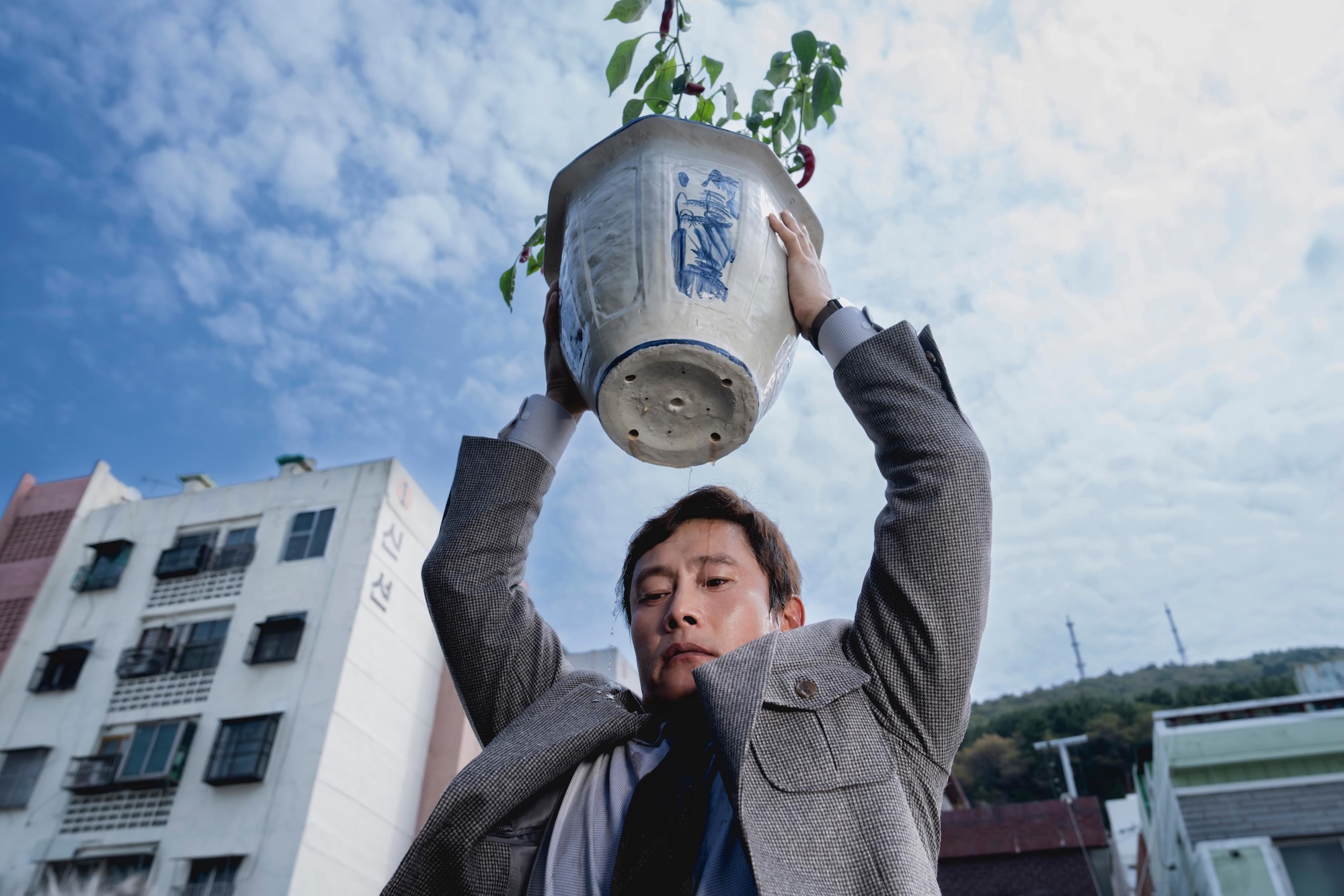
"Leaves and bodies fall in No Other Choice, Park Chan-wook's masterfully devilish satire with a chilling autumnal wind blowing through it. "Come on, fall," urges You Man-su (Lee Byung-hun) as he grills an eel for dinner for his family in the opening moments of Park's film. He's eager for the season to start but unprepared for the amount of cyclical collapse - familial, economic, even existential - that Park has in store."
"And in No Other Choice, he remains at the peak of his powers, archly and elegantly spinning a yarn about a murderous rampage that accumulates wider and wider reverberations. "Hitchcockian" is a term that often, understandably, finds Park. He is, like Hitch, a seemingly polite and erudite man with a latently dark imagination. But for more than two decades, Park has cut his own bloody, unyieldingly meticulous path in movies that are rarely predictable, very funny and sneakily revelatory."
No Other Choice follows You Man-su, a man who initiates a murderous rampage that reveals cascading familial, economic and existential collapse. The film blends dark comedy and meticulous, stylish imagery, using reflections and trees to amplify satire. Park Chan-wook frames each attempted murder as a window into different families grappling with unemployment, and Man-su's spying adds layered critique. The film carries Hitchcockian sensibilities—polite surface manners masking a latently dark imagination—while maintaining Park's distinctive, blood-precise aesthetic. The narrative places capitalism and a handsome house at its center, inviting comparison with other Korean satires such as Parasite.
Read at Kqed
Unable to calculate read time
Collection
[
|
...
]