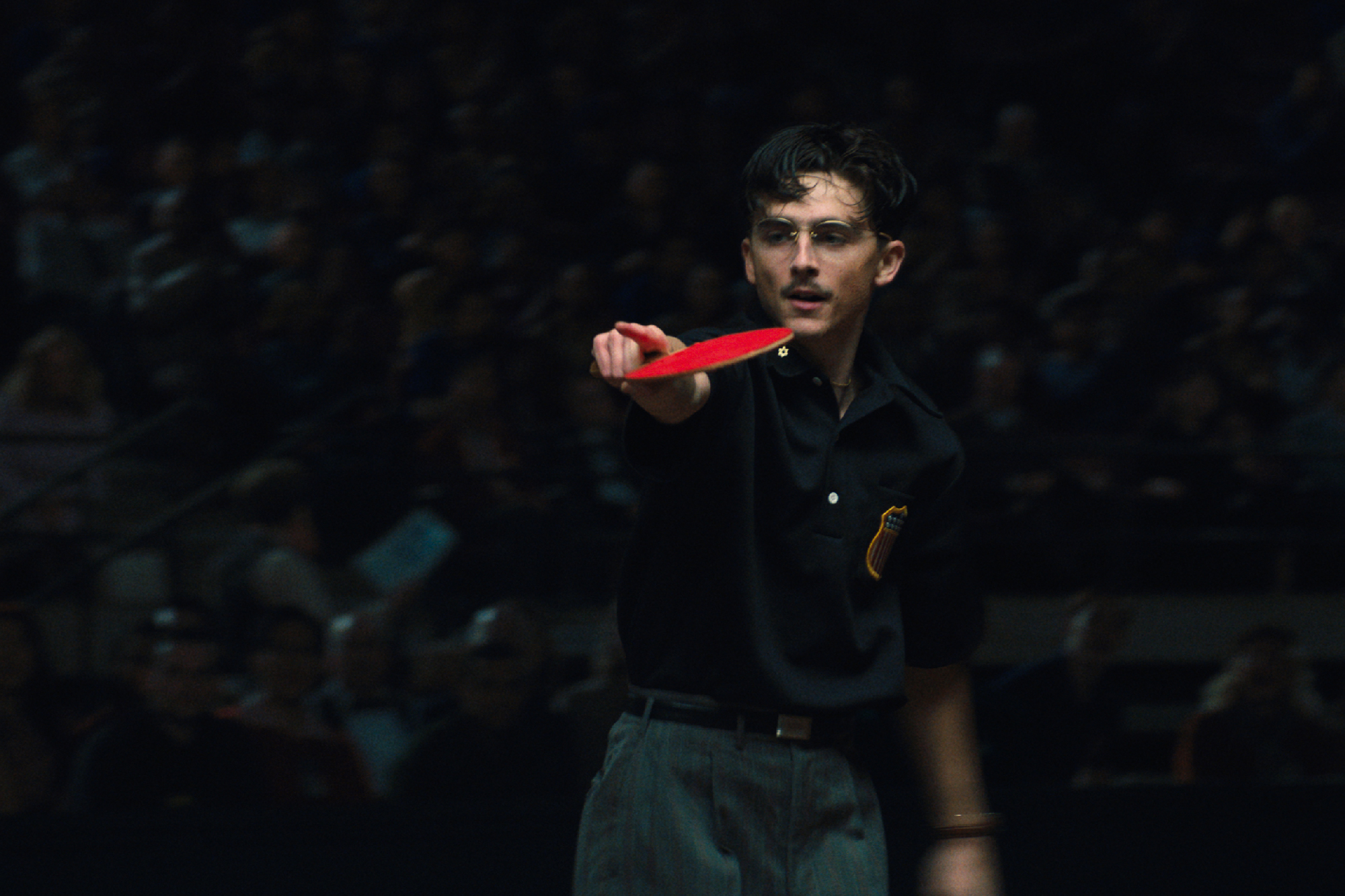
"But we aren't prepared for Marty's lunatic ambition, and his off-putting brand of American exceptionalism in which he constantly shifts from hero to victim to suit his schemes. We are both charmed by and leery of this showman, gambler and flamboyant self-promoter who, we come to see, is indifferent to the damage he leaves in his wake."
"Safdie and co-writer Ronald Bronstein bravely go further, repeatedly reminding us of Marty's Jewishness in ways that are edgy and shocking. In one scene, Marty cajoles fellow player Béla (Hungarian actor Géza Rohrig of the shattering 2015 concentration-camp saga ) to reveal the tattooed numbers on his arm to a stranger. Later, on a trip to the Middle East, Marty shamelessly chips off a piece from a pyramid that he gifts to his mother with the line, "We built it.""
Early scenes set in confined spaces convey claustrophobia that drives Marty to exceed expectations and escape a crummy, anonymous life. Marty displays lunatic ambition and an off-putting American exceptionalism, shifting between hero and victim to serve his schemes. He charms while exploiting others as a showman, gambler and self-promoter indifferent to the damage he causes. The filmmakers repeatedly foreground Marty's Jewishness in provocative ways, including scenes that pressure a fellow player to reveal Holocaust-era tattoos and a pyramidal souvenir stolen for his mother. Marty's hunger for attention and success becomes destabilizing rather than satisfying.
Read at Kqed
Unable to calculate read time
Collection
[
|
...
]