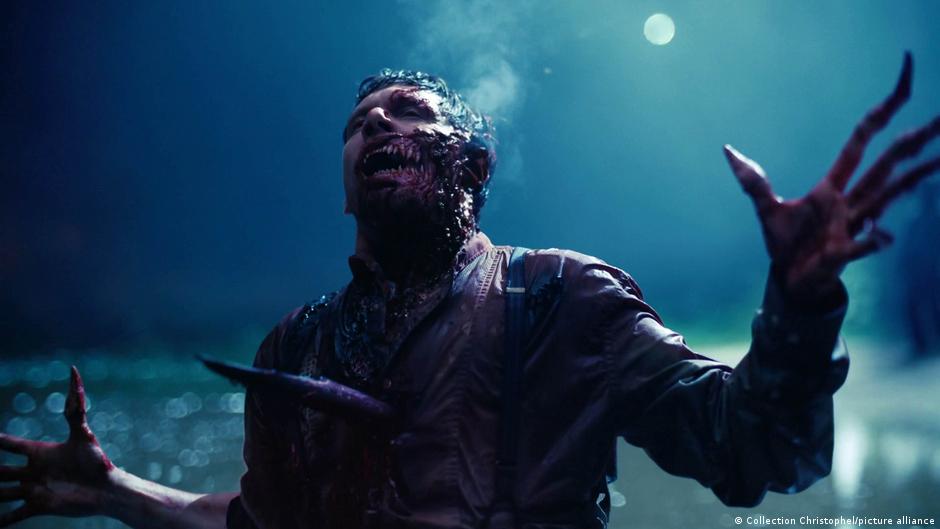
"The horror film, set in the early 1930s southern United States, follows twin brothers who return to their hometown, hoping to start over by opening a place for the African American community amid the pressures of Jim Crow-era life. As the opening night unfolds, the celebration reveals that the brothers and their community are being targeted by vampires. To view this video please enable JavaScript, and consider upgrading to a web browser that supports HTML5 video"
"Vampire-like figures have long existed in myth, folklore and religion. There were stories of blood-drinking demons in Mesopotamia. In ancient Greek and Roman mythology, the "strix" was a bird of ill omen associated with feeding on blood. Hindu mythology described the "vetala," a spirit inhabiting corpses. Later, vampires appeared in Slavic and Balkan folklore, featuring some of the characteristics we have come to associate with the blood-thirsty monster nowadays: reanimated corpses that easily fell prey to stakes, sunlight and, of course, garlic."
"The first vampire to make an appearance in English literature was in John Polidori's 1819 short story "The Vampyre," embodied by the aristocratic Lord Ruthven. It was then followed by the most famous vampire in literature, via Bram Stoker's 1897 novel "Dracula," which solidified the vampire's place as a true Gothic-era monster. Vampires hit the big screen The vampire craze reached new levels"
Ryan Coogler's Sinners, nominated for a record-setting 16 Academy Awards, is a horror film set in the early 1930s southern United States about twin brothers who return to their hometown to open a space for the African American community under Jim Crow. On opening night, celebration turns terrifying as vampires target the brothers and their neighbors, with supernatural menace echoing the social and racial violence of the era. Vampire figures appear across cultures—from Mesopotamian blood-drinking demons to the Greek and Roman strix and the Hindu vetala—and Slavic folklore contributed features like vulnerability to stakes, sunlight and garlic. The vampire entered English literature in Polidori's 1819 tale and was cemented by Bram Stoker's Dracula, later becoming a staple of cinema.
Read at www.dw.com
Unable to calculate read time
Collection
[
|
...
]