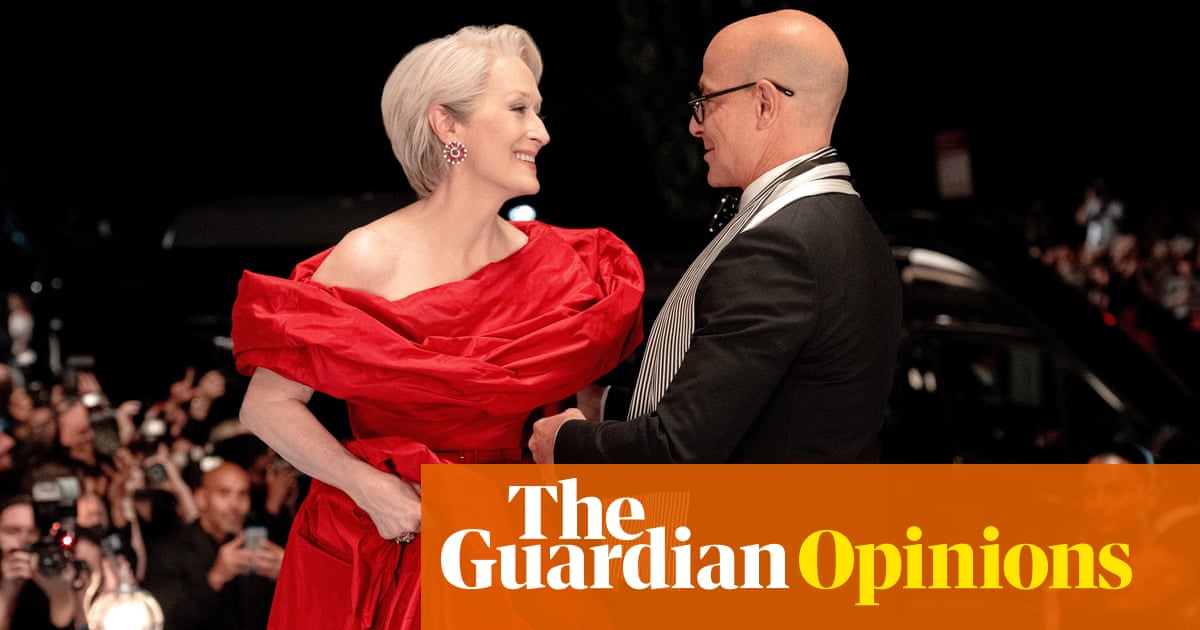
"All the fashiony high camp, all the sharp one-liners of the first movie (By all means, move at a glacial pace, you know how that thrills me) deliquesce into melancholy for a struggling media industry in the second film."
"Except that at precisely that moment they are laid off, by text message. Perfectly realistic: swathes of the Washington Post, including Pulitzer finalists and correspondents in war zones, suffered a similar fate (in this case, sacking by email subject field) in February."
"We meet the older Andy Sachs (Anne Hathaway) the put-upon assistant of Runway editor Miranda Priestly (Meryl Streep) in the original movie when she and her newspaper colleagues are receiving an award for investigative reporting. Except that at precisely that moment they are laid off, by text message."
"In the 1990s we had no idea we were working at the high watermark of the circulation and power of the glossy magazine industry. When those enormous, thick-papered tomes thunked down on our desks at Vogue House (which they literally did, hand delivered) they were so solid, so reassuring, so full of the promise of glamour and gorgeousness, that we thought it would go on for ever."
The sequel turns sharp fashion comedy into a mood of sadness tied to media job losses. Andy Sachs is shown years later as an older assistant, while her former boss Miranda Priestly remains central. A layoff arrives abruptly by text message, mirroring real-world cuts that affected major newspapers. The story also triggers nostalgia for the era when glossy magazines held enormous circulation and influence. The film’s depiction of magazine culture recalls thick, reassuring print issues delivered to desks and the sense that glamour and success would last. The world is portrayed as preposterous in hindsight, with roles like copyediting framed as guardianship of style and language.
Read at www.theguardian.com
Unable to calculate read time
Collection
[
|
...
]