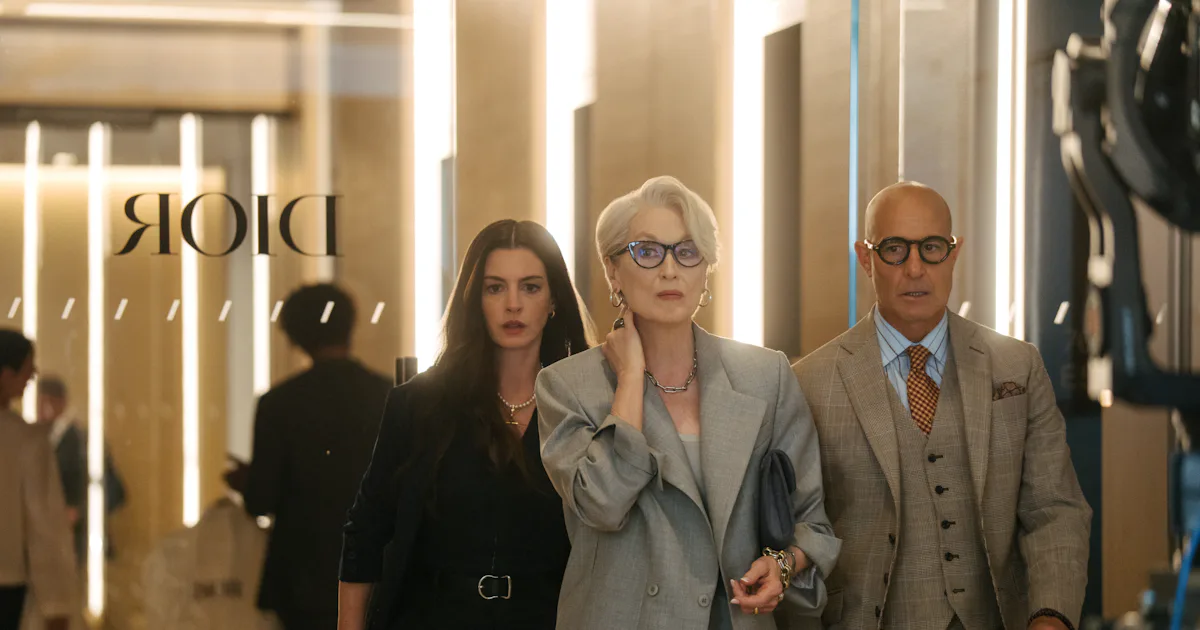
"Meryl Streep could've demanded over $15 million to step back into Miranda Priestly's sky-high heels for the long-awaited sequel to The Devil Wears Prada. But according to Variety, she negotiated a "favored nations" deal so her co-stars Anne Hathaway and Emily Blunt could get the same salary, all earning $12.5 million to return."
"While most editors don't make as much nowadays, this is Miranda Priestly we're talking about. Just look at her townhouse. She's navigated her way through many shifts in the fashion and journalism worlds over her three decades in the business. As a result, she's probably guaranteed a significant paycheck, much like her character's inspiration, Vogue editor-in-chief Anna Wintour."
"In 2005, Wintour earned $2 million annually and got an extra wardrobe "allowance" of $200,000 (yes, really). It's not known if she was affected by company-wide pay cuts in 2020, but given how she was promoted to Vogue 's global editorial director and Condé Nast's chief content officer the same year (mirroring Miranda in the sequel), it's likely that her salary only got higher."
"Like the first film, The Devil Wears Prada 2 is filled with awe-inspiring fashion, extravagant parties, and a couture-filled montage set to Madonna's "Vogue." But for almost everyone not named Miranda Priestly, it's hard to imagine how they're able to afford their clothes, let alone the other high costs of living in New York - a conundrum all too familiar to Sex and the City fans."
Miranda Priestly’s compensation is framed as exceptionally high due to her decades-long status in fashion journalism, with comparisons to Vogue editor-in-chief Anna Wintour’s reported earnings and wardrobe allowance. Andy Sachs’ pay is presented as lower than Miranda’s but still substantial enough to support a professional lifestyle. Nigel’s role and compensation are tied to his senior position within the Runway operation. The assistants’ salaries are described as more modest, making their ability to afford couture and New York living costs more questionable. The film’s emphasis on luxury fashion and parties is contrasted with the practical financial realities implied by the characters’ roles and backgrounds.
Read at Bustle
Unable to calculate read time
Collection
[
|
...
]