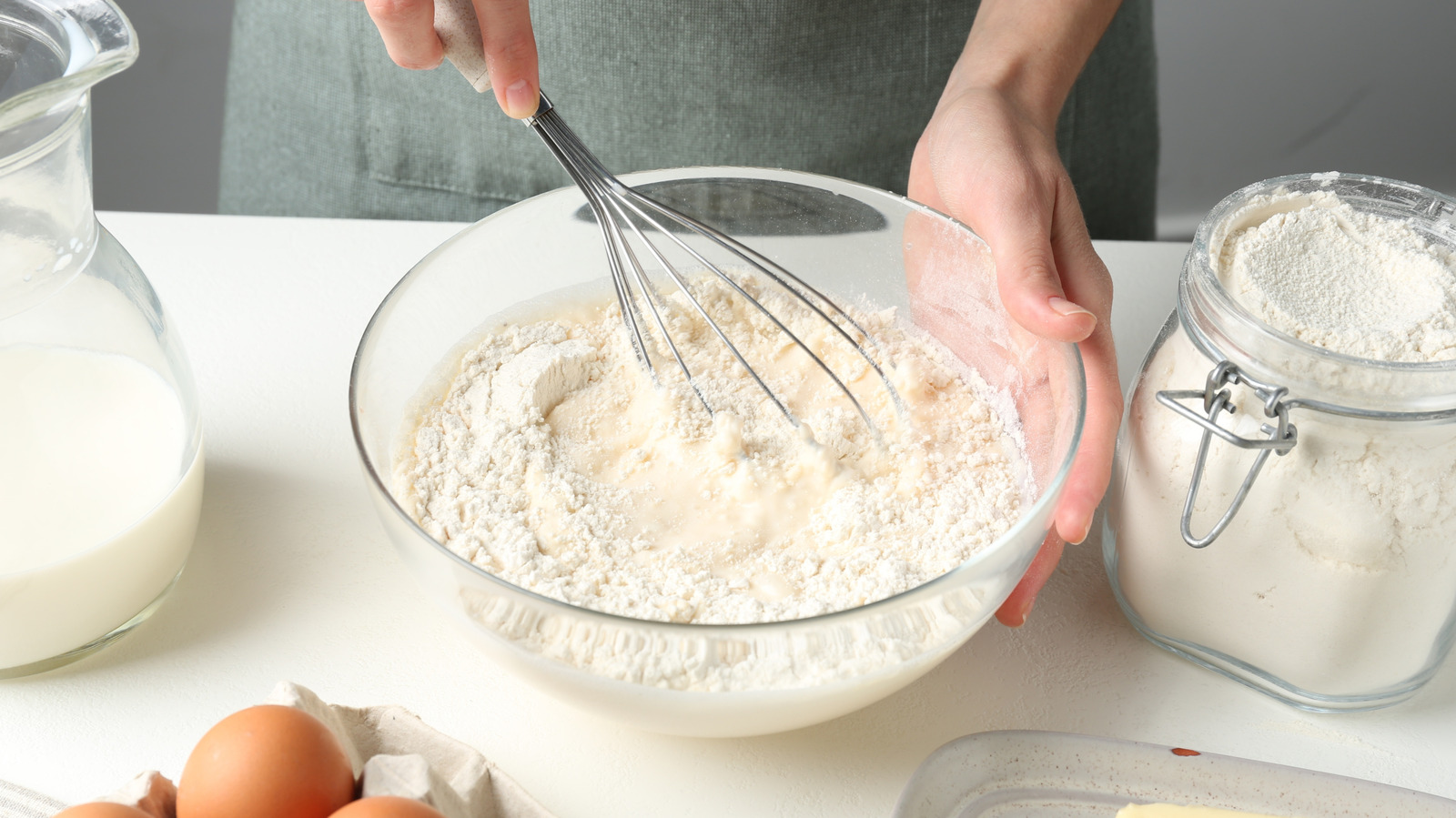
"As milk ages, bacteria break down the milk's natural sugars and convert them into lactic acid. The result is a tangier ingredient that has an acidic profile closer to buttermilk. When this extra acid comes into contact with baking soda or baking powder, carbon dioxide bubbles are produced, ultimately affecting the texture of your batch of pancakes."
"Your stack will have a fluffier texture than one made with fresh milk, and you'll notice that tangy, tender crumbs enhance the spread at breakfast. The sour milk's quiet tang lets the sweetness of any added toppings - maple syrup, fresh fruit, chocolate shavings, or homemade whipped cream - step forward on your plate."
"If you have fresh milk yet still want to try the sour hack to make pancakes that give IHOP some competition, add vinegar or lemon juice and let the mixture stand for 5 minutes. Some curdled pieces will begin to form. Whisk until smooth, then add to any batter just as you would buttermilk."
Sour milk in its early fermentation stage, identifiable by pleasant sharpness without rancid smell or mold, serves as an excellent baking ingredient rather than waste. Bacteria naturally convert milk's sugars into lactic acid, creating a tangier ingredient similar to buttermilk. This acidic profile reacts with baking soda or baking powder to produce carbon dioxide bubbles, resulting in fluffier pancakes with tender crumbs. Sour milk can be used as a direct substitute for regular milk in pancake recipes, allowing toppings' flavors to shine. For convenience, sour milk can be frozen in ice cube trays. Fresh milk can be artificially soured by adding vinegar or lemon juice and waiting five minutes before whisking smooth.
Read at Tasting Table
Unable to calculate read time
Collection
[
|
...
]