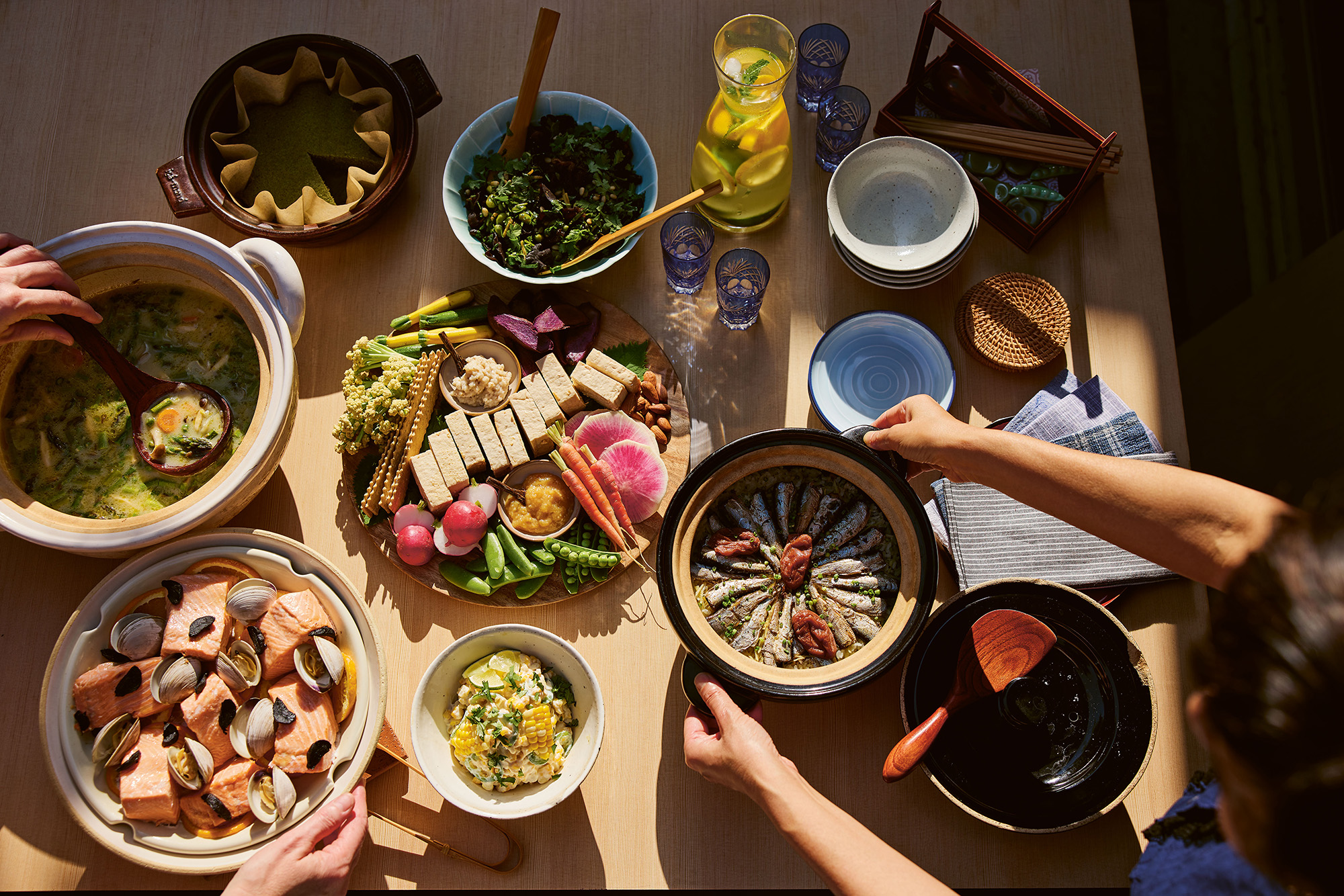
"Naoko Takei Moore has beautiful memories of her mother's Japanese home cooking. Growing up in Tokyo in the '80s, she savored those moments when she and her mom stood side by side in the kitchen making fresh onigiri and mochi, and, most of all, when they'd sit around the family table to enjoy a meal of yose-nabe, a kind of hot pot made with simple ingredients like clams, fish and whatever vegetables they had on hand."
"Takei Moore says the gospel she's spreading isn't really about any particular recipe or cooking technique. Instead, she believes using donabe in day-to-day cooking is a pathway toward a slower, more intentional and more idyllic life - what she calls her "happy donabe life.""
"Ultimately, it's a lifestyle, and it really symbolizes Japanese communal dining. In Japanese conversation, when we say "nabe," it refers to a hot pot dish, but it also means "let's get together." Instead of saying "let's get together," we might say, "Let's nabe sometime.""
Naoko Takei Moore draws from childhood memories of cooking with her mother in Tokyo to promote donabe, traditional Japanese clay pots, as more than a cooking tool. She advocates for a "happy donabe life" centered on intentional, slower living and communal dining. Donabe cooking involves tabletop preparation where diners participate in the cooking process together, embodying the Japanese concept that "nabe" simultaneously means both hot pot dish and "let's get together." Moore's cookbook "Simply Donabe" features seafood and vegetable dishes prepared in these clay pots, emphasizing the cultural significance of shared meals and togetherness in Japanese cuisine.
#japanese-cuisine #donabe-cooking #communal-dining #lifestyle-and-wellness #traditional-cooking-methods
Read at Kqed
Unable to calculate read time
Collection
[
|
...
]