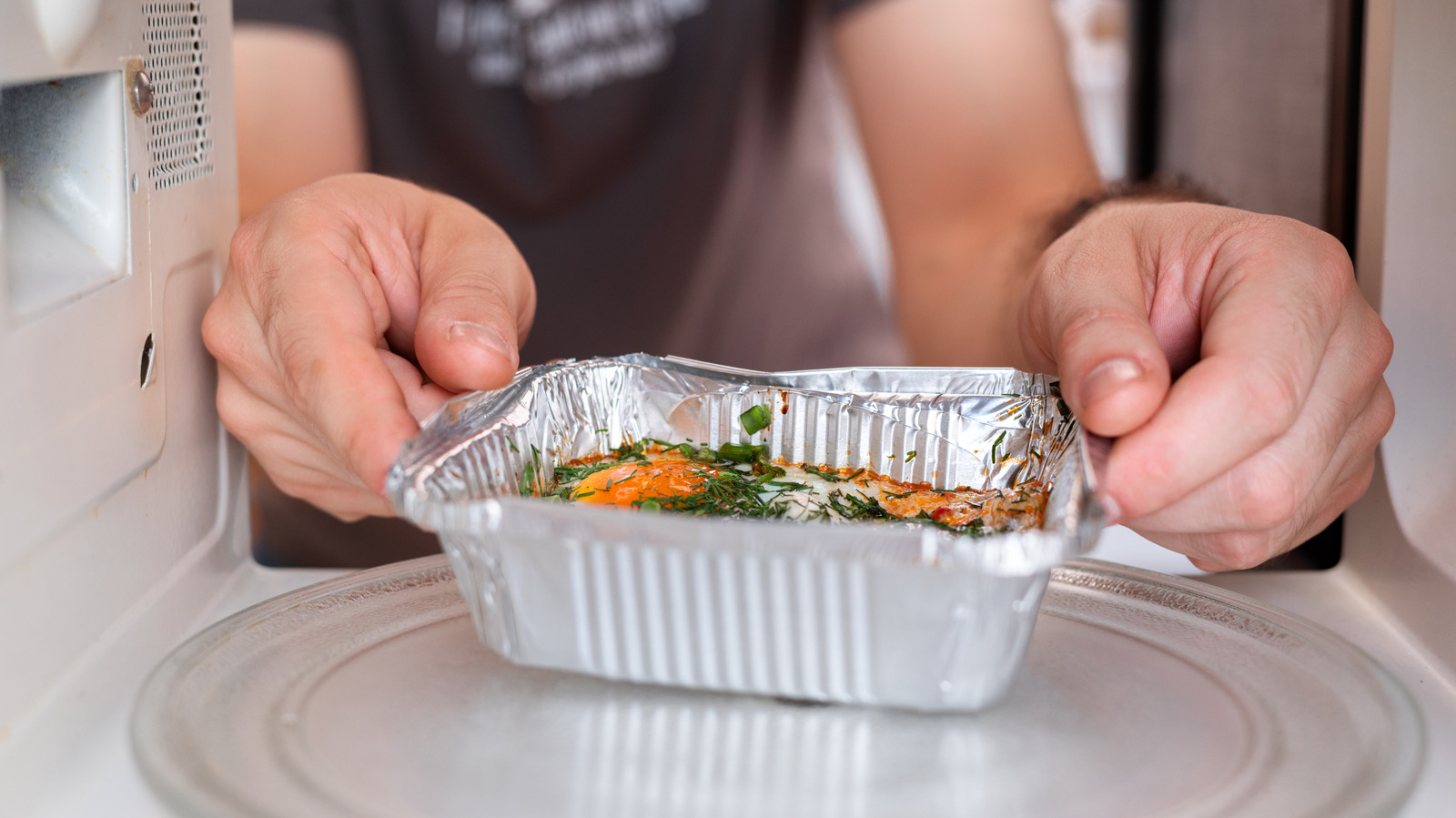
"“The rule of thumb most of us grew up with is mostly right,” Shelke says, accepting that metal typically tops the list of things to never put in the microwave. She does, however, allow that there are safe exceptions to the rule - though the circumstances can be a bit narrow. “There are legitimate exceptions,” Shelke says. “USDA's Food Safety and Inspection Service allows small, smooth pieces of aluminum foil to shield parts of food that overcook quickly (e.g., poultry wing tips) if the foil covers no more than a quarter of the food, stays at least an inch from the oven walls, and is smooth and not wrinkled.”"
"“What matters most is the shape, not that it's metal,” Shelke explains. “Microwaves do not pass through metal but reflect off it. When that reflected energy concentrates at thin edges, sharp points, or crumpled folds, it can build up enough voltage to leap as a visible spark.”"
"“USDA's Food Safety and Inspection Service allows small, smooth pieces of aluminum foil to shield parts of food that overcook quickly (e.g., poultry wing tips) if the foil covers no more than a quarter of the food, stays at least an inch from the oven walls, and is smooth and not wrinkled.”"
Microwave ovens have become smaller, cheaper, and more efficient since the 1970s, but guidance about metal remains common. Metal is often discouraged because microwaves reflect off it rather than passing through. Reflected energy can concentrate at thin edges, sharp points, or crumpled folds, building up enough voltage to produce visible sparks. This explains why microwaving a fork can be hazardous. Some metal items can be used safely when they meet narrow conditions. USDA guidance allows small, smooth pieces of aluminum foil to shield parts of food that overcook quickly, as long as the foil covers no more than a quarter of the food, stays at least an inch from oven walls, and remains smooth and unwrinkled.
Read at Tasting Table
Unable to calculate read time
Collection
[
|
...
]