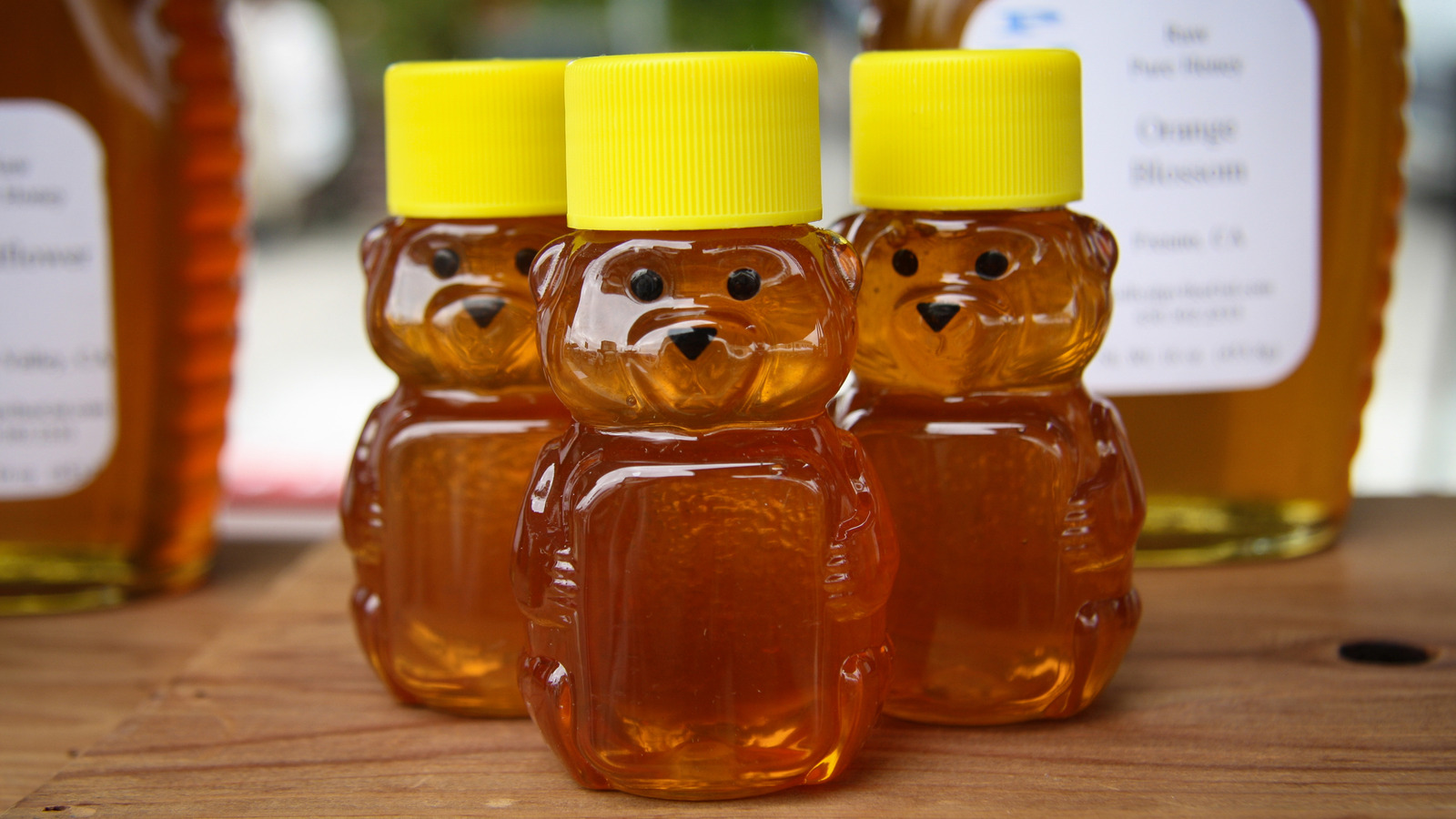
"You can still safely consume the honey; you just need to decrystallize it first. You can use warm water to dissolve the crystals in the honey so that it is a uniform, pourable liquid once again. However, before heating honey, be aware that temperatures over 104 degrees Fahrenheit can destroy the enzymes responsible for its amazing health benefits."
"The easiest way to reverse crystallized honey is to use hot water from your tap. This water won't be boiling, so it's unlikely to damage the plastic container, but it should be warm enough to decrystallize the honey. Find a bowl or pot large enough for the bottle of honey to stand upright, and then fill it with hot tap water."
"Although honey doesn't really ever expire, if it isn't stored properly, its taste, color, and quality can decline, and it may even get contaminated by bacteria. When honey is stored properly, it can last indefinitely. The best environment is one that somewhat mimics that of a beehive: Dry, dark, and warm."
Honey naturally thickens, crystallizes, and darkens over time, but remains safe to eat. Decrystallization requires warm water without exceeding 104°F, as higher temperatures destroy beneficial enzymes. Plastic containers need careful handling to prevent melting or chemical leaching. The simplest method uses hot tap water in a bowl with the honey bottle submerged for about 10 minutes. Alternatively, warm climates allow outdoor placement for 30 minutes to an hour. Proper storage in dry, dark, warm conditions mimics beehive environments and prevents crystallization while maintaining honey's indefinite shelf life and quality.
Read at Tasting Table
Unable to calculate read time
Collection
[
|
...
]