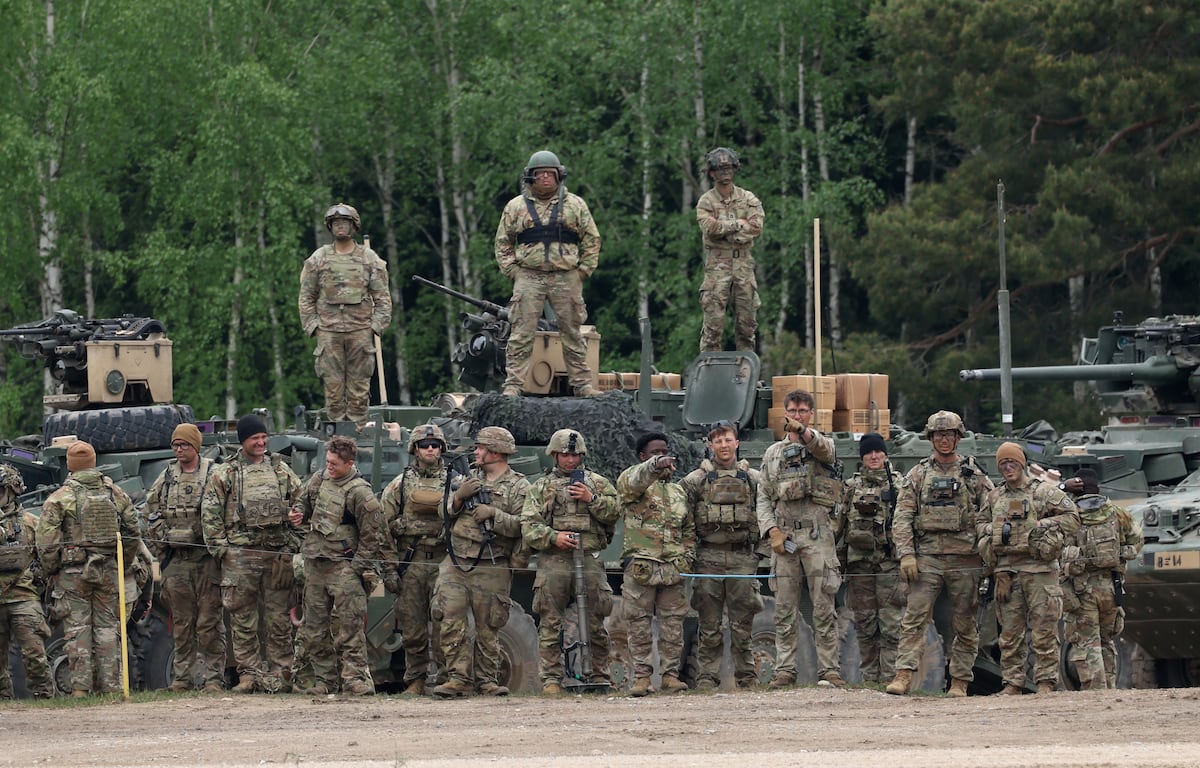
"NATO countries most exposed to the Russian threat are watching with concern as the guarantor of Europe's security pulls away. U.S. President Donald Trump's disdain for America's allies most recently seen by his withdrawal of 5,000 troops from Germany is setting off alarm bells in the countries along the Alliance's eastern flank. They fear that the crisis in transatlantic ties could undermine the core principle of mutual defense and send a message of weakness that Moscow will be quick to exploit."
"Intelligence agencies and governments across several European countries warn that the Kremlin could attack an EU neighbor in the short or medium term. As Polish foreign minister Radosaw Sikorski said at last week's Defence24 Days conference in Warsaw, the likelihood of a conventional incursion across NATO's borders is low. We would detect it you can't hide tank brigades. Yet he added: The concern is that [Russian President Vladimir] Putin is desperate, so he might do something desperate."
"Poland, the Baltic states, and the Nordic countries are home to some of NATO's most vulnerable points places where Putin could test the Alliance's unity and response. Beyond strategic positions in the Arctic, such as Norway's Svalbard archipelago, two locations stand out on the EU's far eastern edge. The first is Narva, Estonia's thirdlargest city, where the European Union meets Russia. With 97% of its population Russianspeaking, it is exposed to potential destabilization attempts by the Kremlin."
"The other major headache is Suwaki, on the border between Poland and Lithuania. This 40-mile corridor between Russia's Kaliningrad exclave and Belarus is the Baltic states' only land link to the EU. For Putin, this Trump presidency is a window of opportunity, and the Baltic states are very worried, a senior official explained to several Spanish newspapers last Monday during a study visit organized by the Polish government. Russia believes that the EU and NATO are weak and sees that under Trump,"
NATO countries most exposed to Russia are concerned as U.S. commitment to Europe appears to pull away. The withdrawal of 5,000 troops from Germany has alarmed allies along the eastern flank, where leaders fear weakened transatlantic ties could undermine mutual defense and signal weakness Moscow could exploit. European intelligence agencies and governments warn that the Kremlin could attack an EU neighbor in the short or medium term. Conventional incursions across NATO borders are considered unlikely because they would be detectable, but the risk of desperate actions remains. Vulnerable points include Poland, the Baltic states, and Nordic areas, including Narva in Estonia and the Suwaki corridor between Poland and Lithuania, the Baltic states’ only land link to the EU.
Read at english.elpais.com
Unable to calculate read time
Collection
[
|
...
]