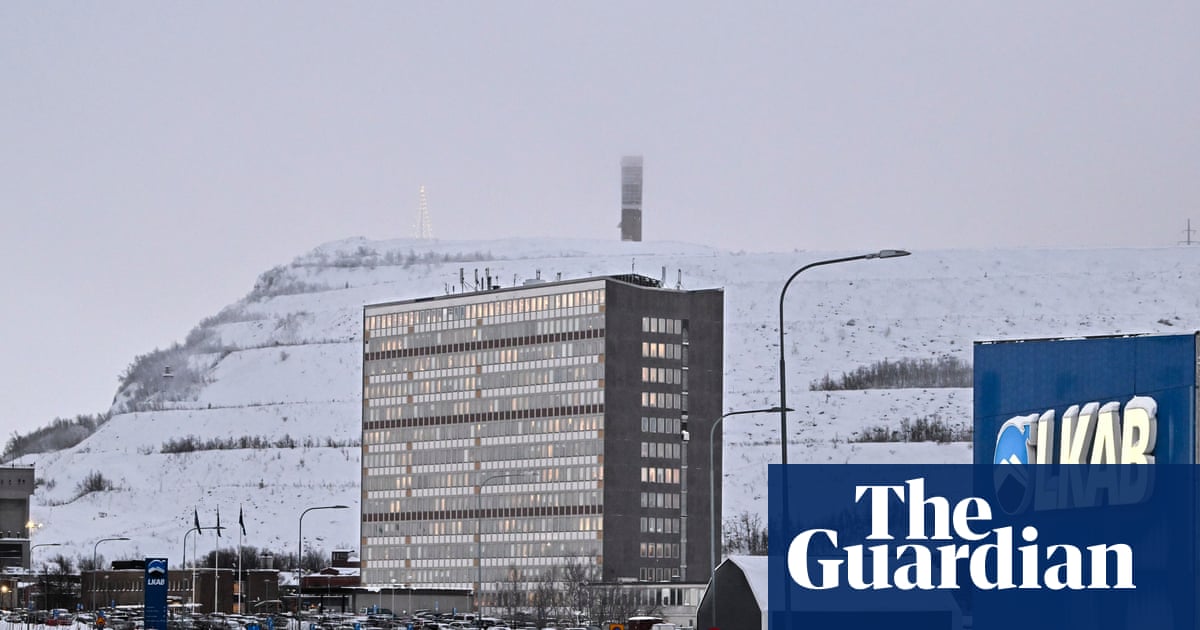
"The EU is struggling to free itself from dependence on China and countries in the global south for critical minerals and rare earths needed for everything from smartphones to wind turbines and military jets. A damning report by the European Court of Auditors (ECA) in Luxembourg found that the bloc's targets for 2030 were out of reach because of lack of progress in domestic production, refining and recycling."
"The report, which examines the EU's ability to meet its target of 42.5% of energy from renewables in 2030, exposes a gulf between rhetoric and reality. In one of the most damning conclusions, it notes that not only is mining and exploration underdeveloped in the EU but even when new deposits are found, it can take 20 years for an EU mining project to become operational."
"It comes as UK prime minister Keir Starmer agreed to accelerate cooperation with Japan on critical minerals during talks in Tokyo on Saturday with his counterpart, Sanae Takaichi. Marco Rubio, the US secretary of state, has convened a summit of about 20 countries in Washington on Wednesday to coordinate diversification of mineral supplies, including the lithium, nickel, cobalt, copper, and rare earth elements needed for solar panels, wind turbines and car batteries."
The EU is struggling to reduce dependence on China and countries in the global south for critical minerals and rare earths used in smartphones, wind turbines and military jets. EU targets to reach 42.5% renewable energy by 2030 face significant supply constraints because domestic production, refining and recycling remain underdeveloped. Mining and exploration within the EU are limited, and new deposits can take up to 20 years to reach operational mining status, severely limiting near-term contributions. International coordination efforts are underway to diversify supplies of lithium, nickel, cobalt, copper and rare earths, but China and Russia continue to dominate many supply chains.
Read at www.theguardian.com
Unable to calculate read time
Collection
[
|
...
]