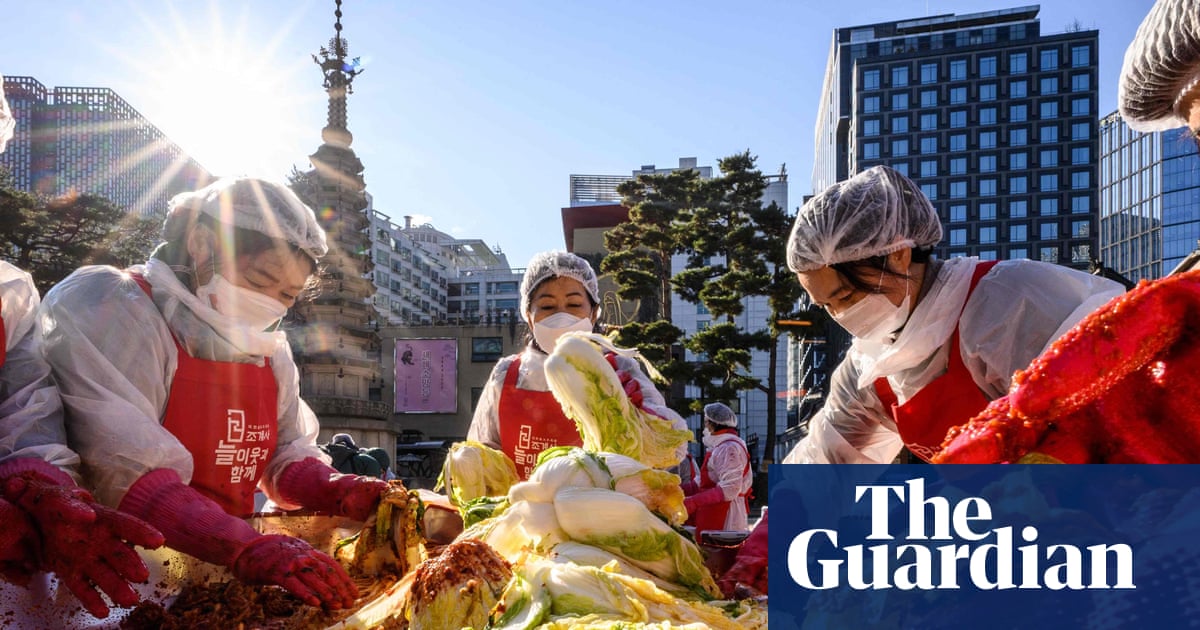
"Her routine is part of the dramatic national shift that has taken place over 20 years in South Korea, which recycled 96.8% of its 4.81 million tonnes of food waste in 2023, according to the ministry of climate, energy and environment a transformation achieved through strict disposal rules, dedicated processing infrastructure and, increasingly, the use of radio frequency identification (RFID) bins that track waste down to the gram."
"Food waste represents a major global climate challenge. More thana billion tonnes of food are thrown away each year worldwide, generating as much as 10% of global greenhouse gas emissions. Many countries still send the bulk of it to landfill. South Korea, however, has been grappling with its waste issue for far longer than most countries after its main landfills reached capacity in the early 1990s."
"The crisis prompted big overhaul of the system and a nationwide pay-as-you-throw scheme in 1995. Residents were required to buy official rubbish bags, which reduced waste but also produced an unexpected issue: once recyclables such as paper were separated out, food scraps were left sitting wet in general waste, worsening odour problems. The practice of sending food to landfill was banned altogether in 2005, and mandatory separation imposed."
South Korea recycled 96.8% of 4.81 million tonnes of food waste in 2023 through strict disposal rules, dedicated processing infrastructure and resident-linked RFID bins that weigh and record waste. A nationwide pay-as-you-throw scheme began in 1995 requiring official rubbish bags, which reduced waste but left separated food scraps wet in general waste and increased odour. Sending food to landfill was banned in 2005 and mandatory separation imposed. Standardisation of collection accelerated after a 2013 ban on ocean dumping of leachate. Globally, more than a billion tonnes of food are discarded annually, producing up to 10% of greenhouse gas emissions.
Read at www.theguardian.com
Unable to calculate read time
Collection
[
|
...
]