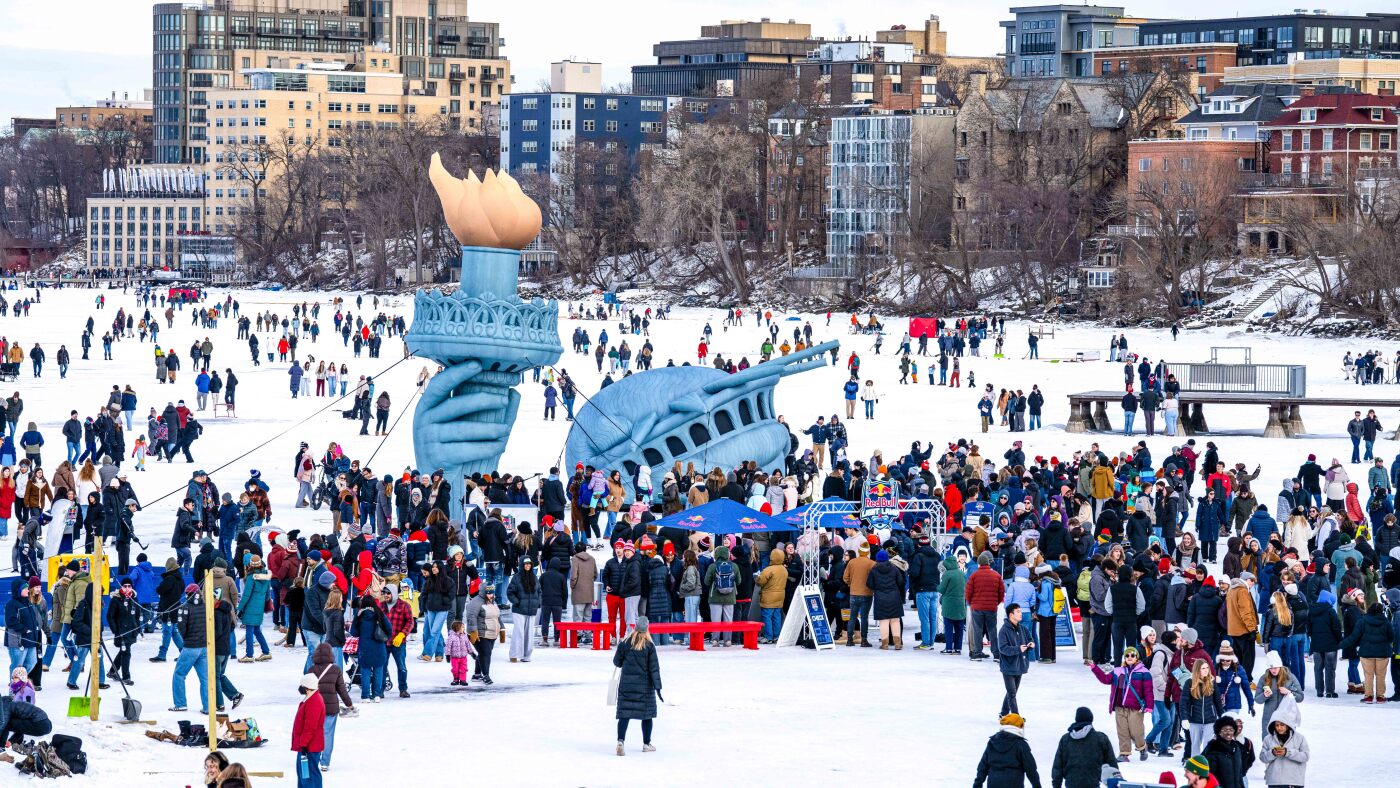
"When our lakes are frozen, they are truly our greatest asset. There's a long history of ice harvesting in this region, so there was just a lot of commercial activity on these lakes, cutting blocks of ice out of the lakes all winter. Frozen lakes were so important to the city that records of when the ice froze each year go back more than 100 years."
"We've actually lost about a month of lake ice duration here in Madison. Traditionally, these were lakes that froze really safely every winter. And that's becoming less—we're less confident in that, going into the future. As climate change accelerates, fluctuations in winter temperatures increase, which leads to unpredictable ice conditions."
Madison, Wisconsin, built on an isthmus between Lake Mendota and Lake Monona, has a deep cultural connection to frozen lakes. Historically, ice harvesting was a major commercial activity, with records of freezing dates spanning over 100 years. Today, winter activities like ice fishing, skating, and ice sailing remain common. However, climate change is significantly altering this landscape. Lakes are freezing approximately one month later than historical averages, and ice conditions have become unpredictable and unsafe. Temperature fluctuations during winter create unstable ice formation, forcing event organizers to relocate activities to land, as occurred during the 2024 Frozen Assets Festival.
Read at www.npr.org
Unable to calculate read time
Collection
[
|
...
]