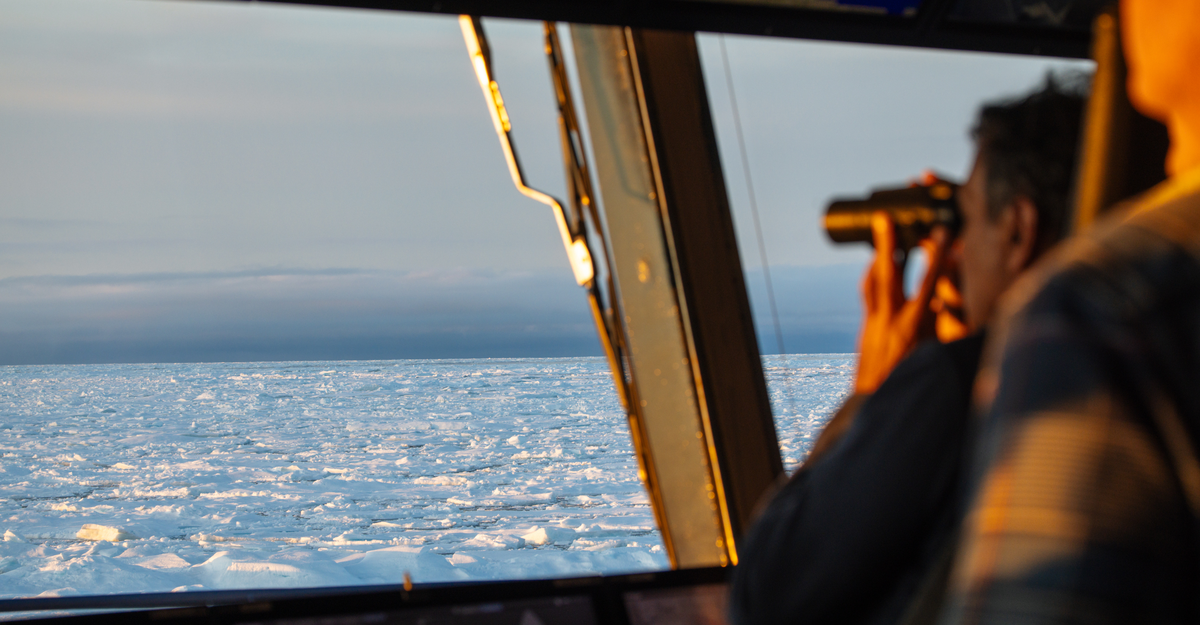
Arctic sea ice is retreating and scientists predict most of the Arctic Ocean could be seasonally ice-free by 2050. A warming Arctic opens shorter trans-Arctic shipping routes and access to fossil-fuel reserves, dramatically reducing voyage times. Large portions of the central Arctic will lie under high-seas jurisdiction, creating lawless zones as maritime traffic increases through mixed water and sea ice. The region has few environmental protections, limited knowledge of vulnerable species, and uncertain climate impacts from expanded shipping, including black-carbon emissions that amplify short-term warming. Calls exist for a precautionary pause and new international governance frameworks.
"Much of the ocean's center, the northernmost stretch surrounding the pole, will be subject to the lawlessness of the high seas-which will become a problem as more ships try to navigate a mushy mix of water and sea ice. And although the Arctic is the world's fastest-warming region, and contains its most rapidly acidifiying ocean, it has few environmental protections. Scientists don't have a clear idea of which species might need defending, or of the climate effects of unbridled shipping."
"When the Chinese cargo freighter Istanbul Bridge set sail for Europe in late September, it took an unusual route. Instead of heading south for the 40-day voyage through the Suez Canal, it tacked north. The freighter arrived in the United Kingdom at the port of Felixstowe just 20 days later-successfully launching the first-ever Arctic commercial-container route from Asia to Europe. For most of human history, the surface of the world's northernmost ocean has been largely frozen."
Read at The Atlantic
Unable to calculate read time
Collection
[
|
...
]