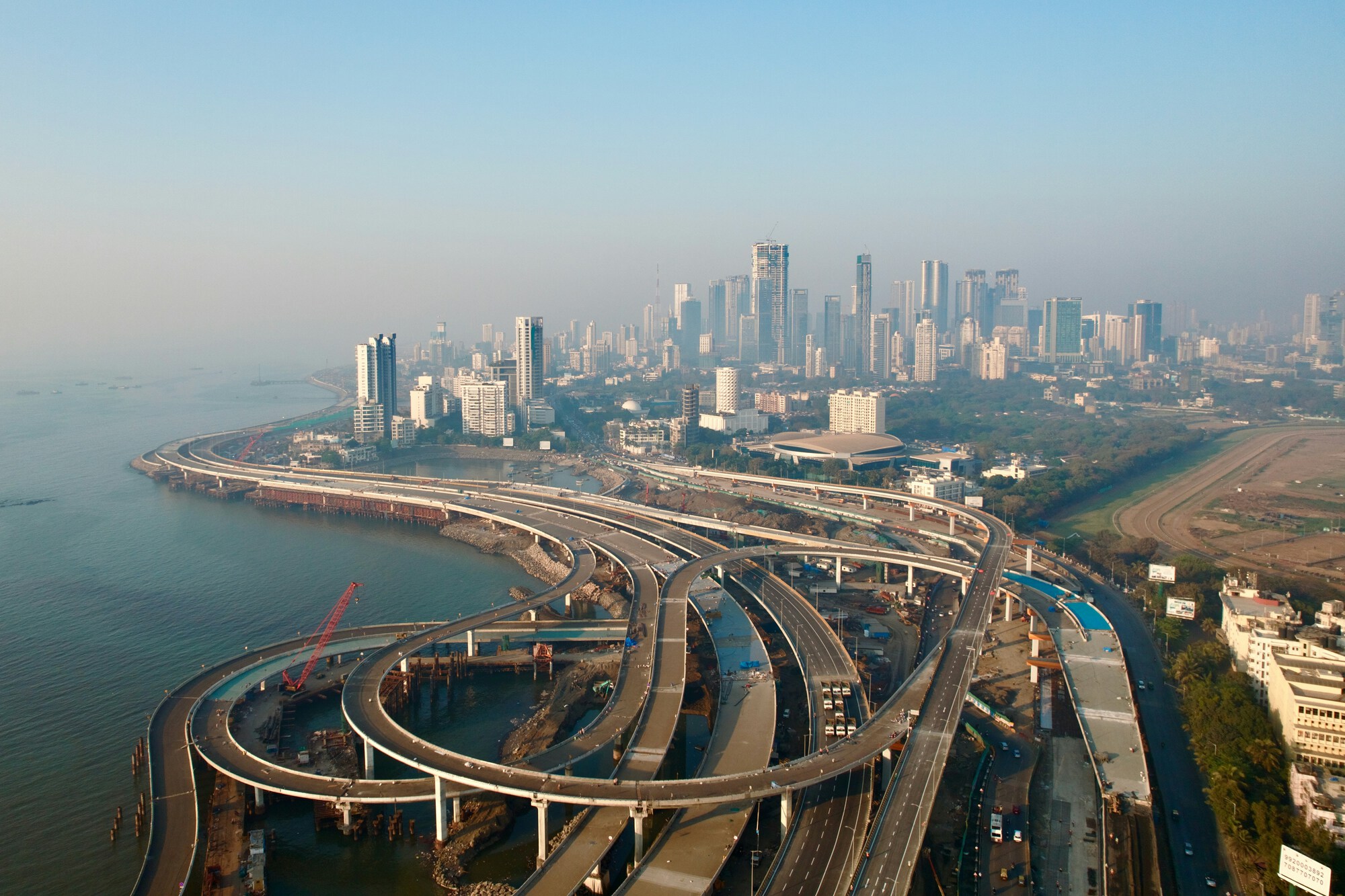
"In 2025, India's most consequential design projects unfolded largely out of sight. While public attention gravitated toward museums, cultural landmarks, and visually arresting façades, the architecture that most decisively shaped daily life existed underground, at the city's edges, or inside secured compounds few citizens would ever enter. Sewage networks were rebuilt, flood tunnels bored beneath dense neighborhoods, substations lifted above floodplains, and data centers multiplied across peri-urban landscapes."
"In this sense, infrastructure asserts itself as architecture, not as background support, but as the primary civic project of the contemporary Indian city. The most important "buildings" of 2025 were engineered voids, conduits, and nodes: spaces defined less by enclosure than by performance, resilience, and continuity. Together, they signal a shift in where architectural intelligence is now urgently needed. India's cities are confronting overlapping climate stresses at unprecedented speed."
"Across many Indian cities, infrastructure systems have been designed with spatial logic, environmental intelligence, and long-term adaptability. These projects required the same design rigor as public buildings, yet they operate without the visibility or recognition typically afforded to architecture. What emerged was a recalibration of value. Performance began to outweigh spectacle. Redundancy replaced efficiency as a design virtue. And the boundary between architecture, landscape, and engineeri"
India's most consequential 2025 design work prioritized infrastructural systems—sewage networks, flood tunnels, elevated substations, and peri-urban data centers—located out of public view. These engineered voids, conduits, and nodes emphasized performance, resilience, redundancy, and continuity rather than form or spectacle. Infrastructure systems were designed with spatial logic, environmental intelligence, and long-term adaptability, demanding design rigor comparable to public buildings despite minimal visibility. Cities faced overlapping climate stresses—heatwaves, erratic monsoons, water scarcity, grid instability, and pollution—that transformed disruptions into structural conditions. The resulting shift blurred boundaries between architecture, landscape, and engineering to sustain urban functionality.
Read at ArchDaily
Unable to calculate read time
Collection
[
|
...
]