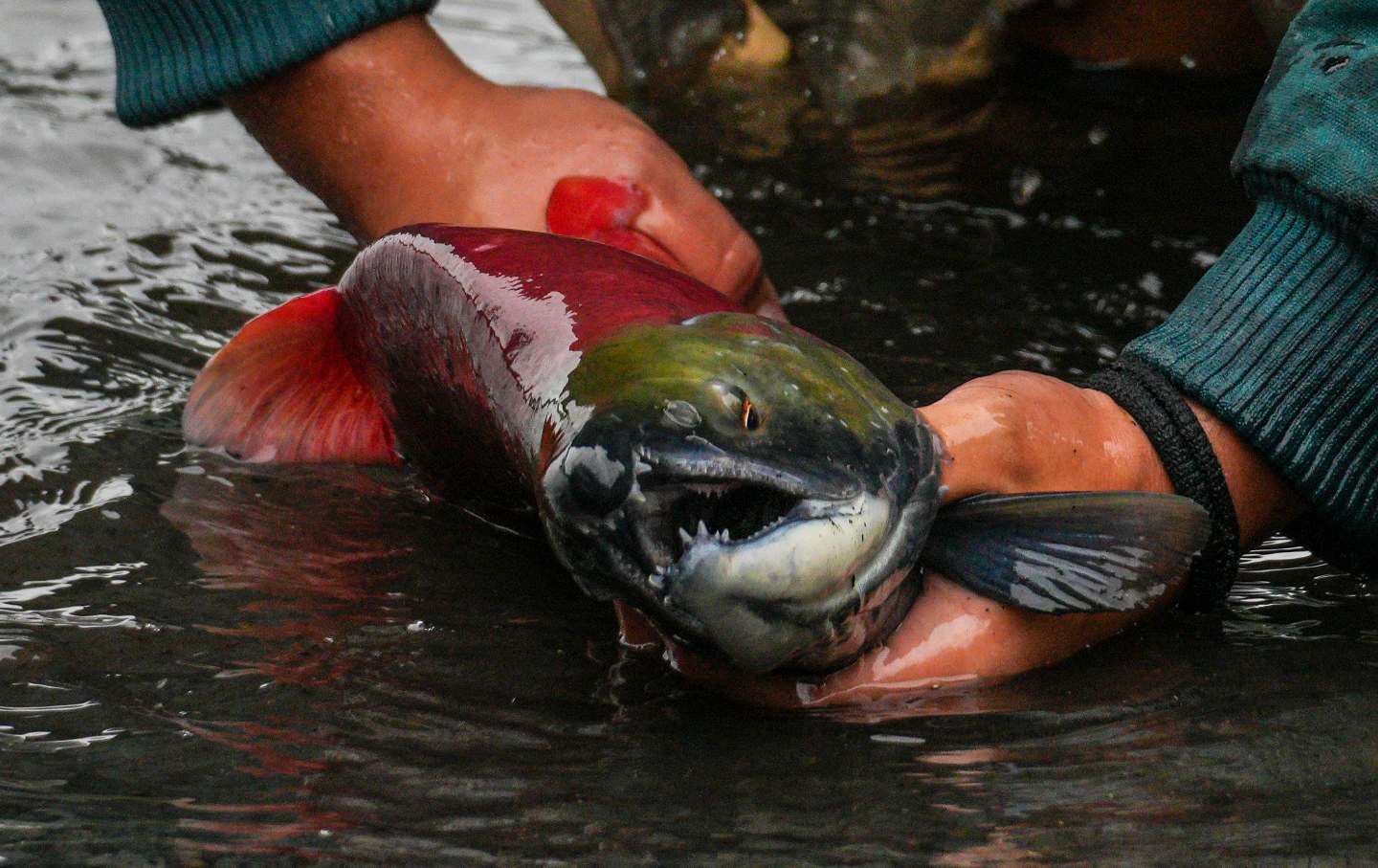
"On the banks of the Yukon River, after arriving by canoe only a few miles from the Canadian border, I shared some salmon with Karma Ulvi, the chief of the Native Village of Eagle in Alaska. But the fish we ate wasn't caught locally: A plane had delivered the salmon from Bristol Bay, in the southwest corner of the state, over 1,000 miles away. For the Native tribes that have lived along the Yukon for millennia, importing is the only option."
"In the last stronghold for wild salmon on earth, these tribes are fighting to save the fish. But it's a war with many fronts, none of them simple: climate change, federal funding, competing scientific narratives, and, ultimately, corporate greed. Heat stroke during the summer has left scores of dead fish on the banks, unable to reach their spawning grounds. And over the last few decades, Alaska has seen more rain in the fall, causing floods that wash out salmon eggs."
Remote Yukon River villages increasingly rely on imported salmon because local fishing has been impossible for years. Warming summers cause heat stroke in salmon and large fall rains flood and wash out eggs, reducing returns. Tribes are mobilizing to protect the remaining wild salmon amid complex pressures: climate change, insufficient federal support, competing scientific claims, and powerful commercial fishing interests that prioritize profit. Food insecurity and cultural loss accompany declining fish. Local cultural camps and traditional practices aim to sustain language and harvesting knowledge while communities contest fisheries management and fight for sustainable practices.
Read at The Nation
Unable to calculate read time
Collection
[
|
...
]