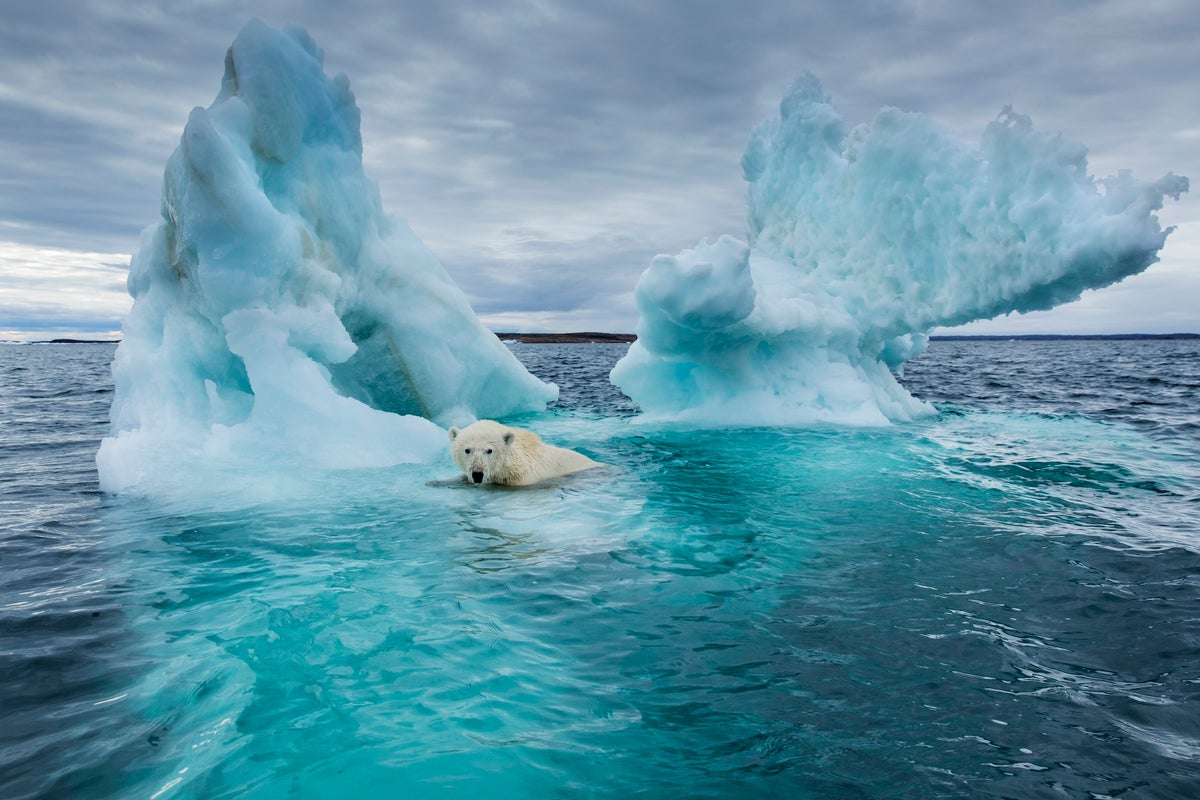
"The Arctic is a dramatically different place than it was 20 years ago, when scientists first began giving it an annual checkupand its current state is dire. The first Arctic Report Card was released by the National Oceanic and Atmospheric Administration in 2006. Since then the region has warmed twice as fast as the global average. About 95 percent of the oldest, thickest sea ice is gonethe sliver that remains is collected in an area north of Greenland."
"The very first Arctic Report Card in 2006 was issued because things were changing rapidly, and this need for rapid updates was felt keenly, said Rick Thoman of the International Arctic Research Center at the University of Alaska Fairbanks during a press briefing at the annual meeting of the American Geophysical Union. Every year does not have a new record, but cumulatively [the report] provides a record of where we've been and a guidejust a guideto where we're going."
Over the past two decades the Arctic has warmed at roughly twice the global rate, producing the 10 warmest regional years within the past decade. About 95 percent of the oldest, thickest sea ice has disappeared, with remaining ancient ice confined north of Greenland. The central Arctic Ocean has become warmer and saltier, accelerating ice melt and modifying heat exchange with the atmosphere, which influences weather patterns globally. Between October 2024 and September 2025 surface air temperatures reached their warmest levels since at least 1900. Winter sea-ice growth hit a record-low annual peak and the summer minimum extent ranked tenth lowest in at least 47 years.
Read at www.scientificamerican.com
Unable to calculate read time
Collection
[
|
...
]