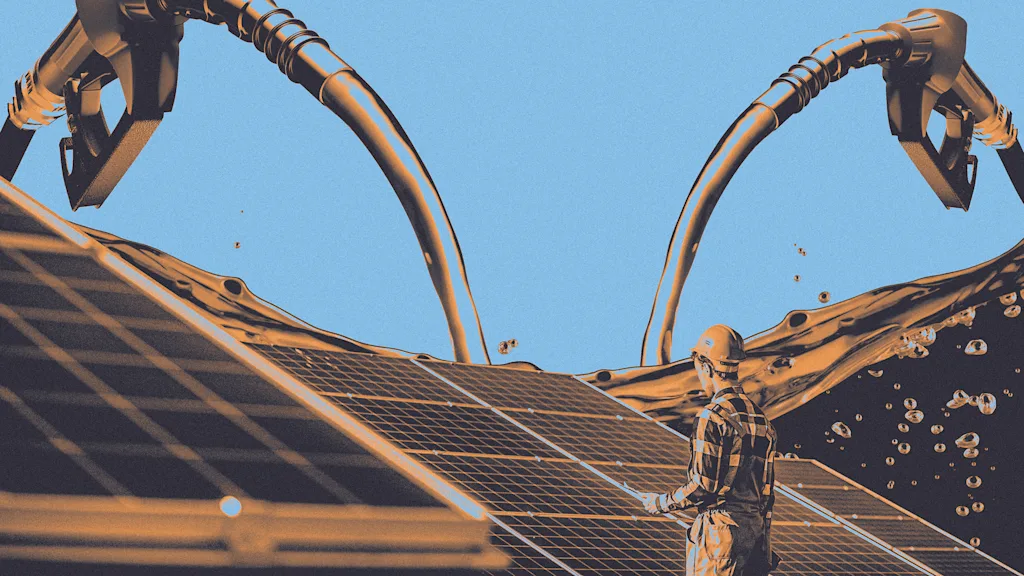
Global goals aim to transition away from fossil fuels with targets to triple renewable capacity and double efficiency by 2030, addressing the energy sector’s roughly 75% share of CO2 emissions. Renewable deployment accelerated, with over 90% of new power capacity in 2024 from renewables and similar 2025 growth. Despite that progress, fossil-fuel production continues to expand, and major producers like the United States are pressuring other countries to keep buying fossil fuels. COP30 in Belém elevated the energy transition debate, prompting a proposal for a formal road map supported by more than 80 countries but blocked in the final agreement by oil- and gas-producing states.
"Two years ago, countries around the world set a goal of "transitioning away from fossil fuels in energy systems in a just, orderly and equitable manner." The plan included tripling renewable energy capacity and doubling energy efficiency gains by 2030-important steps for slowing climate change since the energy sector makes up about 75% of the global carbon dioxide emissions that are heating up the planet."
"More than 80 countries said they supported the idea, ranging from vulnerable small island nations like Vanuatu that are losing land and lives from sea level rise and more intense storms, to countries like Kenya that see business opportunities in clean energy, to Australia, a large fossil-fuel-producing country. Opposition, led by the Arab Group's oil- and gas-producing countries, kept any mention of a "road map" energy transition plan out of the final agreement from the climate conference, but supporters are pushing ahead."
Read at Fast Company
Unable to calculate read time
Collection
[
|
...
]