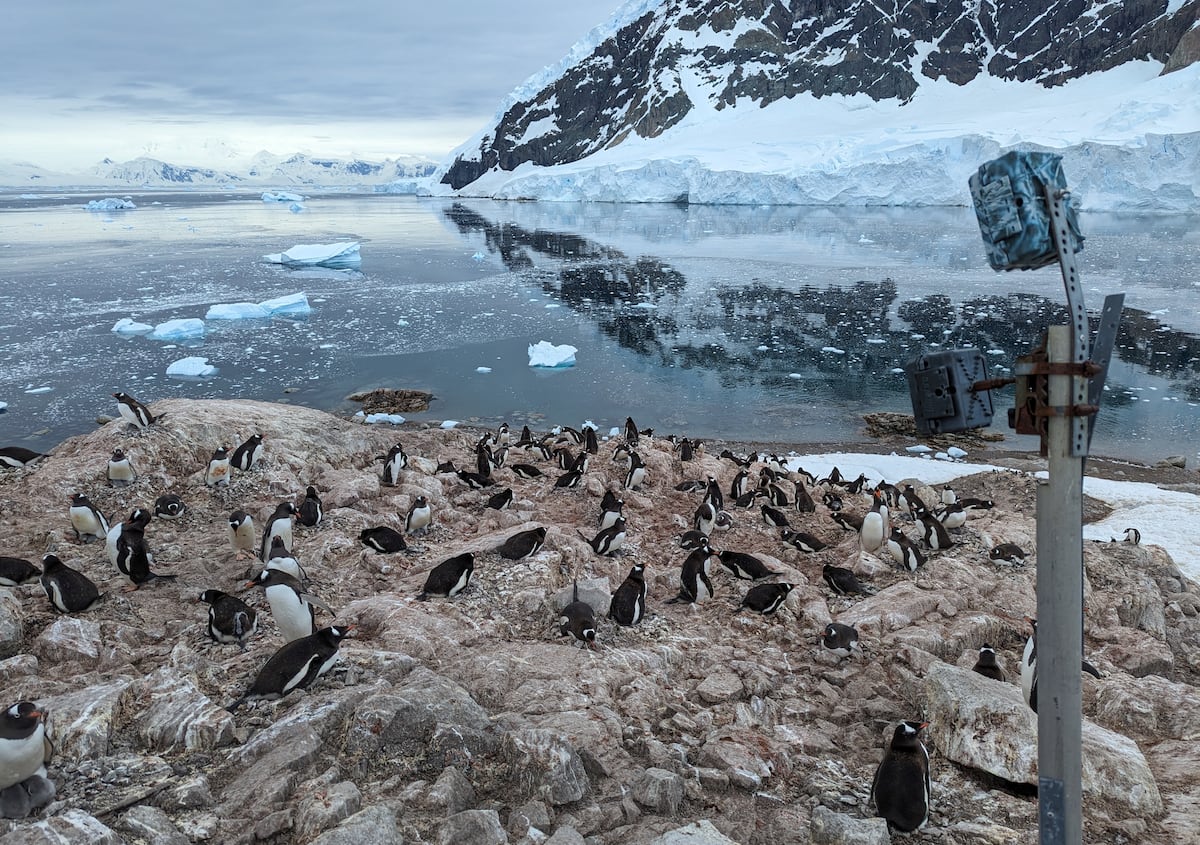
Penguins across dozens of colonies and three species now return to nesting grounds earlier each year, averaging two weeks sooner and in some instances nearly a month. Dozens of cameras with built-in thermometers recorded an accelerated increase in temperature at breeding sites. It remains unclear whether penguins are adapting to or being overwhelmed by climate change. All penguin species except the emperor require snow-free, dry, warm land to lay eggs. Dark, salt-rich guano and absorbed heat increase local radiation trapping and ice melt. Eighteen cataloged species tend to reuse previous breeding sites. Penguins serve as sentinels of Antarctic ecosystem health.
"Every year, penguins are returning earlier to the nesting grounds where they lay their eggs and raise their chicks. This isn't a phenomenon limited to a single colony; it has been observed in dozens of colonies and across three different species. On average, they have returned two weeks earlier, but in some cases, by almost a month. This places these birds among the living beings that have most significantly altered one of life's fundamental patterns: raising the next generation."
"All penguin species, except for the emperor penguin, which nests on the ice, need to lay their eggs on land, in an area free of snow and as dry and warm as possible. In fact, researchers link their massive nesting efforts to the melting ice: their droppings, in addition to the heat they absorb, are rich in salts and very dark, trapping more radiation, which accelerates the melting of the ice."
Read at english.elpais.com
Unable to calculate read time
Collection
[
|
...
]