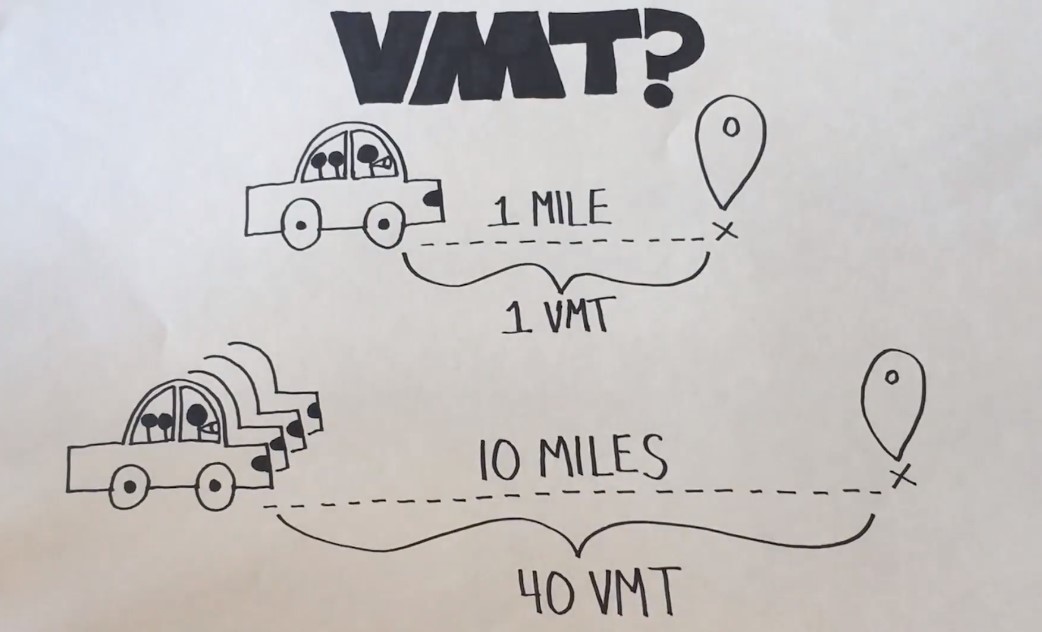
CEQA agencies now use affordable, senior, or supportive housing as off-site VMT mitigation following the 2024 CAPCOA Handbook. Affordable housing is assumed to generate lower VMT per capita due to reduced car ownership and higher transit use. That assumption fails because affordable projects are additive rather than substitutive; independent funding means affordable units do not displace market-rate development. Adding affordable units therefore increases total households and travel and can raise VMT if located in auto-dependent areas. VMT outcomes vary by location, transit service, land use, and street design. CEQA mitigation requires reductions to be real, additional, quantifiable, verifiable, and enforceable. Using affordable housing struggles to meet those criteria: Real? No. These VMT reductions are assumed and not measured. Additional? No.
"Under CEQA, some agencies now use affordable, senior, or supportive housing as an off-site VMT mitigation strategy, as outlined in the 2024 CAPCOA Handbook. The logic seems sound, that affordable housing typically generates lower VMT per capita than market-rate housing due to factors like reduced car ownership and higher transit use. However, this reasoning falters under closer scrutiny."
"At its core, using affordable housing as VMT Mitigation assumes that adding affordable units would offset a project's VMT impacts. In reality, these projects are additive, not substitutive. Affordable housing does not displace market-rate development since their funding streams are independent of each other. Thus, building affordable units does not reduce the supply of market-rate housing. Instead, it simply adds more households and therefore more travel."
"If these projects are located in auto-dependent areas, they may even increase VMT. The paradox: projects mitigate their own VMT impacts by funding developments that create additional VMT elsewhere. Using affordable housing as VMT mitigation presumes affordable housing always produces lower VMT when compared to market-rate housing. In practice, VMT varies based on many variables, including: Project location and access to jobs/services Transit frequency and reliability Local land use and street design"
Read at cal.streetsblog.org
Unable to calculate read time
Collection
[
|
...
]