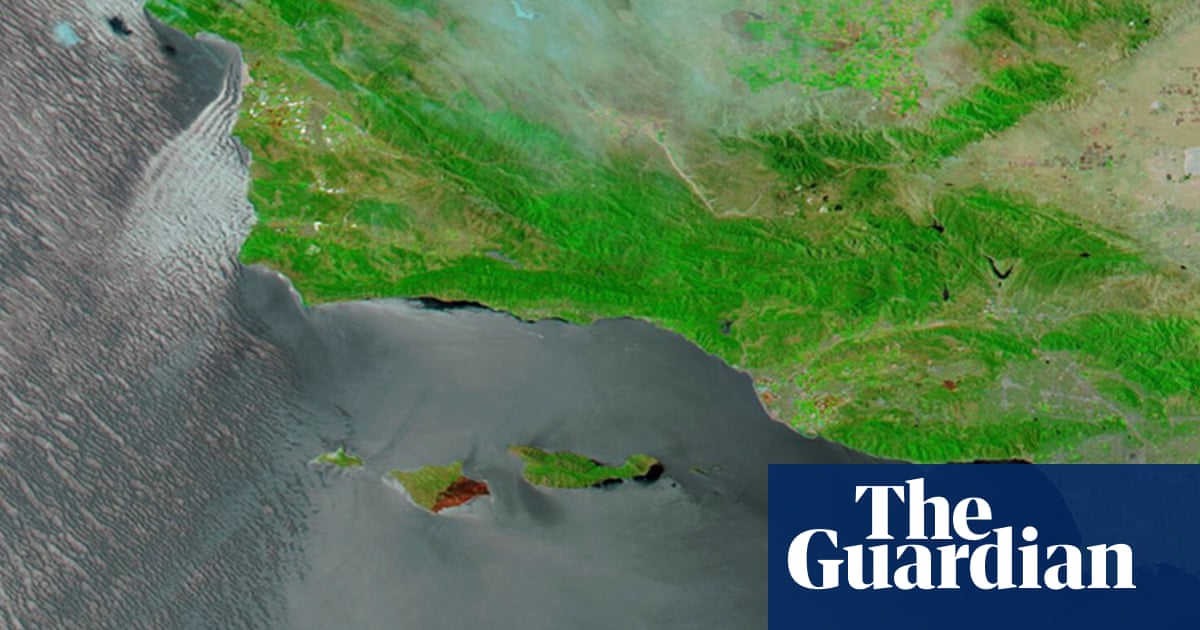
Satellite imagery from 20 May shows blackened burn scars across Santa Rosa Island after a wildfire consumed about a third of the island. The fire scorched more than 18,300 acres and is believed to be the largest recorded on the island. Santa Rosa Island contains habitat for rare and threatened species, including plants and animals found nowhere else. The island’s ecosystems evolved separately from California’s mainland and are not considered fire-adapted, making large fires uncommon and potentially damaging for long periods. The cause is under investigation, with reports that flames began after a sailor crashed a boat and fired flares for help. Strong winds drove extreme fire behavior, while marine fog and rugged terrain limited aerial support and created communication and access problems. Restoration biologists, archaeologists, and cultural experts worked to protect habitats and archaeological sites during containment efforts.
"Images from a Nasa satellite showcased the devastating scars left behind by a wildfire that consumed roughly a third of Santa Rosa Island, one of the five islands that make up Channel Islands national park off the southern California coast. Taken on 20 May, the Moderate Resolution Imaging Spectroradiometer (Modis) took the false-color image of the burn area, showing swaths of blackened land. While the fire is mostly contained, the images drive home the potential lasting impact on the unique ecosystems across the rugged and remote island."
"Home to scores of rare and threatened species, Santa Rosa Island provides habitat to some plants and animals found nowhere else on earth. The fire that scorched more than 18,300 acres (7,400 hectares) is believed to be the largest recorded on the island, officials said. The landscapes that evolved separately from California's mainland are not considered fire-adapted ecosystems, and blazes of this magnitude and size are uncommon here."
"While the cause of the fire is still under investigation, according to National Park Service officials, flames were spotted after a sailor crashed his boat onto Santa Rosa Island's rocky shores and fired flares to seek help. Images shared by the coast guard showed that SOS was carved into the charred ground by the 67-year-old man before he was rescued by helicopter."
"Fire crews who were boated in to battle the blaze faced extreme fire behavior fueled by strong winds, while the thick coastal marine layer and challenging terrain inhibited aerial support and caused communication and access issues, according to official updates from Cal Fire. The delicate habitats and archeological sites threatened by the flames also had to be protected. Resource advisers teams of restoration biologists, archeologists and cultural experts were on site during the firefight to limit disturbances caused by strategies to contain the blaze, including deep gouges into the soil and vegetation made by bulldozers."
#wildfire #santa-rosa-island #channel-islands-national-park #satellite-imagery #ecological-restoration
Read at www.theguardian.com
Unable to calculate read time
Collection
[
|
...
]